


Why Is Online Learning Becoming Important for AEC Professionals?
Here’s why upskilling has become important for both engineering and architecture careers:
Keeping Skills Relevant: AEC workflows are continually evolving. This makes it important for professionals to regularly update their technical knowledge.
Learning Around Work: Online learning allows working professionals to develop new skills without having to step away from their existing projects or responsibilities.
Access to New Tools: People can explore software and digital processes that may not have been covered during their formal education or early career.
Building Career Flexibility: Developing skills beyond a current role can help individuals find new career paths within the AEC industry.
Learning at Your Own Pace: Online BIM courses give learners more control over when and how they study, making it easier to fit learning around different schedules.
Staying Industry-Ready: Continuous upskilling helps professionals keep pace with changing project requirements and the growing use of digital technology across the industry
What Makes Online BIM Learning Different From Traditional Online Courses?
Digital BIM learning is not just fashionable; it’s practical. This offers a more flexible way to build skills around their existing work and commitments. Here’s how that makes a difference:
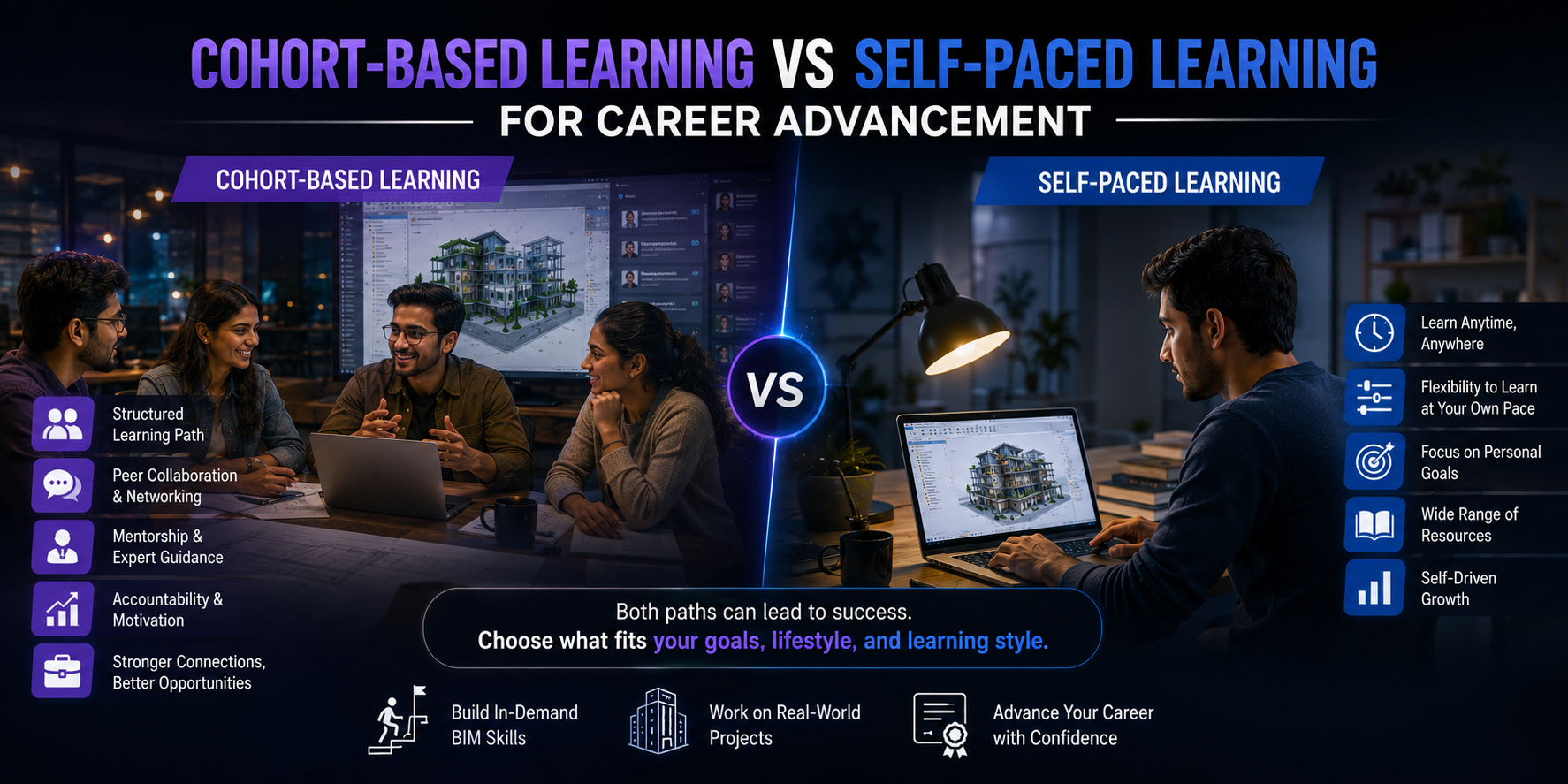
Flexible Learning: Online BIM programs allow students to learn around their work schedules. This makes it easier to continue upskilling without taking a career break.
Practical Exposure: BIM learning can involve exercises that allow learners to apply tools and workflows instead of only comprehending them theoretically.
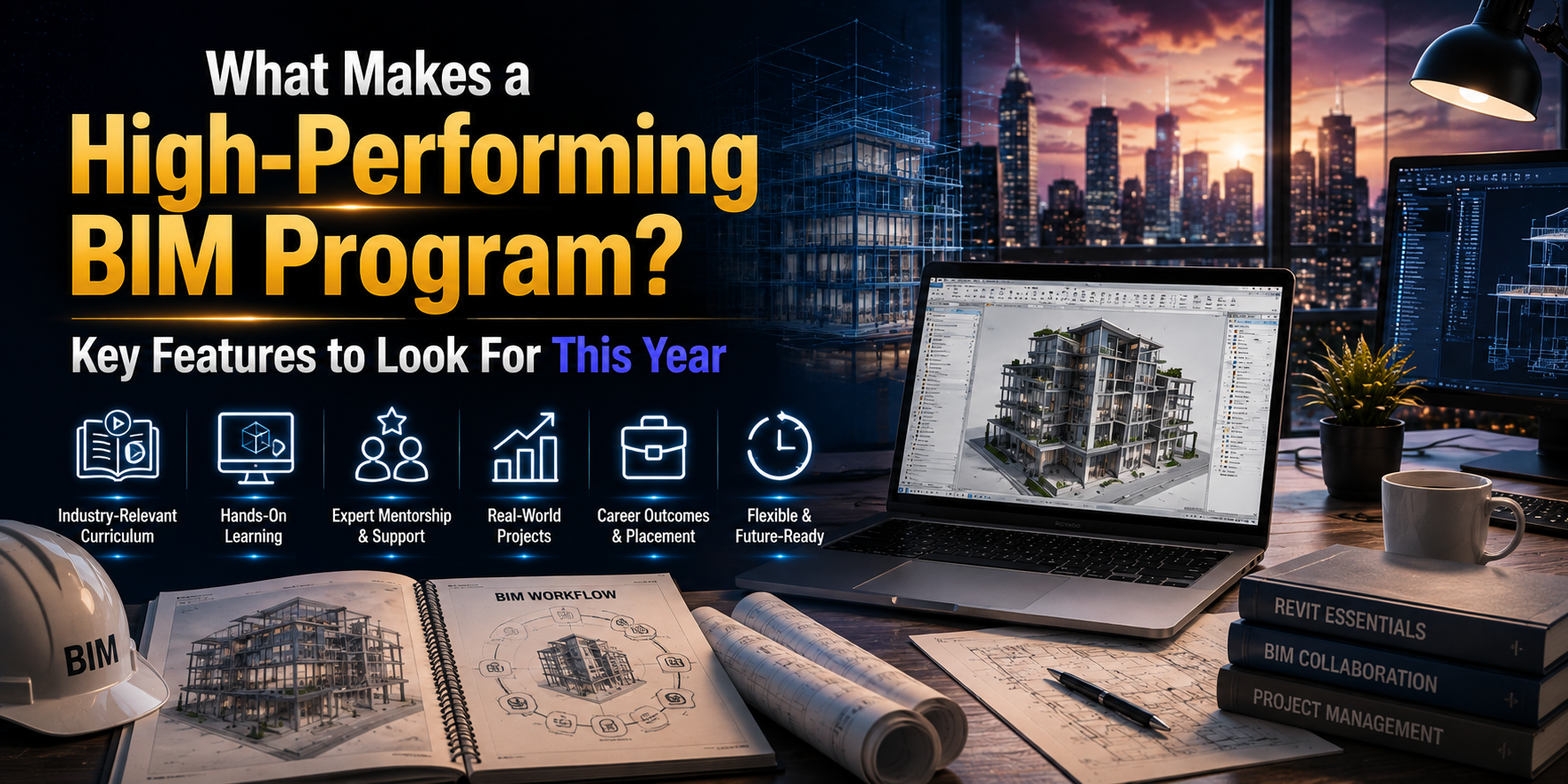
Industry-Relevant Skills: A well-structured BIM program can focus on the tools, processes, and systems that professionals are likely to encounter in AEC projects.
Expert Guidance: Access to mentors and industry professionals can help learners understand how BIM concepts are applied beyond the classroom.
Collaborative Learning: Online platforms can bring learners together through discussions, reviews, and project work, helping them develop communication and coordination skills.
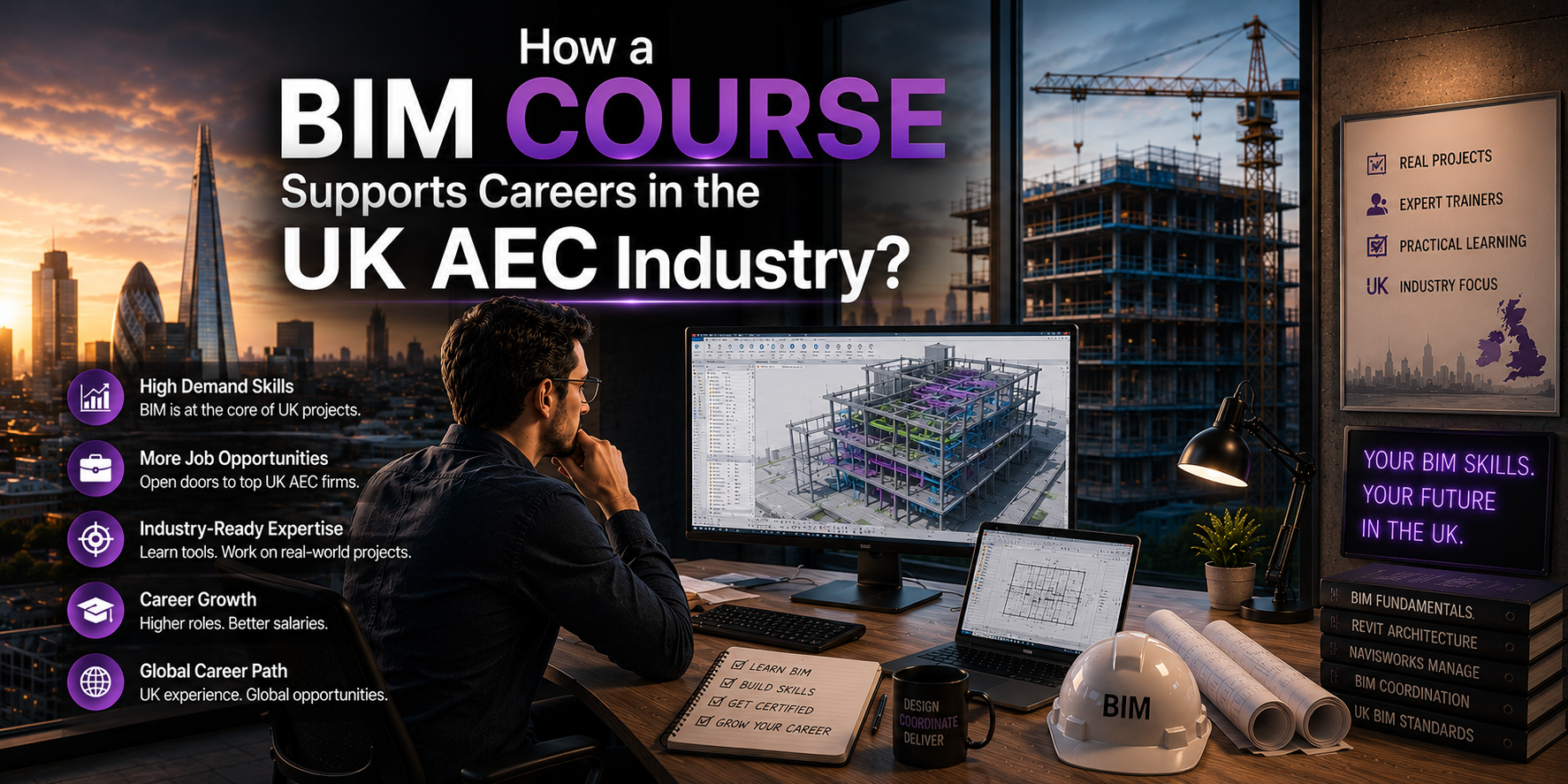
Career Preparation: Combining technical learning with projects and industry guidance can help professionals build skills that are more closely aligned with the expectations of BIM roles.
How Does Project-Based Learning Build Practical AEC Skills?
Project-based learning allows professionals to move beyond theory and practise skills in a more practical setting. Here’s how this builds their expertise:
Real-World Projects: Working on realistic assignments helps learners understand how their skills translate into the kind of tasks they may encounter in professional practice.
BIM Workflows: Applying BIM learnings across different stages of a project helps individuals understand how models and information are interconnected.
Coordination: Working with different disciplines helps professionals understand how teams exchange information, identify conflicts, and coordinate design decisions.
Documentation: Project work gives learners an opportunity to practise model creation, project documentation, and construction management with accuracy and consistency.
Portfolio Creation: Completed projects can demonstrate how a learner has applied their skills and knowledge. It gives them tangible work to discuss during job applications and interviews.
Why Do Live Mentorship and Industry Experts Matter in AEC Learning?
BIM learning becomes easier when you have someone experienced to guide you through the process of digital construction and project management along the way. Let’s explore how this helps:
- Guidance from industry experts helps learners understand how BIM tools work in actual project settings.
- Expert guidance can help learners identify gaps and resolve technical challenges more effectively.
- Comprehensive BIM learning requires an understanding of the standards, processes, and practices that shape project delivery.
- Feedback from mentors can help individuals spot mistakes and improve their approach before entering the workplace.
- Real project discussions can expose learners to challenges that tutorials and self-study may not cover.
- Industry insights can help learners understand the skills and expectations associated with BIM jobs.
How Should an Online Platform Support Working AEC Professionals?

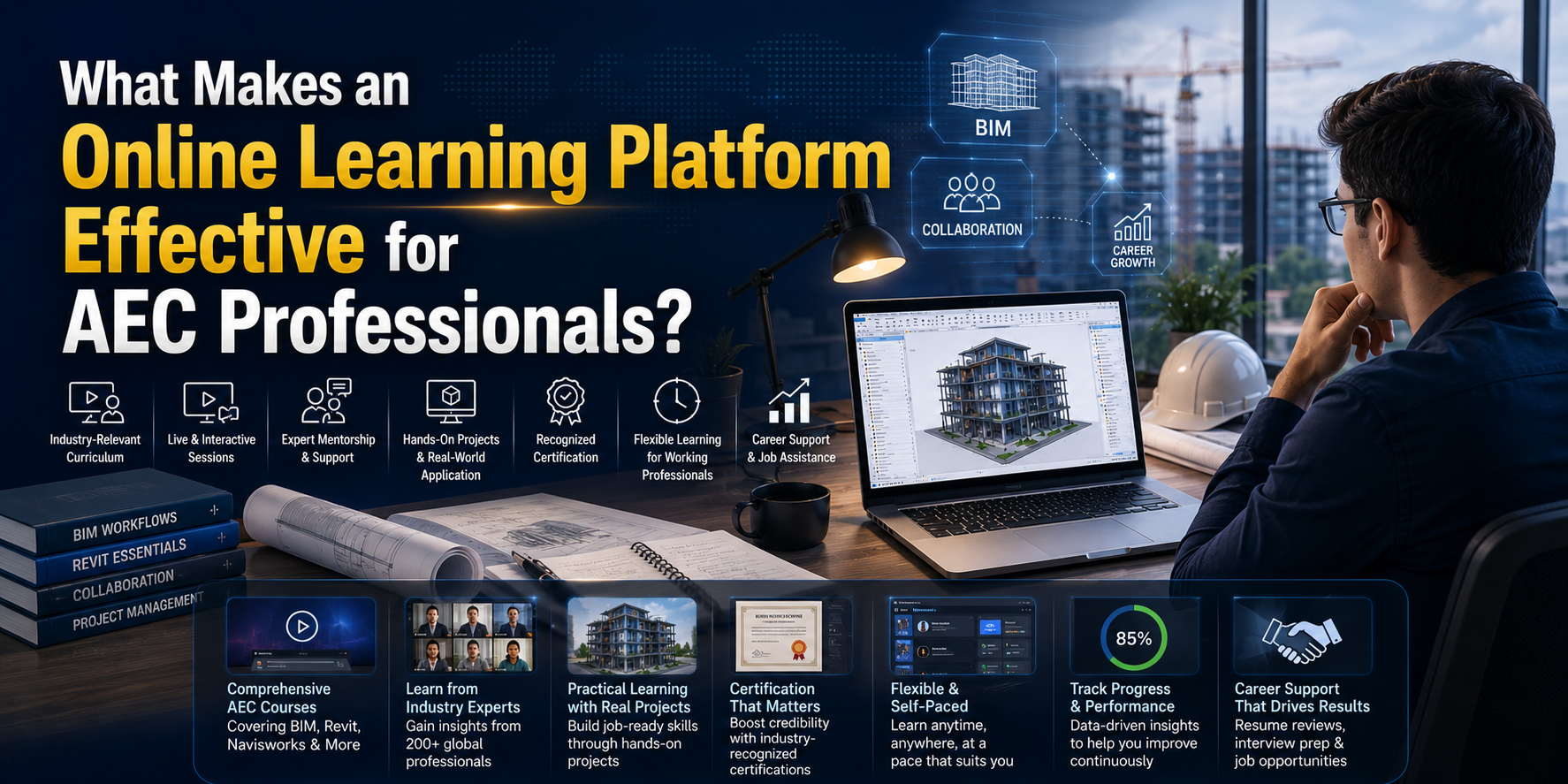
Online platforms help AEC professionals continue learning without putting their careers on hold. Here’s how they can use this flexibility to build the skills needed to secure BIM jobs.
Adaptable Schedules: Learning at convenient times makes it easier for individuals to balance skill development with project deadlines and work commitments.
Recordings: Access to recorded sessions allows professionals to revisit complex concepts or catch up when work prevents them from attending live classes.
Structured Learning Paths: A clear sequence of topics helps learners build their BIM skills progressively instead of jumping between unrelated tools and concepts.
Assignments: Practical assignments help professionals to apply what they learn and identify areas that need more practice.
Feedback: Timely feedback helps students understand what they are doing well and where their approach needs improvement in the BIM learning process.
Learner Support: Access to mentors or support teams gives professionals somewhere to turn when they encounter technical or learning-related challenges.
Which BIM Tools, Workflows, and Industry Standards Should an Effective Platform Cover?
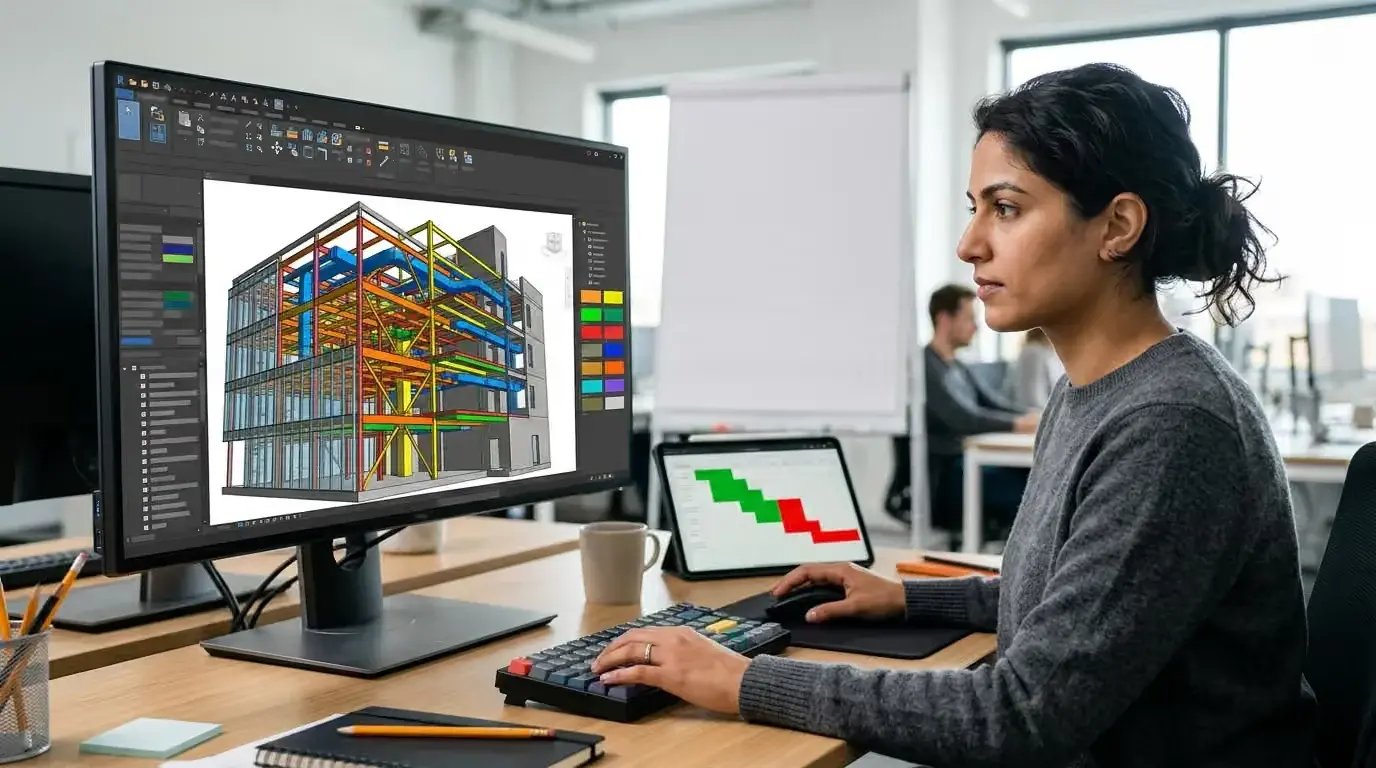
An effective BIM training should offer a holistic understanding of multiple tools, software, and plug-ins. Here’s what it must cover:
Autodesk Revit: It is used for creating BIM models, developing detailed documentation, and managing project information throughout the design process.
Autodesk Navisworks: This tool combines models from various disciplines, reviews project coordination, and identifies clashes before construction.
Autodesk Forma: It supports early design decisions through features such as site analysis, environmental studies, and rapid creative exploration.
DiRoots: It reinforces Revit tools for managing model data, automating repetitive tasks, and streamlining documentation workflows.
ProSheets: It enables batch exporting of Revit sheets and views into formats required for project documentation and sharing.
EF Tools: This software upgrades Revit utilities that simplify repetitive modelling, annotation, and documentation tasks across different project workflows.
Enscape: It is a rendering software that connects BIM models with real-time visualisation for design reviews, presentations, walkthroughs, and client communication.
pyRevit: It extends Revit through custom scripts and tools that automate repetitive tasks and support more efficient project workflows.
Autodesk Interoperability: This extension allows information to move between different BIM platforms, supporting collaboration across software and project teams.
McQuay: It provides BIM-ready HVAC and technical information that can be incorporated into coordinated building services models.
How Can an Online Learning Platform Help AEC Professionals Become Job-Ready?
Here’s how digital upskilling platforms help AEC professionals improve job readiness.
-
Portfolio Building: Project-based work gives learners tangible examples of their BIM skills to showcase during job applications.
-
Technical Assessments: Practice assessments help individuals test their software knowledge and identify areas that need improvement.
-
Interview Preparation: Mock interviews and industry guidance can help professionals communicate their skills and approach technical questions with confidence.
-
Career Support: Job guidance can help learners identify suitable BIM roles and better understand what employers expect from candidates.
How Can You Choose an Online Learning Platform That Fits Your AEC Career Goals?
Choosing an online learning platform needs time and research. Here are the key considerations that can simplify the selection process for you:
-
Check whether the curriculum covers the BIM tools, workflows, and skills relevant to your career goals.
-
Look for capstone project-based BIM learning that lets you apply technical knowledge to practical AEC scenarios.
-
Speak with course alumni to understand how the platform has supported their learning and career growth.
-
Review the mentors’ industry experience and the quality of learner support available.
-
Consider career support, portfolio development, interview preparation, and other services that can support your job search.
You will find all these attributes in Novatr’s BIM Professional Program. It offers practical insights through 80+ hours of live sessions and assignments. Students also get the opportunity to work on projects and learn from 200+ industry mentors to gain professional skills.