


What Makes a BIM Course Worth Taking in 2026?
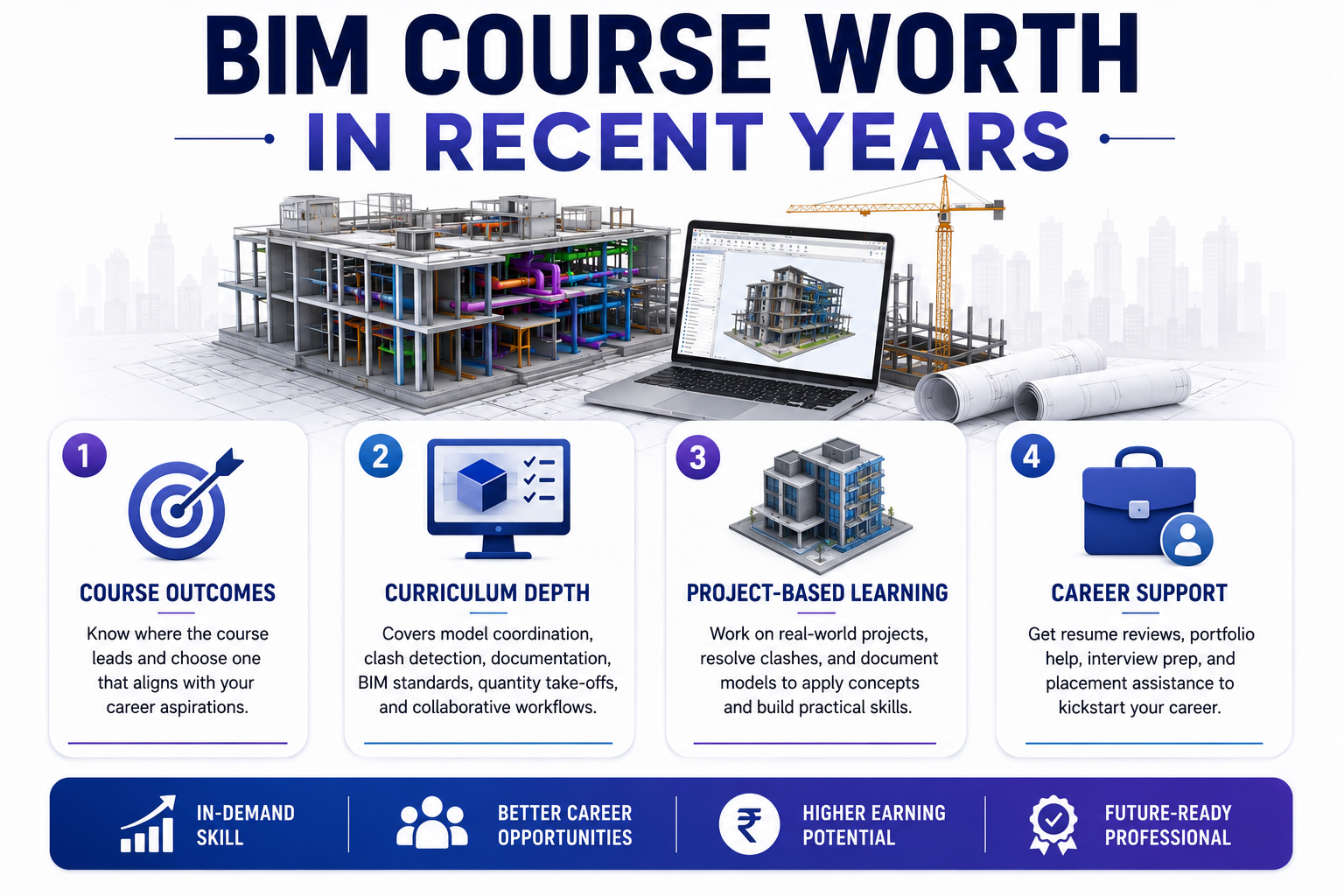
Learners need to consider multiple factors before enrolling in a BIM course. Primarily, it depends on their career goals, existing skill levels, and the kind of BIM role they want to pursue. Here are the top parameters one needs to consider:
1. Course Outcomes
Every BIM course is built differently. Some prepare learners for entry-level modelling roles, while others equip them for jobs such ad coordination or project management. Knowing where a course leads helps you choose one that aligns with your career aspirations.
2. Curriculum Depth
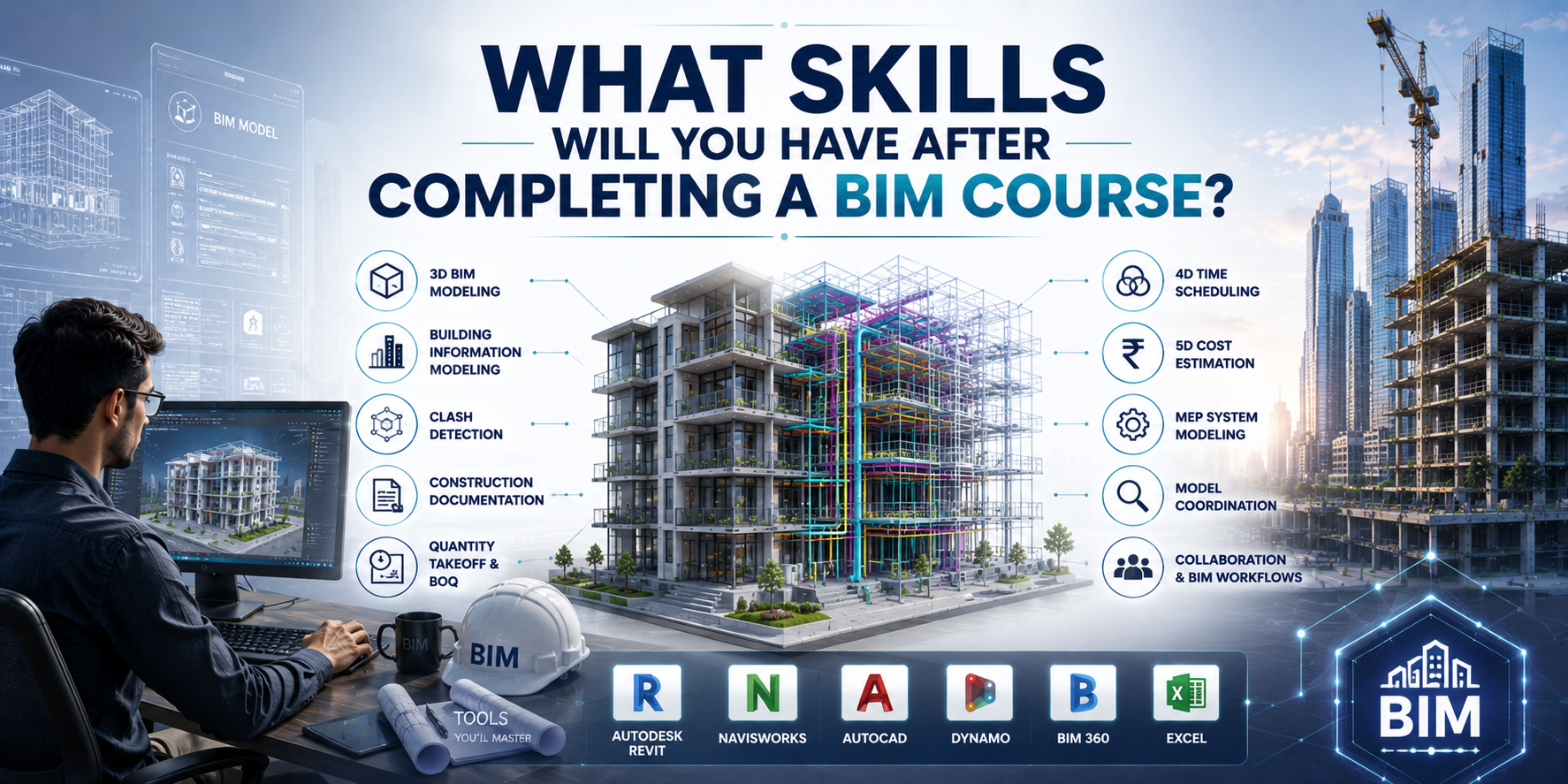
A well-rounded curriculum should introduce learners to model coordination, clash detection, documentation, BIM standards, quantity take-offs, and collaborative project workflows that are commonly followed across the AEC industry.
3. Project-Based Learning
Assignments simulate the challenges professionals encounter on live projects. Working on multidisciplinary models, resolving clashes, and documenting projects help learners to apply concepts instead of simply understanding software commands.
4. Career Support
Attaining BIM skills is only the first step for AEC folks. The next step includes resume reviews, portfolio development, interview preparation, and placement assistance to help learners present their capabilities effectively and transition into the industry with confidence.
Which BIM Courses Are Best for Architects, Civil Engineers & MEP Engineers?
Selecting the right BIM training is an introspective exercise that demands individuals to assess their learning objectives and long-term aspirations. Here’s the list of top BIM courses globally:
|
Course Name |
Duration |
Fee (INR) |
Certification |
Placement Support |
|
7 months |
2,75,000 |
Yes |
Yes |
|
|
Master Certificate in BIM by EduCADD |
160 hours |
Available on inquiry |
Yes |
Yes |
|
BIM Professional Course by Elite BIM |
7 months |
2,86,113+ |
Yes |
Yes |
|
Master's in Building Information Modeling by BIM Mantra |
4 months |
Available on inquiry |
Yes |
Yes |
|
BIM Courses by CADD International |
Available on inquiry |
Available on inquiry |
Yes |
Yes |
|
BIM Course by NICMAR Online |
8 months |
1,95,000+ |
Yes |
Yes |
|
PG Advance Certification in Architectural BIM by Protrainy |
Available on inquiry |
1,60,000 |
Yes |
Yes |
|
BIM Certificate Program by VDCI |
290 hours |
5,35,000 |
Yes |
Yes |
|
Certificate in Information Management Using BIM by RICS |
8 months |
Available on inquiry |
Yes |
No |
|
BIM Leaders Course by Pinnacle IIT |
Available on inquiry |
Available on inquiry |
Yes |
Yes |
What Skills, Tools, and Workflows Should a Good BIM Course Cover?
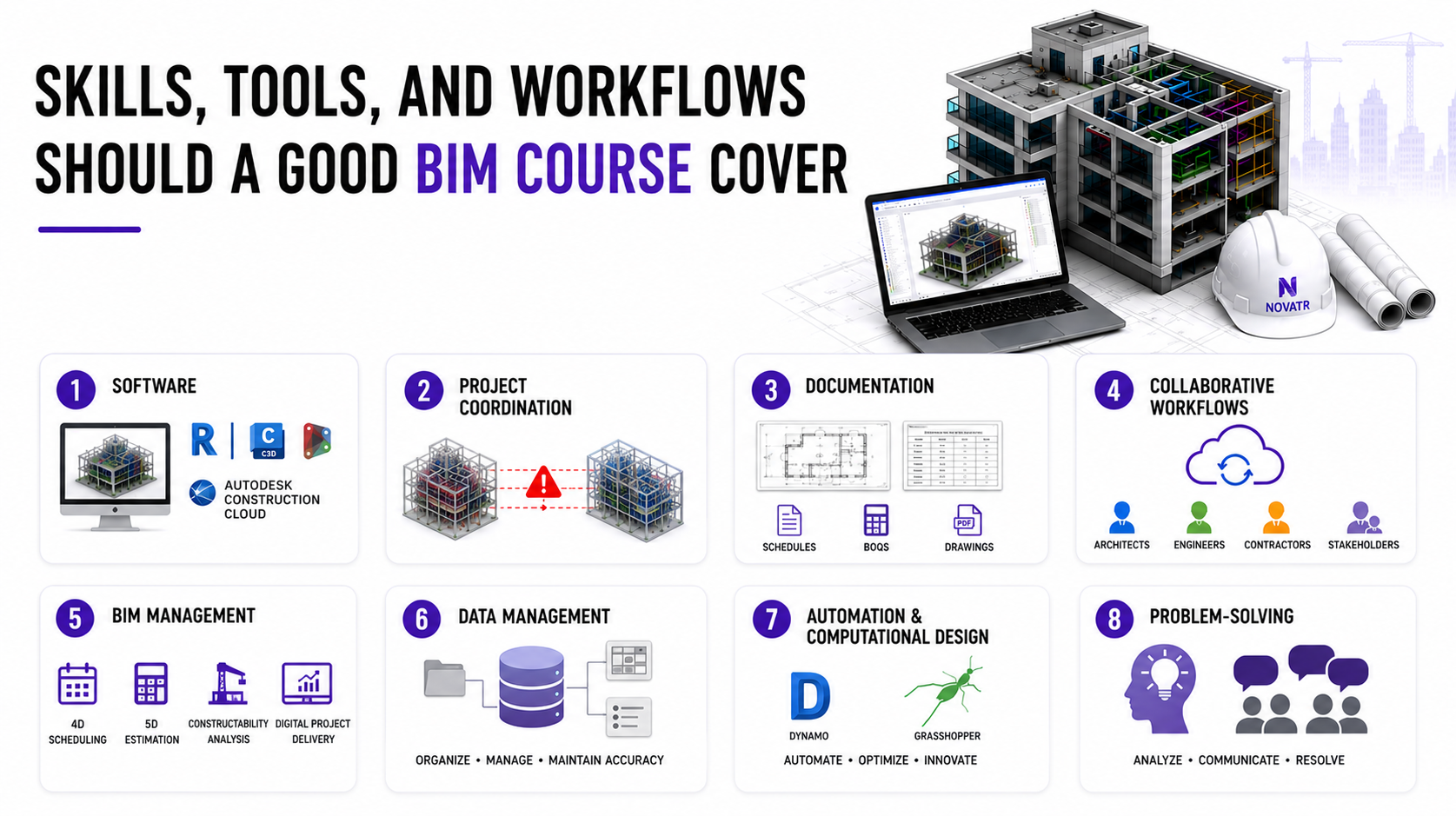
The credibility of a BIM course depends on the skills, software, and processes taught during the program. Let’s have a look at the essential ones:
1. Software
BIM professionals work across a digital ecosystem rather than a single platform. A comprehensive course should introduce learners to tools like Revit, Navisworks, Autodesk Construction Cloud, Civil 3D, Dynamo, and other software commonly used across the industry.
2. Project Coordination
Construction projects involve multiple domains working simultaneously. Learning how to coordinate federated models, identify clashes, and resolve conflicts prepares professionals to minimise errors before construction begins.
3. Documentation
BIM models enable the auto-generation of drawings, schedules, BOQs, and construction documentation that remain consistent with the model, reducing manual effort and improving project accuracy.
4. Collaborative Workflows
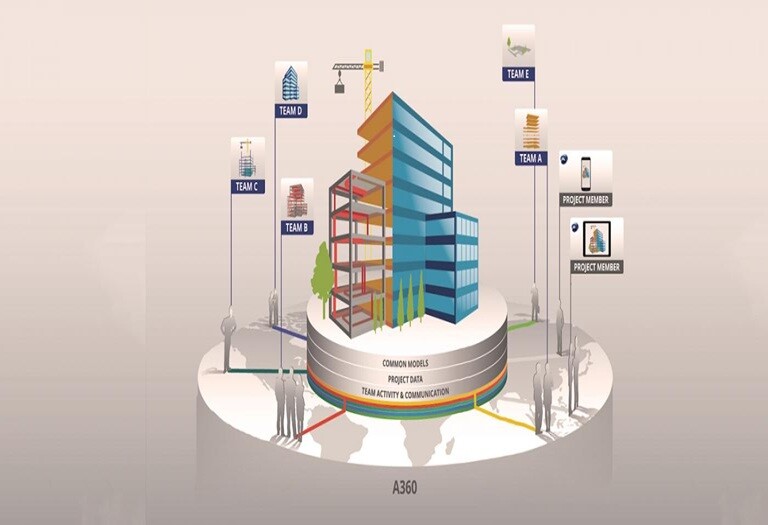
BIM processes rely on collaboration between architects, engineers, contractors, and project stakeholders. Learning concepts such as Common Data Environments (CDEs), model sharing, version control, and BIM standards help teams to work more efficiently throughout the project lifecycle.
5. BIM Management
Exposure to concepts such as 4D BIM (scheduling), 5D BIM (estimation), constructability analysis, and digital project delivery gives learners a broader understanding of how BIM supports the entire building lifecycle.
6. Data Management
BIM is more than creating 3D models. Professionals should understand how to organise project data, assign parameters, manage model information, and ensure that data remains accurate throughout the project lifecycle.
7. Automation and Computational Design
Learning visual programming tools like Dynamo or Grasshopper enables professionals to automate repetitive tasks, improve productivity, and create more intelligent design workflows.
8. Problem-Solving
BIM professionals must be able to communicate effectively with multidisciplinary teams, interpret technical information, and resolve design coordination challenges throughout the project.
How Do Real Projects and Industry Mentorship Improve BIM Learning?
For BIM professionals, an understanding of practical industry wisdom is as important as theory knowledge. Here’s why:
1. Project Experience
Working on capstone tasks helps learners understand how BIM is applied throughout the design and construction process while developing confidence in handling project deliverables.
2. Industry Standards
Every firm follows established BIM standards, naming conventions, and documentation practices to maintain consistency across projects. Discovering these standards prepares professionals to contribute effectively from the beginning of their careers.
3. Expert Mentorship
Industry mentors share practical knowledge gained from delivering real projects. Their guidance helps learners understand project expectations, improve modelling practices, and develop workflows that align with current industry requirements.
4. Constructive Feedback
Reviewing project submissions is an essential part of BIM learning. Regular feedback helps learners identify modelling errors, improve documentation quality, and refine their approach before entering the workforce.
What Should You Compare Before Choosing a BIM Course?
The right BIM couse can equip individuals with the right tools to succeed in their career path. Let’s have a look at the key considerations for choosing a BIM course:
1. Curriculum
Review the topics covered throughout the program instead of focusing only on the software taught. A comprehensive syllabus should include modelling, coordination, workflows, documentation, and project delivery concepts.
2. Learning Format
Certain individuals prefer self-paced courses, while others benefit from live cohort-based learning. Consider the teaching format, class schedules, mentor interaction, and access to recorded sessions before enrolling.
3. Faculty Expertise
Courses led by practising BIM professionals provide insights into current industry workflows and project requirements. Reviewing the mentors' professional experience can help assess the quality of instruction.
4. Career Support
Placement assistance varies significantly across BIM courses. Compare the career services offered, including portfolio development, resume building, mock interviews, internship opportunities, and hiring partnerships.
5. Student Outcomes
The success of course alumnis reflects the effectiveness of a BIM course. You can look for testimonials, placement records, learner portfolios, and career progression to understand the value the program delivers.
How Are Online BIM Courses Evolving for Working Professionals?
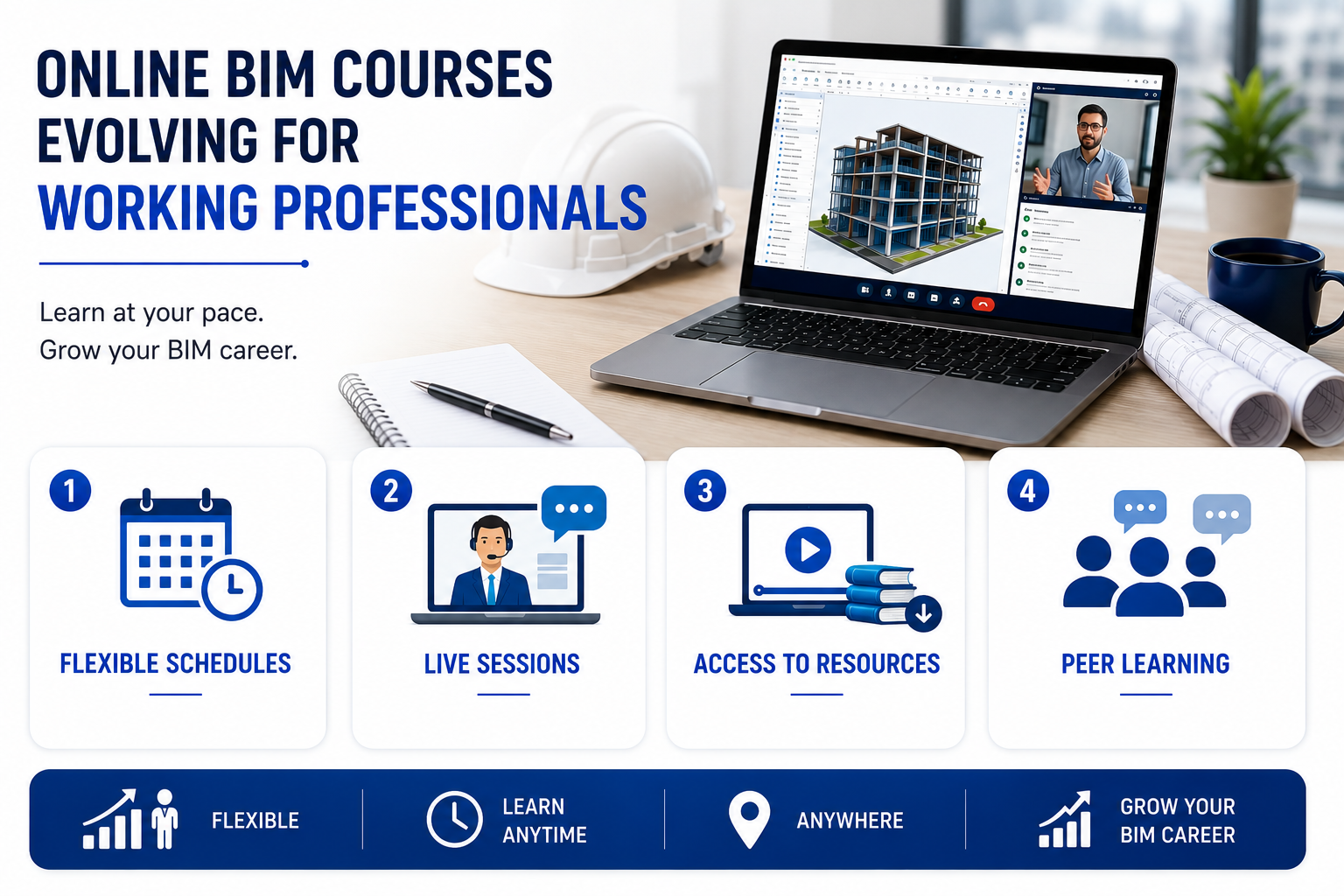
Today, there are multiple online and offline courses available for BIM enthusiasts. While offline classes allow structured classroom learning, online courses enable working professionals to learn at their own pace. Here’s how online programs are more beneficial for practicing AEC professionals:
1. Flexible Learning Schedules
Architects, engineers, and MEP technicians manage demanding project timelines. Online BIM courses offer evening or weekend classes, allowing learners to develop new skills without interrupting their work commitments.
2. Live Industry-Led Sessions
Online courses are typically not limited to recorded lectures. Live sessions conducted by industry experts enable learners to interact with mentors, ask questions, and understand how BIM is implemented on real projects.
3. Access to Learning Resources
Making a successful BIM career requires excelling in practical workflows. Therefore, recorded sessions, software demonstrations, and projects allow learners to revisit concepts, strengthen their understanding, and practise independently.
4. Peer Learning Opportunities
Cohort-based online BIM courses bring together architects, civil engineers, and construction professionals from diverse backgrounds. Learning alongside peers encourages knowledge sharing and exposes learners to different project perspectives.
What’s Included in Novatr’s BIM Professional Program?
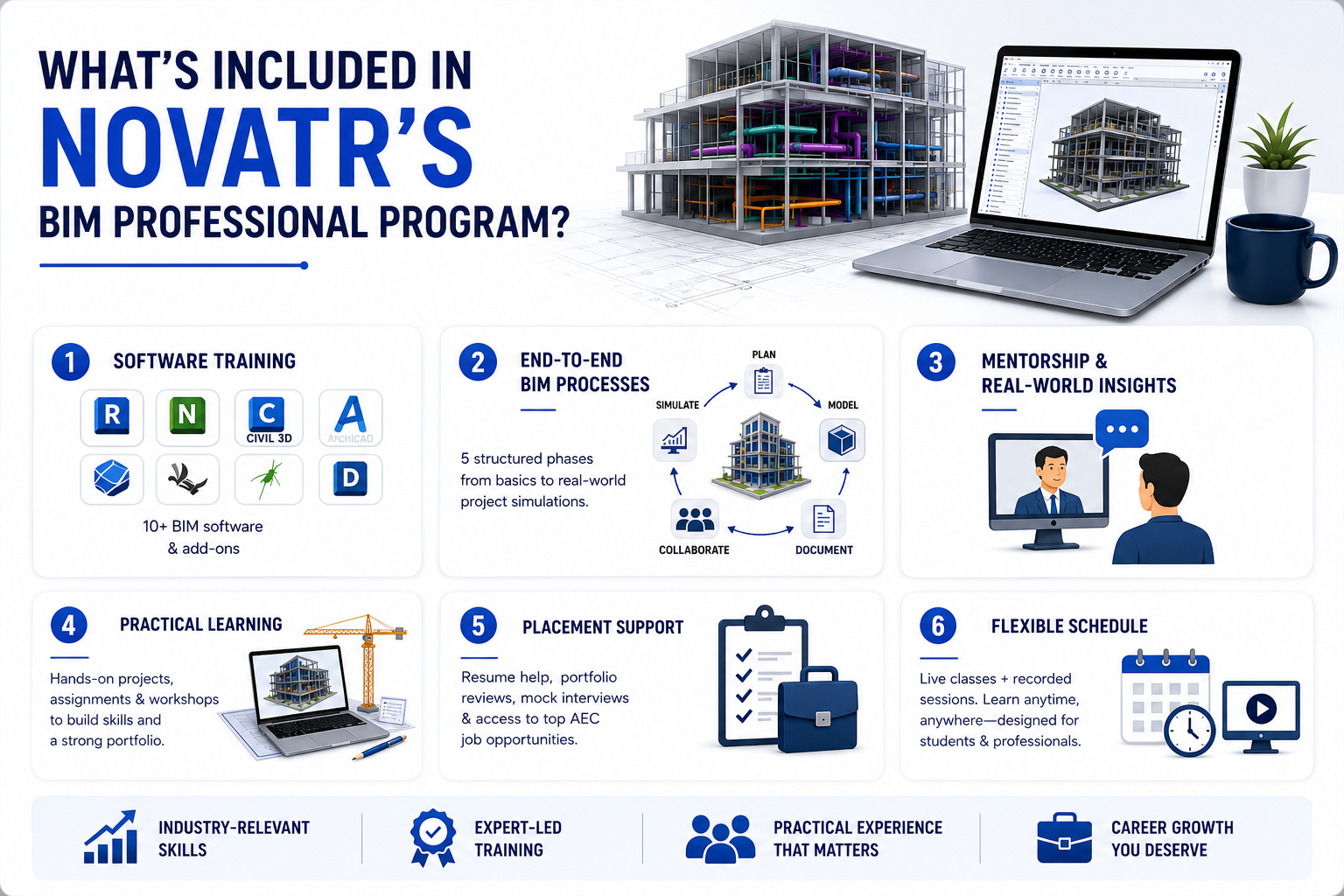
Novatr offers a holistic BIM course for architects, engineers, and MEP professionals. It enables individuals to level up their career through a comprehensive learning experience. Here’s what the course offers:
1. Software Training
The program teaches 10+ BIM software and add-ons such as Navisworks, Revit, Autodesk Construction Cloud, Archicad, Rhino, Grasshopper, OpenBuildings Designer, Civil 3D, and Dynamo.
2. End-to-End BIM Processes
The course curriculum is divided into 5 phases, with each module spanning multiple weeks. The initial phases cover the basics of BIM and its cross-disciplinary impact, alongside model creation, data-driven workflows, and documentation. The second half of the program teaches collaboration and real-world project simulations.
3. Mentorship and Real-World Insights
Learners receive guidance from BIM professionals and industry professionals who share practical insights, project workflows, and best practices. This helps bridge the gap between academic learning and real-world project execution.
4. Practical Learning
The program emphasises hands-on learning through capstone projects, assignments, and workshops that simulate real AEC workflows. This allows learners to build a strong portfolio while gaining practical experience with BIM processes.
5. Placement Support
Novatr provides career assistance through resume-building sessions, portfolio reviews, mock interviews, and access to hiring opportunities with leading AEC firms. This support helps learners confidently transition into BIM-focused roles.
6. Upskilling through a Flexible Schedule
Designed for both students and working individuals, the program offers live online classes along with recorded sessions, allowing learners to study at their own pace without disrupting their academic or professional commitments.
What Career Growth Can BIM Courses Unlock in AEC?
BIM is redefining the future of work in the AEC industry. It is enabling faster project completion, better coordination, and higher quality of work. Let’s explore how this is unlocking a new era of success in the AEC domain.
1. Access to High-Demand Roles
BIM has created new career opportunities in the architecture, engineering, construction, and facility management industries. Professionals with BIM expertise can pursue roles such as BIM Modeller, BIM Coordinator, VDC Engineer, BIM Manager, and Digital Construction Manager.
2. Higher Salary Potential
BIM professionals command higher salaries than their counterparts with only conventional CAD skills. As professionals gain experience in coordination, project management, and digital construction, their earning potential also increases.
3. Global Career Opportunities
BIM standards are widely adopted across countries such as the UAE, the UK, the US, Canada, and Australia. Professionals trained in BIM can therefore explore career opportunities in both domestic and international markets.
4. Future-Ready Skill Set
New-age technologies such as Digital Twins, automation, AI, robotics, and cloud-based collaboration are taking over the AEC trio. Learning BIM equips professionals with the foundation required to adapt to these emerging technologies and remain relevant in the evolving industry dynamic.