

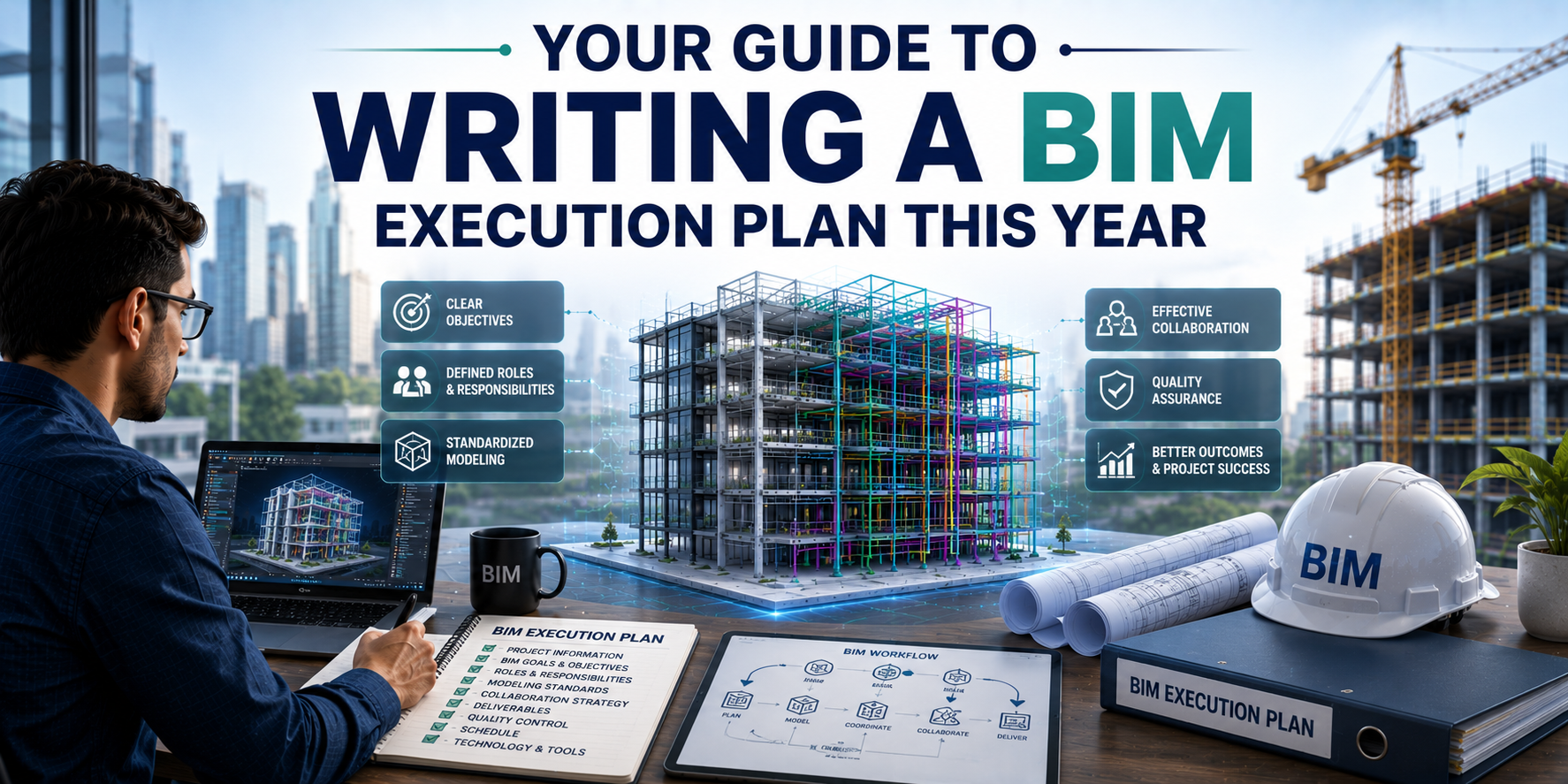

What Is a BIM Execution Plan (BEP)?
You can think of it like a guiding light that keeps every stakeholder moving in the same direction throughout a BIM project. A BIM Execution Plan is a strategic document that outlines how BIM will be implemented, managed, and delivered from the project's inception to completion.
It defines the project's BIM goals, roles and responsibilities, modelling standards, collaboration workflows, information sharing protocols, and technology requirements. By setting the right expectations at the outset, a BEP ensures that architects, engineers, contractors, consultants, and clients work with a shared understanding of the project's objectives.
Why Is a BEP Important for BIM Projects?
Every project needs a blueprint that guides architects, engineers, and contractors to implement the BIM systems. Let’s explore how this makes BEP an essential for AEC projects.
Creates a Shared Project Vision: A BEP defines common goals, expectations, and project requirements, ensuring every stakeholder works towards the same objectives.
Strengthens Team Coordination: It establishes effective communication and coordination. This enables multidisciplinary teams to collaborate and resolve issues.
Brings Consistency to Project Delivery: A BEP standardises 3D modelling practices, BIM documentation, and processes so all teams follow the same project standards.
Reduces Delays and Costly Rework: By establishing review and coordination procedures, a BEP helps identify design conflicts early, reducing revisions, delays, and project costs.
Improves Decision-Making: Well-defined actionables and BIM coordination processes give teams quick access to accurate project data for faster decisions.
Supports Predictable Project Outcomes: A BIM Execution Plan defines systems, milestones, and deliverables, helping teams deliver projects more efficiently and with greater confidence.
Important Elements in a BIM Execution Plan
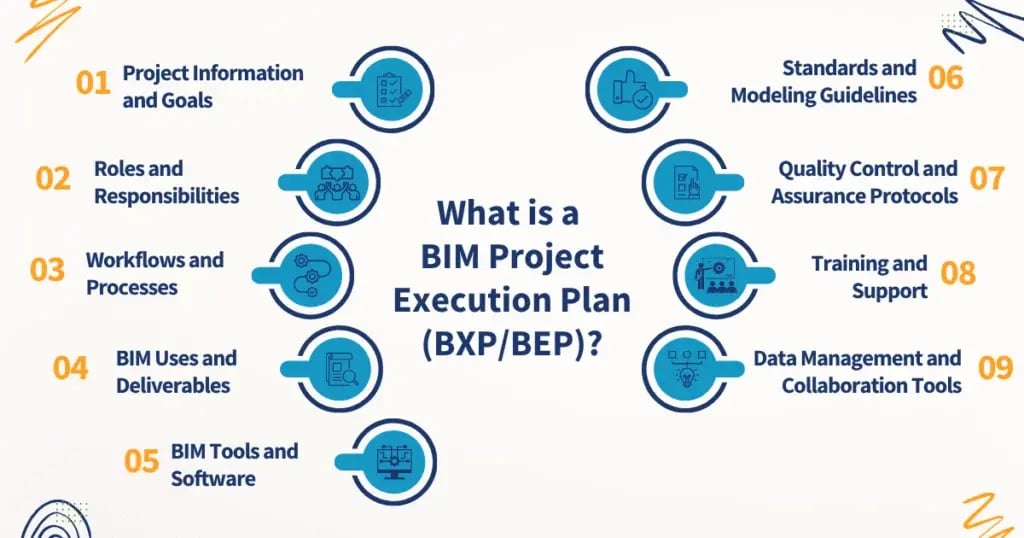
A BEP helps in construction planning and project execution to ensure the aspired quality and functionality of a structure is achieved. Here are the key components of a BIM Execution Plan:
Project Information: Include the project's name, location, stakeholders, scope, timeline, and key milestones. This establishes a common reference point for everyone involved.
BIM Goals and Objectives: Define why BIM is being used on the project, whether for design coordination, clash detection, quantity take-offs, 4D scheduling, facility management, or other applications.
Roles and Responsibilities: Specify the responsibilities of every consultant, contractor, and project stakeholder. This eliminates confusion and establishes accountability throughout the project lifecycle.
Task Information Delivery Plan (TIDP): A TIDP outlines the information and deliverables that each discipline or project team is responsible for producing, including submission timelines and required formats. It helps individual teams manage their responsibilities effectively.
Master Information Delivery Plan (MIDP): The MIDP consolidates all individual TIDPs into a single project-wide schedule. It provides a clear roadmap for when project information will be created, reviewed, approved, and shared throughout the project lifecycle.
Collaboration and Data Management: Define how teams will share, review, coordinate, and manage project information through a Common Data Environment (CDE). It enables structured BEP project coordination that allows everyone to work with accurate and up-to-date information.
Quality Control: A BIM Execution Plan sets up procedures for model reviews, clash detection, validation checks, and quality assurance. Identifying and resolving issues before construction reduces delays, rework, and project costs.
Project Deliverables: Map the BIM deliverables, submission milestones, file formats, and information exchange requirements for each project stage. This ensures everyone involved in the project receives the right information at the right time.
Working Procedures: A BEP establishes standard workflows to ensure consistency across disciplines. These typically include BIM standards, iteration protocol, file naming conventions, construction tolerance expectations, data attribute requirements, annotation standards, data transfer protocols, abbreviations, symbols, and software to be used.
How Do You Write a BEP Step by Step?
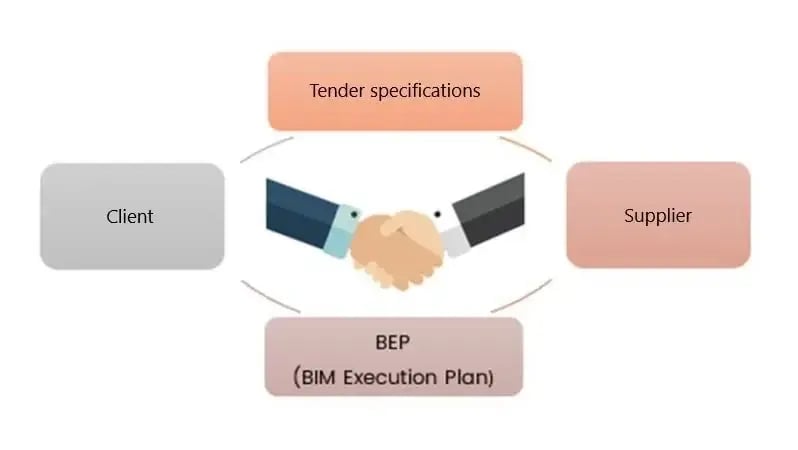
Categorically, there are two types of BEPs:
(i) Pre-contract: It is developed at the tender or bidding stage and outlines the organisation’s plan of action to use BIM.
(ii) Post-contract: The winning organisation creates an elaborate document for the execution and delivery of the plan proposed in the pre-contract stage.
In both phases, the BEP requires careful planning and attention to detail. Here’s how a BIM Execution Plan is written:
Step 01: Define the project information
Record the project scope, stakeholders, objectives, timeline, and milestones. This provides the context for all BIM-related activities throughout the project.
Step 02:Identify BIM uses and objectives
Determine how BIM will be used in the project for various processes such as designing, clash detection, making a BOQ, 4D scheduling, cost estimation, or facility management. Each BIM use should support a clearly defined project objective.
Step 03: Assign roles and responsibilities
Clearly define the responsibilities of the BIM Manager, BIM Coordinator, Model Authors, consultants, and contractors to ensure accountability and facilitate collaboration.
Step 04: Establish BIM standards
Specify the modelling standards, Level of Development (LOD), naming conventions, coordinate systems, file structures, approval workflows, and real-time collaboration procedures that every team member must follow.
Step 05: Mention the technology stack
Specify the BIM software, Common Data Environment (CDE), file formats, and interoperability standards the project team will use. Such standardisation ensures seamless collaboration and information exchange.
Step 06: Create a clash detection quality control strategy
Establish procedures for model reviews, clash detection, validation, issue tracking, and quality assurance to identify and resolve conflicts.
Step 07: State the model handover and as-built processes
Define the project's BIM deliverables, metadata, and as-built documentation. This ensures the completed model can support facility management, maintenance, and future renovations.
Step 08: Review the BEP
Gain approvals for the BEP from all stakeholders and store it in the Common Data Environment. Additionally, keep updating it in parallel with the project’s lifecycle.
How Do ISO 19650 and EIR Shape a BEP?
A BIM Execution Plan is developed around two key documents:
ISO 19650: It is the international standard for BIM information management that defines how a project’s information should be created, managed, and shared throughout the project lifecycle.
Employer's Information Requirements (EIR): Prepared by the client, an EIR outlines the BIM deliverables, project objectives, and information requirements expected from the project team.
While the ISO 19650 provides a framework, an EIR defines the client's expectations. Together, this helps teams with better BIM project management.
What Are the Best Practices to Follow for Making a BEP
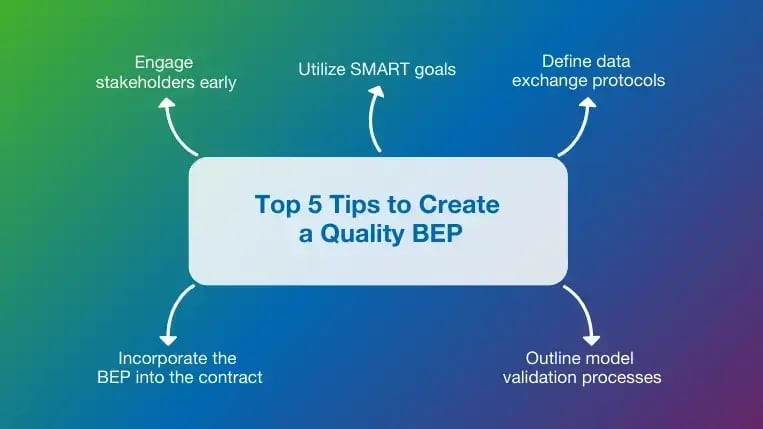
A well-developed BEP improves collaboration only when it is practical, up-to-date, and easy to follow. Here are a few best practices:
Involve the Team: Gather inputs from architects, engineers, contractors, and clients during the BEP preparation.
Keep It Simple: Use jargon-free language, tables, and diagrams to make the document easy to understand.
Follow Industry Standards: Align the BEP with ISO 19650 to enable consistent BIM planning.
Review It Regularly: Update the BIM Execution Plan as project requirements and workflows evolve.
Ensure Team Adoption: Check if everyone understands and follows the said BIM processes recommended for the project.
What Are The Challenges In A BEP Plan?
Developing a BIM Execution Plan is only the first step. Its success depends on how well it is implemented throughout the project. Some common challenges include:
-
Unclear BIM objectives
-
Inconsistent modelling standards
-
Undefined stakeholder responsibilities
-
Poor communication between project teams
-
Outdated or unmanaged BEPs
-
Limited awareness of BIM methodologies
Future Trends in BIM Execution Plans
As digital construction evolves, BIM Execution Plans are expected to become more intelligent and connected. The key trends include:
-
AI-powered project insights and risk prediction
-
Digital Twin integration
-
Smarter cloud-based collaboration
-
Greater alignment with global BIM standards
-
Stronger focus on sustainability and lifecycle management
How Can You Learn to Create BIM Execution Plans?
Developing a BIM Execution Plan requires both theoretical knowledge and practical exposure. Here are some of the best ways to learn:
Pursue Academic Courses: Enrol in BIM certification programs offered by universities, training institutes, or AEC academies.
Watch YouTube Tutorials: Follow experienced BIM professionals and industry channels to understand BEPs through practical demonstrations.
Take Online Courses: Learn through structured courses on platforms like LinkedIn Learning, Coursera, Udemy, or Novatr.
Read Industry Blogs and Guides: Explore resources from Autodesk and BIM consulting firms to stay updated on best practices.
.png)