---
title: SCIA Engineer Vs Autodesk Robot Structural Analaysis. What Structural Engineers Should Know?
description: Compare SCIA Engineer and Autodesk Robot Structural Analysis to understand features, workflows, and which tool suits modern structural engineering needs.
image: https://blog.novatr.com/hubfs/SCIA%20Engineer%20and%20Robot%20structural%20analysis%20comparison.png
---
[Blogs](https://www.novatr.com/learning-hub)
- [Architecture & Construction](https://www.novatr.com/learning-hub?category=Architecture+%26+Construction)
- [BIM](https://www.novatr.com/learning-hub?category=BIM)
- [Computational Design](https://www.novatr.com/learning-hub?category=Computational+Design)
- [Company News](https://www.novatr.com/learning-hub?category=Company+News)
- [Expert Talks](https://www.novatr.com/learning-hub?category=Expert+Talks)
Explore Courses
[Just Launched  BIM Professional Program v.2026 Take your career to the next level by mastering the real-world application of BIM. Know More](https://www.novatr.com/courses/bim-professional-program)
[ Master Computational Design Course Break into an advanced career by learning to apply the power of computation to the art of design. Know More](https://www.novatr.com/courses/computational-design)
[Blogs](https://www.novatr.com/learning-hub)
Explore Blogs
- [Architecture & Construction](https://www.novatr.com/learning-hub?category=Architecture+%26+Construction)
- [BIM](https://www.novatr.com/learning-hub?category=BIM)
- [Computational Design](https://www.novatr.com/learning-hub?category=Computational+Design)
- [Company News](https://www.novatr.com/learning-hub?category=Company+News)
- [Expert Talks](https://www.novatr.com/learning-hub?category=Expert+Talks)
Courses
- [BIM Professional Program v.2026](https://www.novatr.com/courses/bim-professional-program)
- [Master Computational Design](https://www.novatr.com/courses/computational-design)
- [CIVIL/](https://www.novatr.com/learning-hub?category=BIM)
Featured Article
# SCIA Engineer Vs Autodesk Robot Structural Analaysis. What Structural Engineers Should Know?

Deependra Dobriyal
February 20, 2026
8 min read
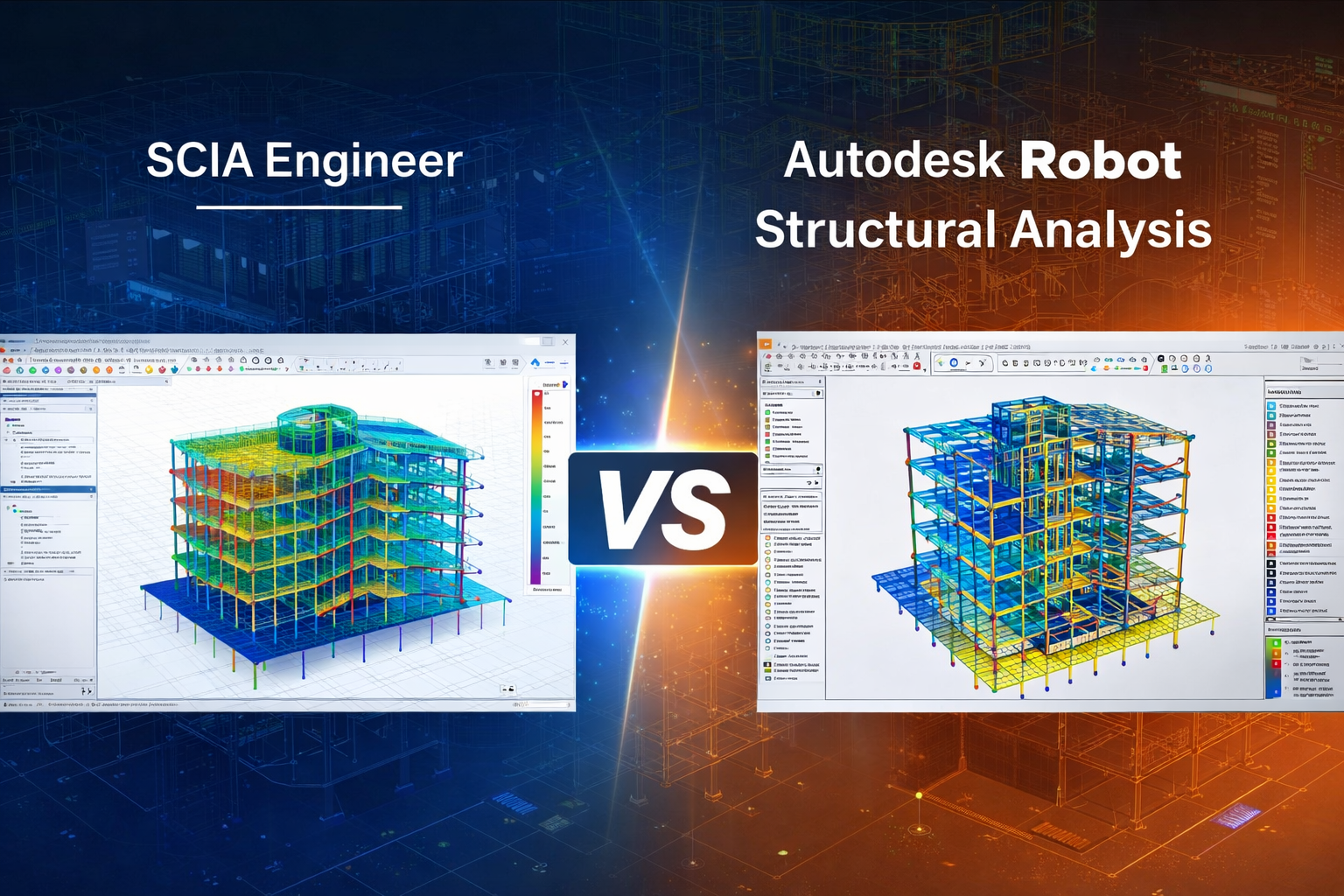

**SCIA Engineer vs Autodesk Robot Structural Analysis** is a common comparison for engineers selecting tools for accurate modeling, code-based verification, and BIM-driven workflows. Both platforms support complex calculations and integrated documentation, but they differ in usability, analysis depth, and project application.
According to the [U.S. General Services Administration](https://fedtechmagazine.com/article/2020/06/what-building-information-modeling-technology-government-perfcon), federal design programs increasingly require BIM-enabled coordination to improve project delivery and lifecycle performance.
This shift means engineers must rely on advanced **BIM structural analysis tools** that connect modeling, analysis, and documentation within a single environment. Choosing the right platform affects efficiency, collaboration, and long-term project outcomes.
Unlock High-Paying Careers With BIM
Master BIM workflows, software and skills on real projects.
Apply Now
\*Limited seats available
## **What is SCIA Engineer?**
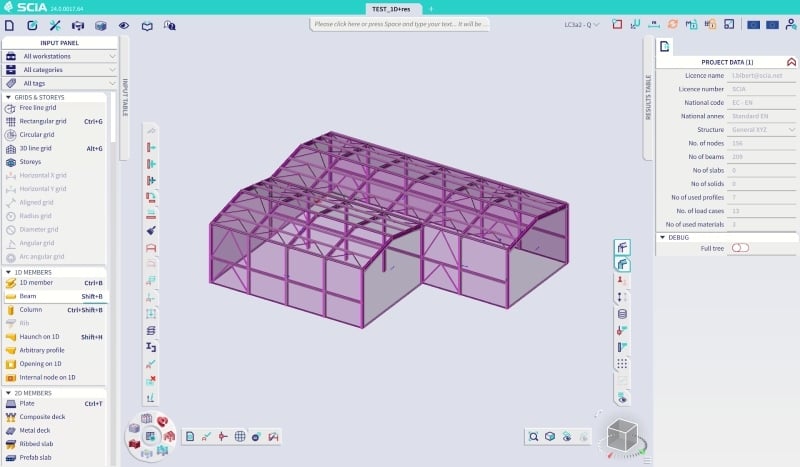
**What is SCIA Engineer?** It is a structural analysis and design platform developed for detailed modeling, advanced finite element analysis, and code-based verification across international standards. It is widely used for complex infrastructure, industrial structures, and non-standard geometries that require flexible analytical control.
**SCIA structural analysis** focuses on transparency in calculations. Engineers can review assumptions, modify load cases, and validate results through clear analytical workflows. This makes it suitable for projects where traceability and compliance documentation are essential.
As one of the leading [**3d structural analysis and design software**](https://www.novatr.com/blog/structural-analysis-and-design-softwares) solutions, SCIA Engineer allows users to model irregular structures, staged construction behavior, and advanced material interactions without oversimplifying the system.
### Key capabilities include:
- Open modeling environment supporting unconventional geometries
- Advanced FEM analysis for detailed load-path evaluation
- Strong interoperability with BIM platforms
- Customizable design checks aligned with global standards
In daily practice, this environment allows engineers to simulate real-world behavior before construction begins. For example, teams can study how load redistribution occurs during phased erection or how a structure responds to changing stiffness conditions. This predictive capability reduces uncertainty and allows design teams to validate decisions earlier.
Because of these features, it is often selected as **structural software for building analysis and design** where engineering judgment must remain visible rather than automated.
SCIA Engineer fits naturally into workflows that prioritize analytical depth over automation.
## **What is Autodesk Robot Structural Analysis?**
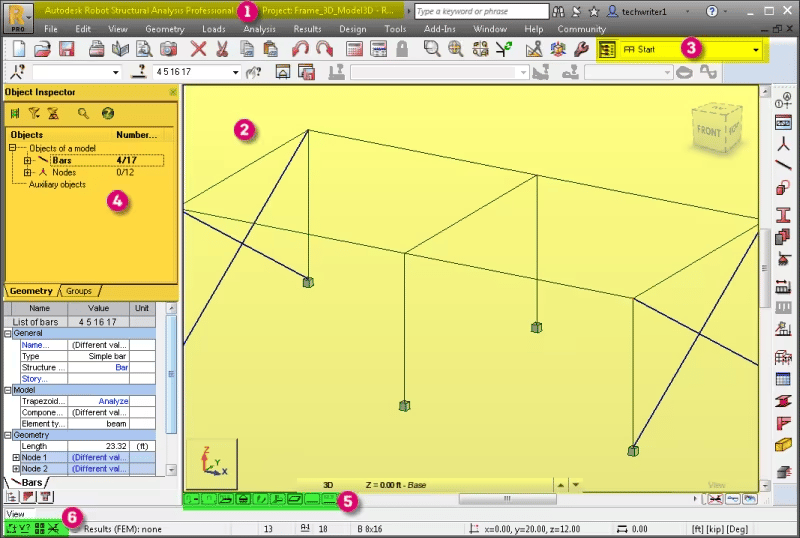
**What is Autodesk Robot Structural Analysis?** It is Autodesk’s analysis platform designed to integrate closely with [Revit](https://www.novatr.com/blog/detailed-revit-guide) and other Autodesk tools, enabling engineers to analyze structural behavior directly within a BIM-centered process.
Robot emphasizes integration. Engineers working within a **Structural engineering BIM workflow** can transfer models between design and analysis environments with minimal rework. This reduces duplication and helps maintain coordination across disciplines.
Unlike SCIA’s open analytical style, Robot focuses on structured automation. It is often considered among the [best structural analysis and design software](https://www.novatr.com/blog/structural-analysis-and-design-softwares) options for teams already embedded in Autodesk ecosystems.
Its functionality includes:
- Direct integration with Revit for model synchronization
- Automated load generation and code checks
- Parametric updates aligned with BIM revisions
- Streamlined workflows for building-scale projects
This approach enables design teams to quickly test structural feasibility while [architectural models](https://www.novatr.com/blog/3d-architectural-modelling) are still evolving. Engineers can run analyses during coordination cycles, ensuring that structural intent remains aligned with design changes without restarting the analytical process.
Robot Structural Analysis is widely adopted where project speed, interoperability, and centralized modeling are priorities. It helps reduce friction between disciplines and supports consistent data exchange from concept design through documentation.
It is particularly effective for standard building typologies where rapid coordination matters more than highly customized analysis.
## **How Structural Engineers Use Each Tool?**
[Structural engineers](https://www.novatr.com/blog/bim-for-structural-engineers) rely on both platforms in different ways depending on project complexity, collaboration requirements, and the desired level of analytical control. Understanding how each tool is applied in practice clarifies its strengths beyond feature lists.
The following comparison explains how engineers typically use each solution in real-world workflows.
### **1. SCIA Engineer**
SCIA Engineer is commonly used for technically demanding structures that require deeper modeling flexibility and validation.
Engineers typically use SCIA for:
- Designing bridges, towers, and industrial systems with non-linear behavior
- Performing advanced load analysis with detailed verification
- Running scenario-based simulations to test structural performance
- Producing transparent calculation reports required for approvals
Because **SCIA structural analysis** allows engineers to control assumptions directly, it is favored in projects where analytical clarity must be demonstrated to regulatory authorities.
It also supports investigative workflows. Engineers can refine models repeatedly, exploring alternatives and understanding how small design changes influence global behavior. This level of insight is especially valuable in retrofit, adaptive reuse, and high-load environments.
### **2. Autodesk Robot Structural Analysis**
Autodesk Robot Structural Analysis is applied where BIM coordination drives project delivery and where integration reduces modeling redundancy.
Engineers often rely on Robot for:
- Rapid analysis of buildings modeled in Revit
- Coordinating design revisions across multidisciplinary teams
- Automating repetitive calculations during iterative design stages
- Maintaining alignment between documentation and analytical models
This makes Robot an efficient choice within **BIM structural analysis tools** ecosystems that prioritize collaboration across architects, engineers, and contractors.
Its structured environment supports consistency, ensuring that analytical updates reflect the latest design information without manual reconstruction. Both tools address structural challenges differently, which is why selecting between them depends more on workflow needs than raw capability.
## **Key Differences: SCIA Engineer Vs Autodesk Robot Structural Analysis**
| **Feature** | **SCIA Engineer** | **Autodesk Robot Structural Analysis** |
| --- | --- | --- |
| Workflow Style | Analysis-driven | BIM-integrated |
| Modeling Flexibility | Highly customizable | Structured and automated |
| Best Use Case | Complex infrastructure | Building-focused projects |
| Transparency of Calculations | Very high | Moderate with automation |
| Integration | Open BIM connections | Strong Autodesk ecosystem |
| Learning Curve | Steeper but flexible | Easier for Revit users |
| Collaboration Focus | Engineering validation | Design coordination |
| Ideal Role in **Structural Engineering BIM workflow** | Specialized analysis layer | Integrated BIM analysis |
These differences demonstrate how each platform aligns with a different stage of modern project delivery.
## **SCIA Engineer Vs Autodesk Robot Structural Analysis: Which is Best for Structural Engineers?**
Choosing between **SCIA Engineer vs Autodesk Robot Structural Analysis** depends on how an engineering team balances analytical depth with workflow integration.
SCIA Engineer is often preferred when:
- Projects involve unconventional geometry or advanced simulation
- Engineers require full visibility into calculations
- Independent verification is critical for approvals
- Structures extend beyond standard building typologies
Autodesk Robot Structural Analysis is often selected when:
- Teams already work inside Autodesk environments
- BIM coordination drives project execution
- Repetitive building analysis must be completed efficiently
- Collaboration across disciplines is continuous
From a wider perspective, both solutions rank among the **best structural analysis and design software** platforms available today because they address different engineering priorities rather than competing directly.
Organizations frequently align software selection with project scale, regulatory requirements, and team structure rather than adopting a single universal solution.
Master BIM and Get Hired Faster
Join a community of 8500+ Architects and Engineers.
Explore Now
\*Limited seats available
## **Conclusion**
The comparison of **SCIA Engineer vs Autodesk Robot Structural Analysis** reflects a larger shift in engineering practice toward connected, data-driven workflows.
SCIA Engineer provides analytical freedom, making it suitable for engineers who must interrogate structural behavior in depth. Autodesk Robot Structural Analysis delivers strong integration, enabling faster coordination within BIM-led environments.
Understanding these differences allows structural professionals to adopt tools that enhance accuracy, streamline collaboration, and support resilient design outcomes.
For engineers looking to strengthen these capabilities, structured learning can help bridge the gap between theory and applied digital workflows. The [BIM professional Course for Civil Engineers](https://www.novatr.com/us/courses/bim-for-civil-engineers) offered by [Novatr](https://www.novatr.com/us) focuses on exposure to industry-relevant tools, BIM-integrated processes, and analytical methods aligned with modern structural practice. The course is designed to help learners build confidence in using contemporary design and analysis environments within real project environments.
Visit our [resource page](https://www.novatr.com/learning-hub) to explore detailed learning pathways and receive expert guidance on advancing your career.
Was this content helpful to you
Like Yes
Dislike No

TABLE OF CONTENTS
BIM Is The New Standard. Are You Certified?
Get Certified in BIM
SHARE ON YOUR SOCIALS
Link Copied Successfully
Related articles
[ CIVIL 10 Leading Structural Engineering Firms in Atlanta Geogia 12 June 2025 11 min read](https://blog.novatr.com/blog/10-leading-structural-engineering-firms-in-atlanta-geogia) [ CIVIL Top 10 Structural Engineering Firms in Seattle (To Work For) 10 June 2025 15 min read](https://blog.novatr.com/blog/top-10-structural-engineering-firms-in-seattle-to-work-for) [ CIVIL Essential Tips To Make An Stunning Structural Engineer Resume 25 September 2025 4 min read](https://blog.novatr.com/blog/essential-tips-to-make-an-stunning-structural-engineer-resume) [ CIVIL 10 Best Structural Engineering Firms in Indianapolis, Indiana 11 June 2025 10 min read](https://blog.novatr.com/blog/10-best-structural-engineering-firms-in-indianapolis-indiana)
Download Syllabus
## BIM Professional Program
Next Cohort
June 2026
Program Duration
7 Months
Premium Program benefits
8 Credentials from Autodesk, NSDC, Novatr
1 program. 10 career paths. Infinite Growth.
40+ ISO 19650 & RIBA real-world projects to practice
1-on-1 guidance. Access 400+ industry experts.
Access the biggest AEC-Tech community on the planet. 8500+ and counting
Curated for you by 100+ global BIM leaders.
Lifelong access to course content
Enter your details to download the program syllabus.
##### BIM Professional Program
June 2026, 7 Months
Your Name Invalid name.
Phone Number Enter a valid phone number
Email Please enter a valid email address.
Select years of experience\* Currently studying 0-1 years 1-2 years 2-4 years 4-8 years 8-10 years 10-12 years 12+ years Invalid selection.
Specialisation Select your background\* Architecture Civil Engineering Mechanical Engineering Electrical Engineering Invalid selection.
Are you professionally trained in interior design?
Yes
No
I agree to the [Terms of Use](https://www.novatr.com/terms-and-conditions) and [Privacy Policy](https://www.novatr.com/privacy-policy), and consent to be contacted by Email, Call, WhatsApp, or SMS.
Submit
Ready to skyrocket your career?
Begin your next chapter in AEC
with Novatr!
We are here to help you take the industry by storm with advanced, tech-first skills.
[Explore Courses](https://www.novatr.com/#courses)
Join our newsletter
Submit
Thank you for signing up.
We’ll send you a nice letter once per week. No spam.

Dare to Disrupt.
Join thousands of people who organise
work and life with Novatr.
Company
- [About Us](https://www.novatr.com/about)
- [BIM Professional Program v.2026](https://www.novatr.com/courses/bim-professional-program)
- [Masters Computational Design](https://www.novatr.com/courses/computational-design)
- [Become a Mentor](https://www.novatr.com/apply-as-mentor)
- [Hiring from Us](https://www.novatr.com/hire-from-us)
- [Careers at Novatr](https://www.novatr.com/career)
Resources
- [Blog](https://www.novatr.com/learning-hub)
- [Media Room](https://www.novatr.com/media-room-home-page)
- [Career Builder](https://www.novatr.com/career-navigator)
- [Events & Webinars](https://www.novatr.com/webinars)
- [FAQs & Support Center](https://www.novatr.com/contact-us)
- [Contact Us](https://www.novatr.com/contact-us)
- [Privacy Policy](https://www.novatr.com/privacy-policy)
- [Terms of Use](https://www.novatr.com/terms-and-conditions)
©2023 Oneistox Network Pvt. Ltd.
All Rights Reserved
```json
{
"@context" : "https://schema.org",
"@type" : "BlogPosting",
"author" : {
"@type" : "Person",
"name" : "Deependra Dobriyal",
"url" : "https://blog.novatr.com/blog/author/deependra-dobriyal"
},
"dateModified" : "2026-02-20T12:03:14.251Z",
"datePublished" : "2026-02-20T12:01:32.000Z",
"headline" : "SCIA Engineer Vs Autodesk Robot Structural Analaysis. What Structural Engineers Should Know?",
"image" : [ "https://blog.novatr.com/hubfs/SCIA%20Engineer%20and%20Robot%20structural%20analysis%20comparison.png" ],
"mainEntityOfPage" : {
"@id" : "https://blog.novatr.com/blog/scia-engineer-vs-autodesk-robot-structural-analaysis.-what-structural-engineers-should-know",
"@type" : "WebPage"
},
"publisher" : {
"@type" : "Organization",
"logo" : {
"@type" : "ImageObject",
"url" : "https://blog.novatr.com/hubfs/Novatr%20Prev%20OX-2.svg"
}
}
}
```