

 Thanks for connecting!


Saumya Verma
12 min read
July 17, 2023



Table of Contents

Building Information Modeling (BIM) has become important for modern structural engineering as projects demand higher accuracy, stronger coordination, and data-driven decision-making. Traditional structural workflows relied heavily on isolated calculations and 2D drawings, which often led to coordination gaps and late-stage revisions. BIM replaces these fragmented methods with intelligent models that integrate design, analysis, quantities, and lifecycle data.
For structural engineers, BIM adoption directly influences design quality, project efficiency, sustainability outcomes, and long-term career growth. Firms increasingly expect engineers to work within shared digital environments rather than standalone tools.
This guide explains how BIM technology benefits structural engineers by improving design accuracy, coordination, analysis, cost estimation, sustainability, and lifecycle management of structural projects.
Who is a structural engineer ?
While an architect is concerned about the design of the built form, a structural engineer is more concerned about its strength and stability. Structural engineers analyse, design, plan, and research structural components and structural systems to ensure the safety of the building’s users. Let us look at the roles and responsibilities of a structural engineer to better understand their deliverables:
- Calculating the load and stress that a building can withstand
- Using computer-aided software to calculate a building's reaction to weather
- Obtaining the regulatory permits for the construction of a building
- Preparing cost estimates of structures and selecting materials for a building
- Supervising building construction and advising project managers
- Collaborating with other professionals like architects, engineers, and builders to deliver a project
- Managing projects and administering contracts
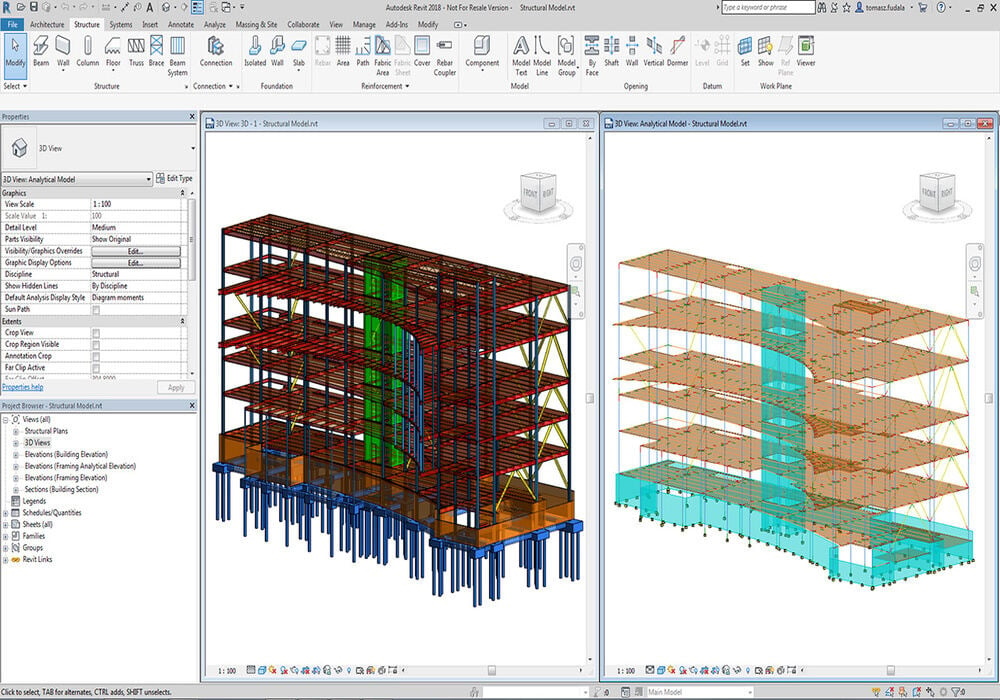
Applications of BIM in Structural Engineering
Building Information Modeling (BIM) is an intelligent, 3D model-based process that helps structural professionals design, detail, document, and fabricate structural systems. Let us look at the various applications that result in the benefits of BIM for structural engineers.
1. Real-time Coordination in BIM structural engineering
Any large-scale architectural project includes the involvement of various stakeholders. This makes coordination between these stakeholders necessary - and the collaborative nature of BIM not only allows the project team to coordinate better but also allows better design decisions to be locked in using the data-driven business model. Revit and Navisworks are important and the best BIM softwares for structural engineers that can be used for this purpose.
2. Visualisation in BIM structural engineering
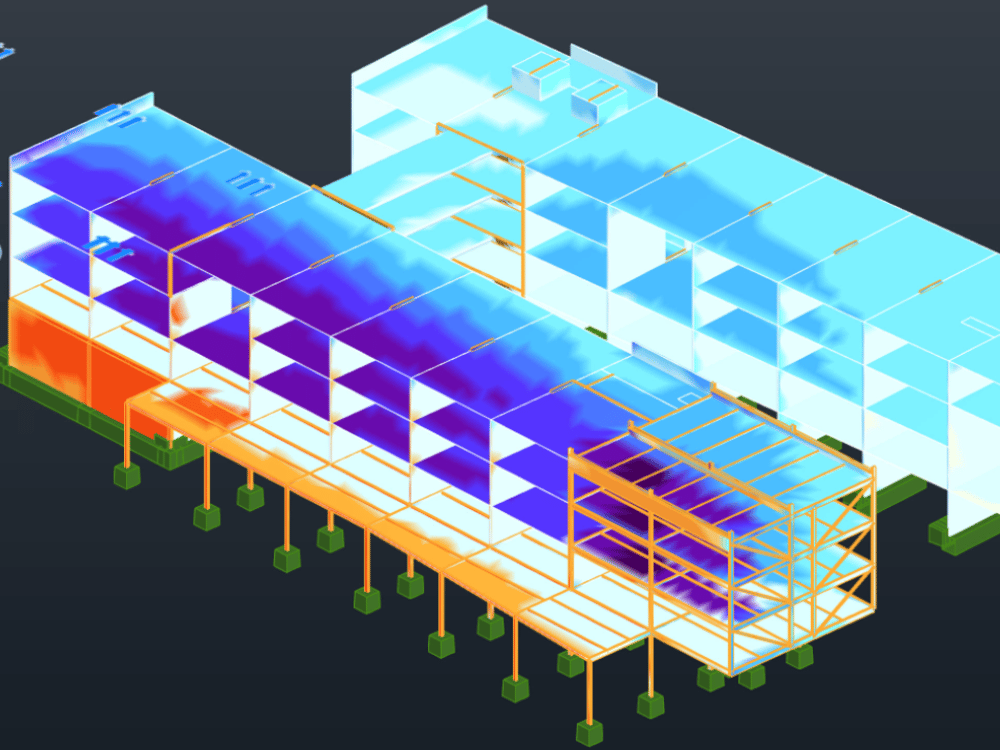
Another benefit of BIM for structural engineers is to visualise elements in 3D. This provides them with good project insight, enhances understanding between stakeholders, and facilitates solving problems. These 3D models can also be analysed for stress, strain, and deflection. This analysis helps engineers identify potential issues early in the design process, reducing the risk of costly mistakes and delays during construction.
3.Energy-efficiency and sustainability in BIM structural engineering
BIM can also be used for energy simulation. These include daylight analysis and thermal performance analysis. By analysing the behaviour of building structures under different environmental conditions, engineers can identify opportunities to reduce energy consumption and carbon emissions. For example, best BIM softwares for structural engineers can be used to analyse the impact of daylighting on building energy consumption and optimise the placement of windows and skylights for maximum energy efficiency.
Also Read: Exploring the Most Innovative BIM Projects in Europe }
4. Structural Analysis in BIM structural engineering
%20Modelling%20for%20Smoke%20Extraction%20London%20%E2%80%93%20Firenze.jpg?width=1000&height=509&name=Computational%20Fluid%20Dynamics%20(CFD)%20Modelling%20for%20Smoke%20Extraction%20London%20%E2%80%93%20Firenze.jpg)
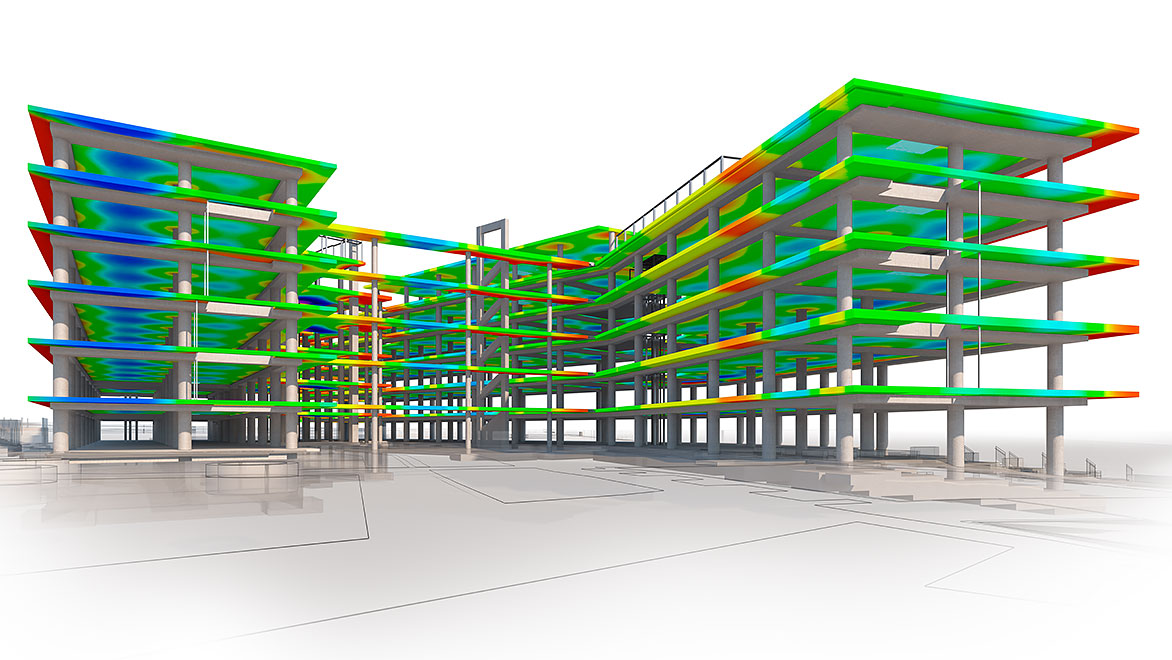
BIM software can be used for structural analysis, including finite element analysis (FEA) and computational fluid dynamics (CFD). These simulations can help engineers test the structural integrity of a building and identify potential issues before construction begins.
Interested in the intersection between BIM and computational design? Check out: What's New in Architecture - Automation, Coding, and BIM!
5. Cost Estimation in BIM structural engineering
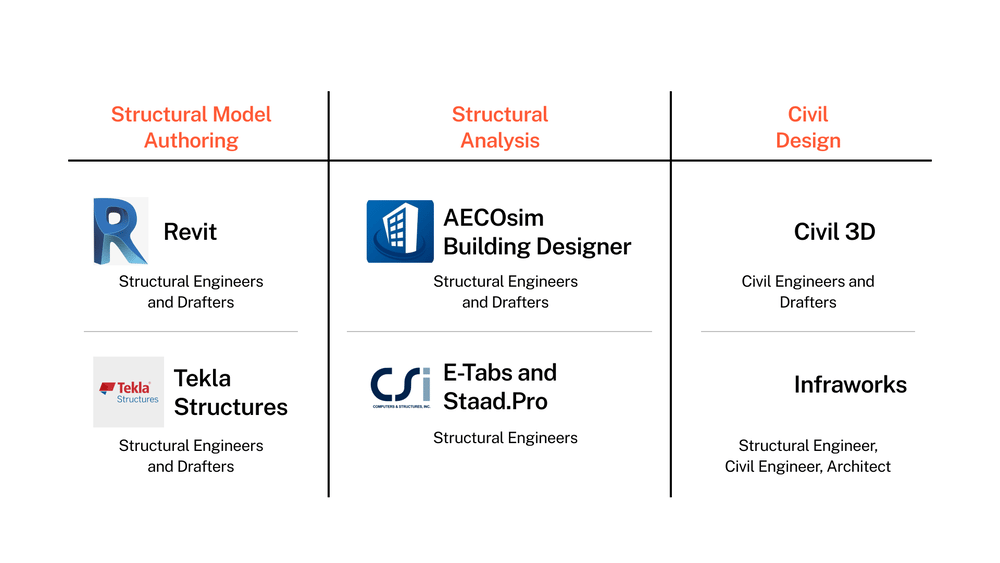
Best BIM softwares for structural engineers can be used for cost estimation, including material quantities and labour costs. This can help engineers identify potential cost savings and optimise the building design for cost-effectiveness.

Popular and Best BIM software used by structural engineers
BIM software brings various functional values. From advanced functions to software built for specific industries and companies, BIM helps in improving communication, reducing overruns and preventing delays. Here’s a list of some of the best BIM software for structural engineers.
1. Revit
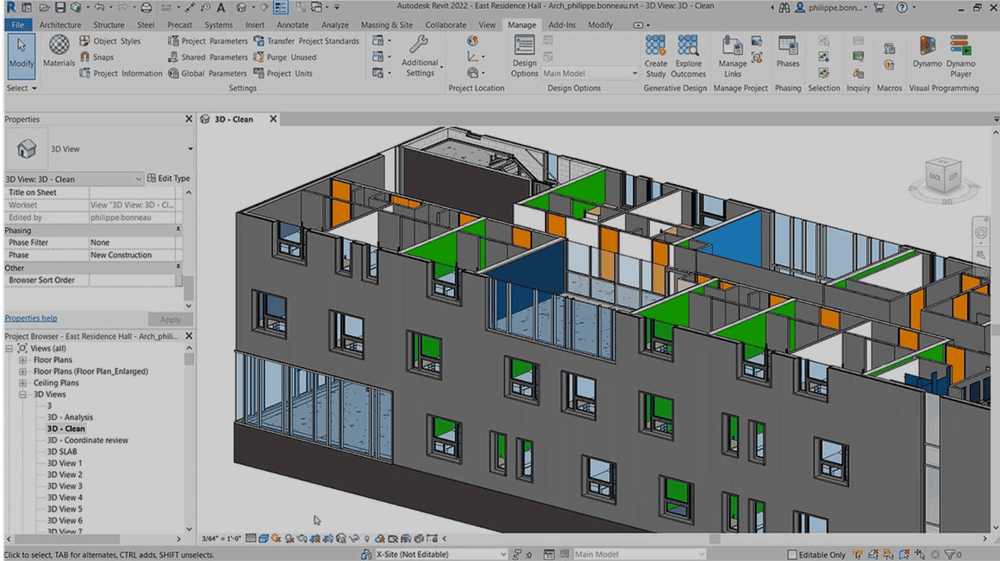
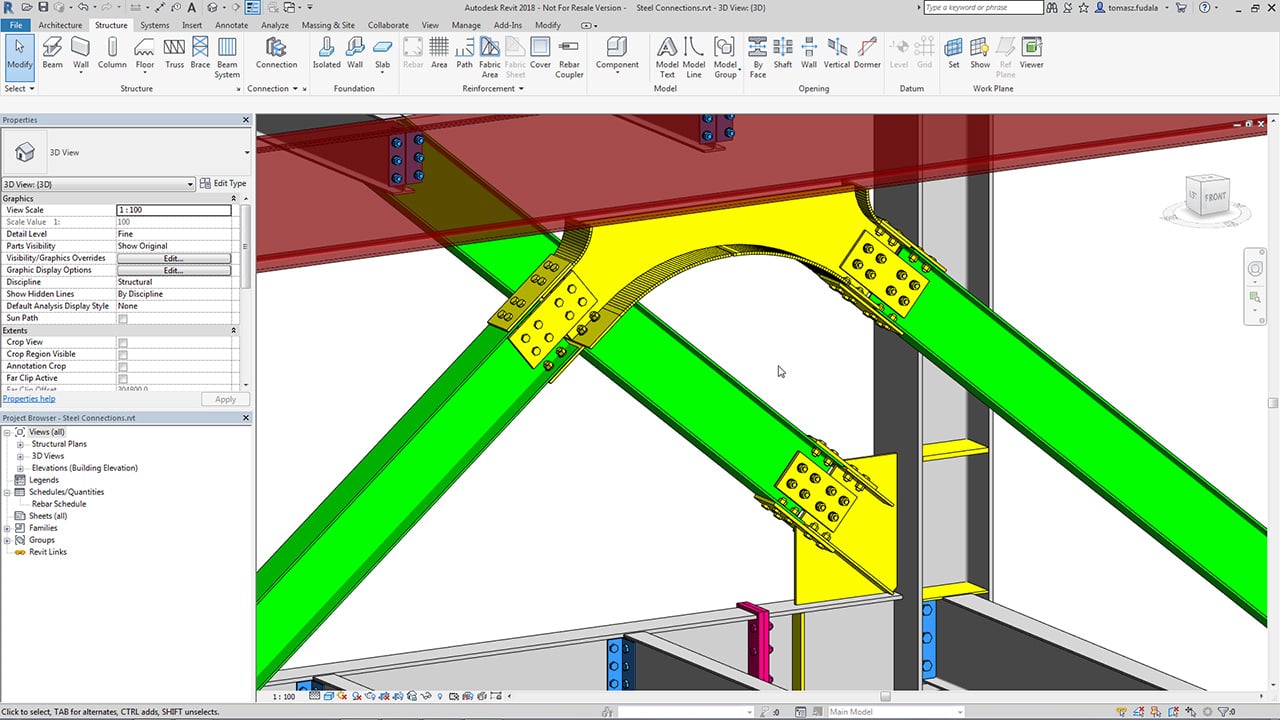
Revit is a powerful, Best BIM Software for structural engineers developed by Autodesk, designed to aid architects, engineers, and construction professionals in the design and construction of buildings and infrastructure projects. It enables users to create detailed 3D models of building structures and systems, which can be analysed for performance, energy efficiency, and constructability.
2. Robot Structural Analysis Professional
Robot Structural Analysis Professional is structural load analysis software developed by Autodesk. The software verifies code compliance and uses BIM-integrated workflows to exchange data with Revit. It can help structural engineers create more resilient, constructible designs that are accurate, coordinated, and connected to BIM. The software features BIM-integrated workflows, wind load simulation, and extensive analysis capabilities, to name a few. These further form the benefits of BIM for structural engineers.
3. Advance Steel
Advance Steel software is a 3D software for steel model design and fabrication. It aims to drive collaboration between engineers and detailers, improve coordination, clarify design intent, and reduce rework. With Advance Steel, structural engineers can achieve a seamless design and detailing workflow for projects in BIM, move quickly from design to fabrication, and streamline steel fabrication and installation.
4. ETABS
ETABS is used for the analysis, design, and modelling of building structures. It can analyse the behaviour of structures under various load conditions, such as seismic, wind, and gravity loads. It offers a range of tools for designing various building systems, including concrete, steel, and composite structures.
What are the benefits of BIM for structural engineers?
Building Information Modeling (BIM) has modernised and brought technology to the forefront of the profession of structural engineers. Here are five key benefits of BIM for structural engineers:
1. Enhanced Collaboration: One of the most significant benefits of BIM is the ability to collaborate with other members of the design team in real time.
Improved Accuracy: BIM software enables engineers to create accurate 3D models of buildings.
2. Improved Productivity: BIM helps automate a lot of the work, which leads to structural engineers doing less manual work and more meaningful work. This helps improve productivity.
3. Enhanced Safety and Security: This benefit of BIM for structural engineers can enhance the safety and security of building structures by analysing their behaviour under different environmental conditions. Engineers can identify potential safety hazards and security risks, and develop strategies to mitigate them.
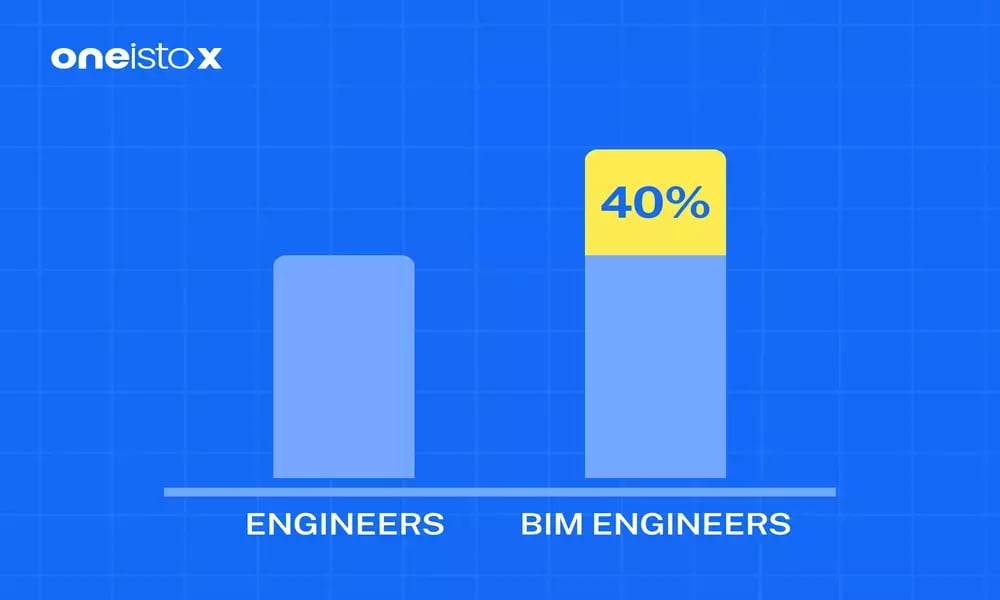
4. Higher salaries: BIM-skilled engineers earn 40% more than the industry average. This is because BIM skills are in high demand but in short supply. According to industry information aggregators such as www.talent.com, the average structural BIM engineer salary in the USA is $85,000 per year or $43.59 per hour.
For more insights about the career opportunities for civil engineers in the field of BIM, check out: BIM for Structural Engineers: Top Benefits, Significance, and Work Opportunities }
List of BIM course suggestions for structural engineers
Now that we have established the relevance and benefits of BIM for structural engineers, let us look at some BIM course suggestions for structural engineers to get you started.
1. Novatr
Mode: online
Completion time: 7 months
Build a future-ready career in construction with Novatr’s BIM Professional Course for Civil Engineers, a hands-on, industry-aligned program designed to help you master Building Information Modeling (BIM) from design to execution. Learn how top global firms use BIM to plan, coordinate, and deliver smarter, more efficient projects, while gaining the technical confidence to work on large-scale infrastructure and building developments.
Here’s what you’ll learn:
- 5+ industry softwares, including Autodesk Revit, Navisworks, Autodesk Construction Cloud: Docs, Coordination & Collaboration.
- Master essential plugins such as EF-Tools, DiRoots.One, pyRevit, ProSheets, Issue and Model Checker for Revit to automate documentation and improve precision.
- Learn complete BIM workflows, from digital design development, estimation & BOQ, and information modeling to clash detection, sequencing, and multidisciplinary coordination.
- Get hands-on experience working on real commercial and residential projects following ISO 19650 standards, guided by mentors from the global AEC industry.
- Develop professional construction documentation, audits, and deliverables aligned with international BIM practices.
Earn globally recognized certifications:
- Novatr Course Certificate, signed by the Academic Director.
- Autodesk User Certification, validating your command over Autodesk tools.
- NSDC Certificate, officially recognizing your BIM expertise.
- Optional Specialization Certificates, for learners who wish to deepen their skills in niche BIM applications.
2. Skill Lync
Mode: Online
Completion time: 8 to 12 months
The "Drafting and Design using Revit" course offered by Skill-Lync provides BIM training on both parametric design skills and drafting standards to create error-free drawings. The website suggests that the course is suitable for students of civil engineering in their first, second, third, or final year, as well as employees in civil engineering firms who are looking to upscale in their profession.
3. BIM Labs
Mode: Offline
Completion Time: 240 hours - 850 hours
BIMLabs offer aspiring professionals a platform and the tools to efficiently plan, design, construct, and manage buildings and infrastructure. They have an offline training centre in Kerala. BIMLabs also offers placement opportunities after the completion of the course.
Challenges of Implementing BIM in Structural Engineering
This section discusses key challenges structural engineers face when adopting BIM, including technical, financial, and skill-related barriers.
While BIM offers clear advantages, structural engineers often face barriers during adoption.
Common challenges include:
- Steep learning curves due to data-rich modelling and integrated workflows
- High initial costs for software licenses, hardware, and training
- Limited availability of BIM-skilled structural professionals
- Difficulty aligning BIM workflows with traditional analysis methods
- Inconsistent standards across project teams and stakeholders
Overcoming these challenges requires structured training, gradual workflow integration, and standardized BIM execution plans that support structural engineering requirements.
Impact of BIM on Sustainable Structural Engineering
This section explains how BIM supports sustainability by improving resource efficiency, lifecycle management, and energy performance in structures.
BIM plays a key role in advancing sustainable structural engineering.
Its impact includes:
- Optimized material usage through accurate quantity modelling
- Early performance evaluation for load efficiency and durability
- Support for lifecycle-based design and maintenance planning
- Reduced waste through coordinated design and fewer revisions
- Better alignment with energy and environmental standards
By enabling data-driven decisions across the structure’s lifecycle, BIM helps engineers design resilient systems that balance safety, efficiency, and environmental responsibility.
Conclusion
As we are advancing in the AEC industry, collaborative approaches and virtual modelling is what we are looking at. BIM is one such technology that will benefit the construction industry with better collaboration, simulations, clash detection, and coordination. These are just a few of the many benefits of BIM for structural engineers.
That’s it. We hope this blog gives you the insight you need to accelerate your career in the architecture, engineering, and construction (AEC) industry by helping you learn the relevance and benefit of BIM for structural engineers.
Interested in learning more about BIM and its career opportunities? Go to our
Resources page to find more insights on these topics and more.
Interested in learning more about BIM Modeling? Here’s something that might interest you:
Novatr offers you a course in BIM Professional Course for Civil and Structural Engineers that will help you understand computation in different design fields with industry workflows, advanced tools for a concrete foundation in computational design. Learn high-performance computational BIM and building analysis via a live industry project. Bag opportunities along with professional certification, endless career possibilities and upskilling.
FAQs
1. What are the main benefits of BIM for structural engineers?
BIM helps structural engineers improve design accuracy, coordinate with multidisciplinary teams, reduce errors, manage quantities efficiently, and support lifecycle-based decision-making across complex construction projects.
2. How does BIM improve structural design accuracy?
BIM improves design accuracy by using intelligent models that update automatically, reduce manual errors, and allow early detection of clashes and inconsistencies across structural systems.
3. Which BIM software is best for structural engineering?
Common BIM software for structural engineering includes Revit for modelling, Robot Structural Analysis and ETABS for analysis, and Advance Steel for steel detailing workflows.
4. What challenges do structural engineers face when adopting BIM?
Structural engineers often face challenges such as skill gaps, high software costs, workflow changes, and difficulty integrating BIM with traditional analysis methods.
5. How does BIM support sustainable structural design?
BIM supports sustainable design by improving material efficiency, enabling lifecycle analysis, reducing waste, and helping engineers evaluate energy and performance impacts early.

.png)


.jpg)
-1.png)

.svg)

.svg)
.svg)