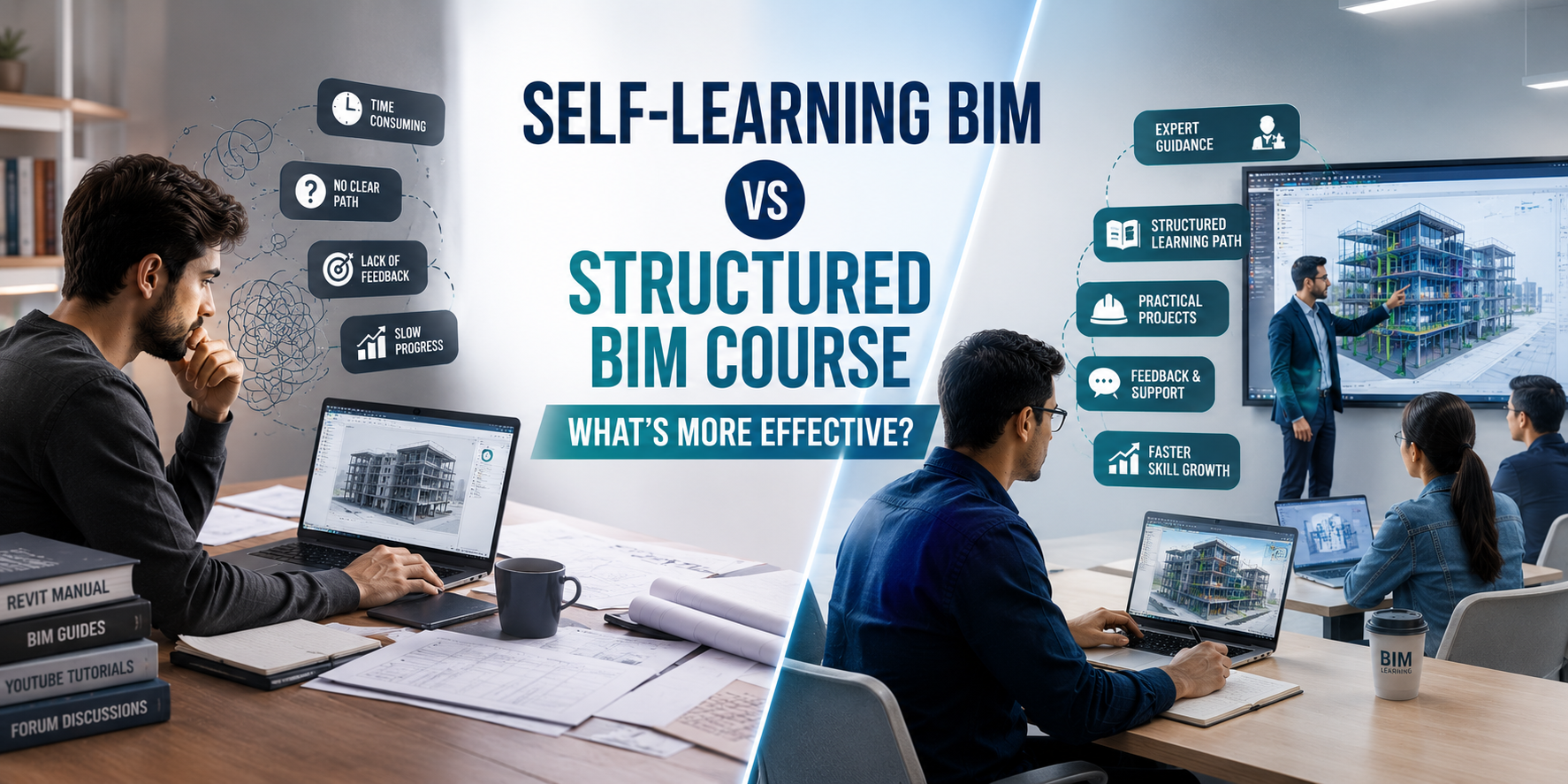


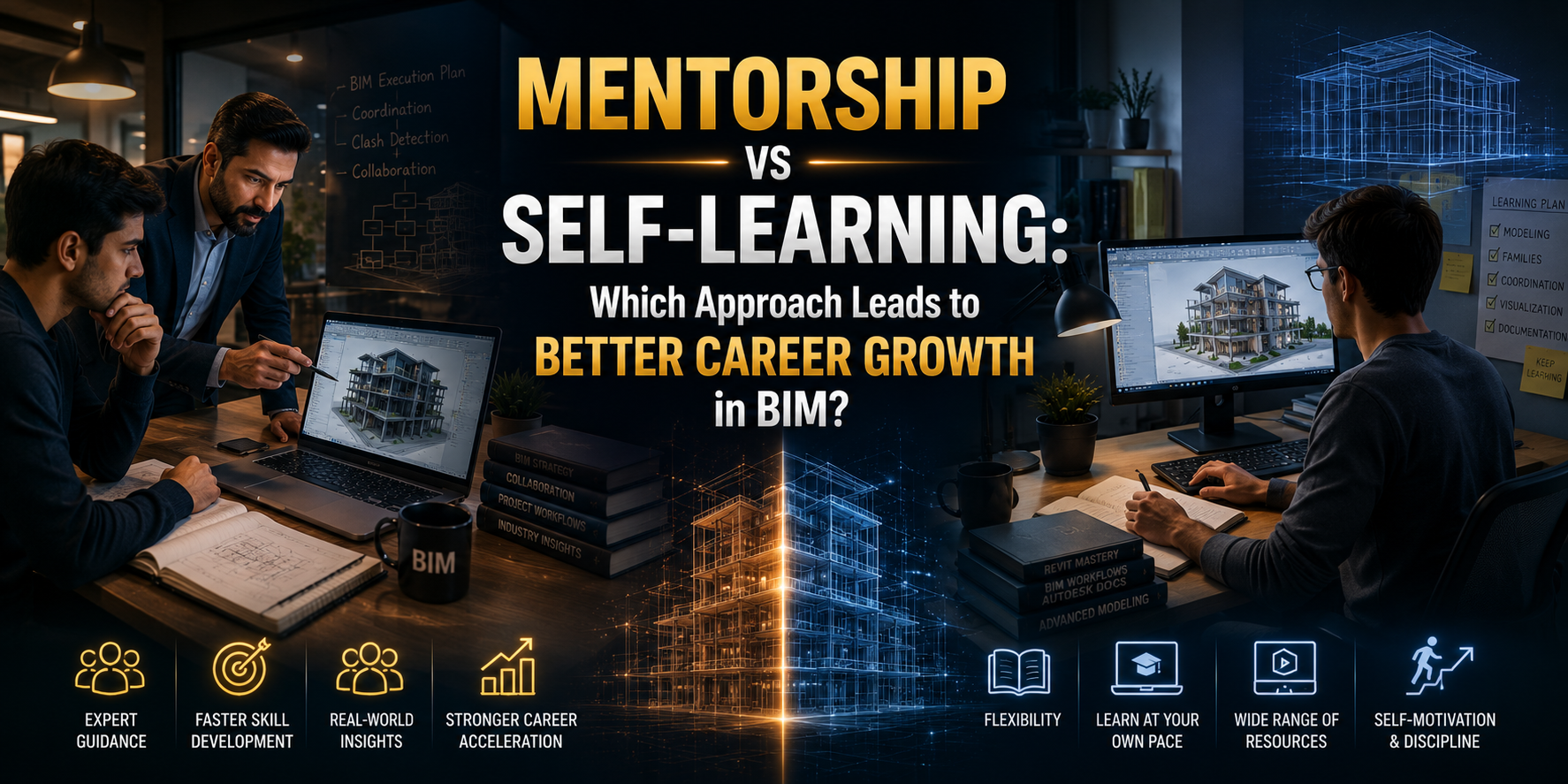

Why Does the Way You Learn BIM Affect Career Growth?

The way people learn BIM impacts the way they apply it in real projects. The variation shows in confidence, speed, and accuracy with which they work. Let’s dive further into this:
Practical Application: Learning through real-world projects helps professionals comprehend how BIM tools and workflows work in practice.
Problem-Solving: Working through practical challenges helps professionals develop the ability to identify issues and find effective solutions.
Confidence: Regular practice and communication can make individuals feel secure when using BIM tools and handling project responsibilities.
Collaboration: BIM learning through team-based projects helps professionals understand how to communicate and coordinate with different disciplines.
Industry Readiness: Exposure to BIM workflows helps people discover workplace expectations and apply their skills more effectively.
Continuous Growth: A strong learning foundation makes it easier for professionals to adapt to new construction technology and evolving industry practices.
What Can You Learn Through Self-Directed BIM Training?
Self-guided BIM courses are a great way to gain a foundational knowledge of the technology. Here’s what you can learn and how it can shape your professional development:
BIM Software: Online tutorials and courses can help you develop working knowledge of tools such as Revit, Navisworks, and Dynamo, along with their common applications.
Model Creation: You can learn to create and modify BIM models, develop building elements, and understand how different components work together within a project.
Documentation: Self-learning can help you understand how to generate drawings, schedules, sheets, and other project documents directly from a BIM model.
BIM Workflows: Exploring BIM workflows can give you a better understanding of how models, information, and documentation move through different stages of a project.
Online Resources: You can use Udemy tutorials, blogs, forums, and BIM learning courses to explore specific tools, workflows, and concepts based on your upskilling needs.
Personal Projects: Applying what you learn to small personal projects allows you to practise BIM workflows, experiment with different tools, and gradually build a portfolio of work.
What Does Mentorship Add to BIM Learning?
Mentorship gives learners an edge over their peers. It allows them to be sharper, more capable, and better prepared for real-world challenges. Here’s how it can help your career development:
Expert Reviews: Mentors can examine your work, point out gaps, and suggest better ways to approach BIM tasks.
Project Supervision: Working under expert insight helps learners understand how BIM skills are applied across different project stages.
Industry Workflows: Mentors can introduce learners to workflows and practices commonly followed by BIM teams in professional settings.
Model Review: Reviewing BIM models with an experienced professional can help learners spot errors, improve modelling practices, and understand project standards.
Project Coordination: Mentors can help learners master how different disciplines coordinate their models and resolve design conflicts.
Problem-Solving: Exposure to real project challenges helps learners develop practical ways to assess issues and make informed decisions.
Mentorship vs Self-Learning: Which Works Better for Different BIM Career Stages?
The right approach to BIM learning can vary depending on where you are in your engineering and architecture careers. Let’s explore how both methods offer distinct benefits at each career stage.
|
Learning factor |
Self-learning |
Mentorship |
Best-suited for |
|
Getting started |
Learn basic BIM concepts and software at your own pace. |
Get a structured introduction with guidance from a skilled professional. |
Students and beginners |
|
Building software skills |
Practise BIM tools through tutorials and exercises. |
Learn software via project-based applications. |
Freshers |
|
Understanding workflows |
Explore BIM workflows using online resources. |
Understand how BIM workflows are used in projects. |
Early-career professionals |
|
Improving existing skills |
Identify areas for improvement and practise them independently. |
Receive feedback on your work and learn better approaches. |
Mid-career professionals |
|
Handling complex projects |
Build new skills based on your career goals and interests. |
Gain insights on developing skills relevant to future roles. |
Professionals seeking growth |
|
Staying updated |
Follow new tools, tutorials, blogs, and industry resources independently. |
Learn about evolving practices and technologies from experts. |
All career stages |
Can Self-Learning Build Job-Ready BIM Skills Without Industry Guidance?
Self-learning becomes a stepping stone for BIM upskilling but it cannot fully equip professionals to become industry ready. Here’s why self-study may not be enough on its own:
Understanding Project Standards: Every company may follow different naming conventions, templates, libraries, and modelling standards. These nuances are hard to gauge from generic BIM learning resources.
Working With Constraints: Real projects come with deadlines, budgets, and frequent design changes. Therefore, learning in isolation rarely prepares learners to balance these competing demands.
Understanding Roles: BIM processes involve well-defined responsibilities across modelling, coordination, and management activities. Industry exposure helps learners understand where their role fits within the larger picture.
Quality Expectations: A model can look technically correct and still fail to meet project needs. Industry direction can help learners understand the level of detail, consistency, and accuracy expected in professional deliverables.
When Should BIM Professionals Seek a Mentor?
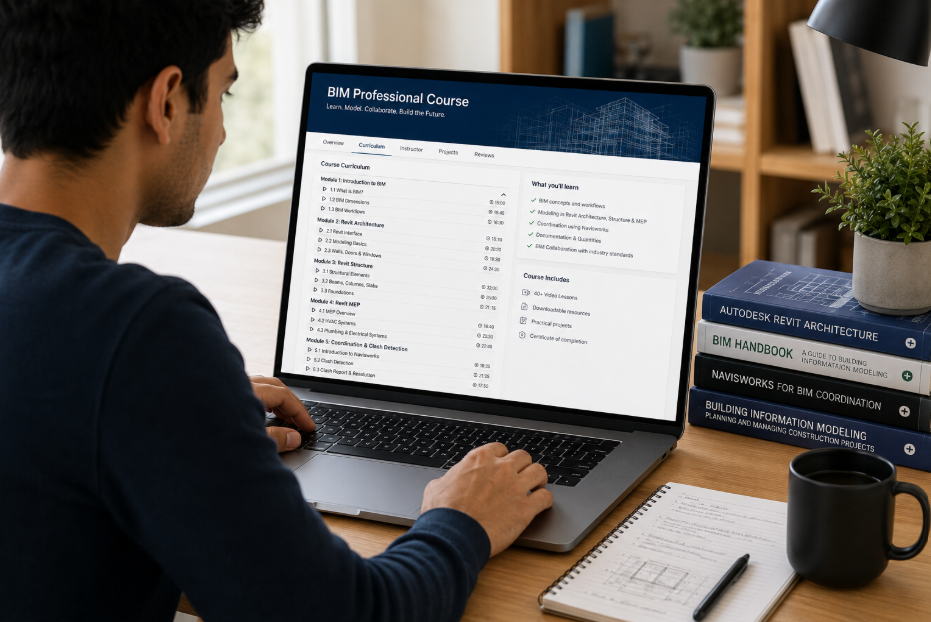
When individuals reach the limits of self-learning, mentorship can help them move forward with structured academic and online BIM courses. Let’s explore some situations where advice can make a difference:
-
Repeatedly struggling with the same BIM concepts can be a sign that you need expert advice to identify and correct gaps in your skillset.
-
An overwhelming number of BIM learning programs can make it difficult to decide what to learn and in what order.
-
Moving beyond software skills requires an understanding of the principles, standards, and practices that shape BIM projects.
-
Discussing your approach with an experienced professional can reveal better ways to handle unfamiliar BIM tasks.
-
Real project experiences offer lessons that are difficult to replicate through tutorials and self-study.
How Can You Combine Self-Learning and Mentorship for Faster BIM Career Growth?
Combining self-learning with mentorship allows professionals to learn at their own pace while benefiting from expert guidance when needed. Here’s how you can balance both:
Build the Foundation: Use online tutorials, courses, and free resources to understand BIM concepts and develop basic software skills.
Practise Independently: Apply your BIM learning on capstone projects to strengthen your understanding and become more comfortable with BIM tools.
Seek Expert Input: Share your work with a mentor to identify gaps, improve your approach, and understand where you can develop further.
Learn From Critique: Use feedback to revisit difficult concepts, correct mistakes, and improve your work instead of simply moving on to the next topic.
Apply New Skills: Take the suggestions you receive and put them into practice while working on complex projects.
Keep Learning: Continue using self-learning resources to explore new tools and techniques while turning to mentors when you need direction or practical insight.
A mixed approach can make BIM learning more structured without taking away the flexibility of learning independently. For professionals looking for a more organized training, Novatr’s BIM Professional Program can provide a combination of thoughtful learning, projects, and industry exposure.

.png)