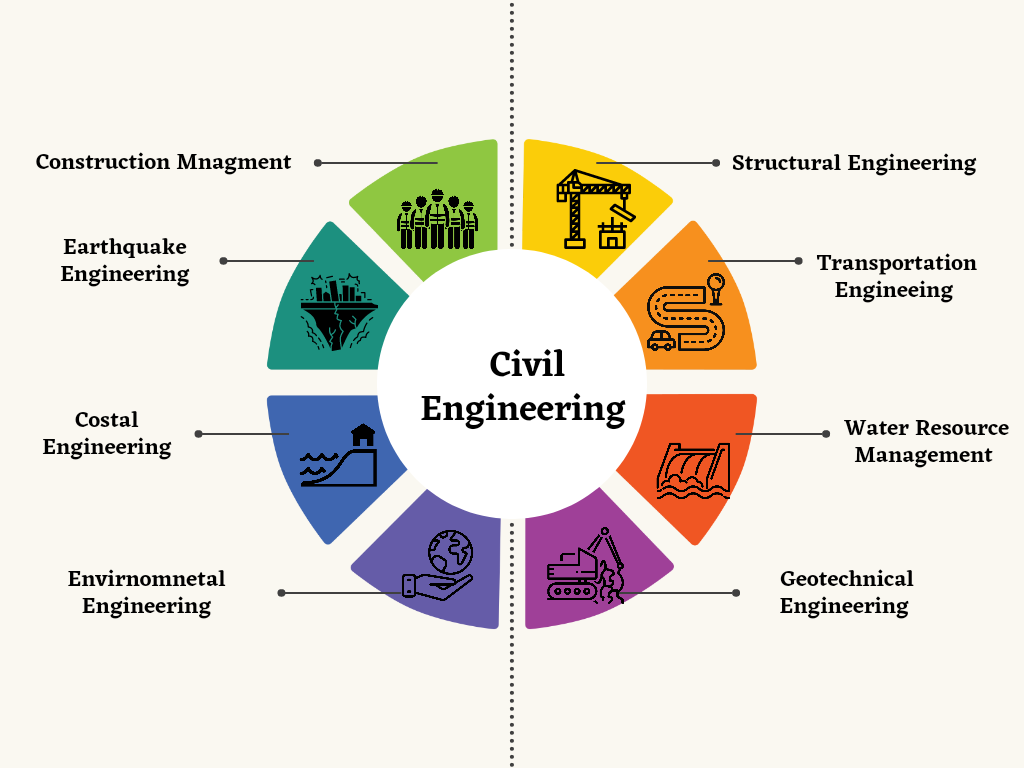

-1.png)


Why to Become a Civil Engineer?
From concept to completion, civil engineers lead infrastructure projects to guarantee sustainability, safety, and functionality. They manage the projects by evaluating the feasibility, examining the materials and structural elements, and building, bridges, and dams. Their area of expertise is in the managing of water resources with issues such as water scarcity, flood control, and preservation of the environment. By creating systems for waste management, renewable energy production, and pollution control, they also support sustainability and environmental protection. They put policies into place to lessen the negative consequences of projects managing water resources to deal with issues and support environmental preservation. Their knowledge and creativity are necessary both for the preservation of the environment and the growth of the economy.
Becoming a civil engineer can be an excellent career choice for those who are passionate about creating sustainable and innovative solutions for society. Here are some reasons why you might want to consider this path:
1. Opportunities
Civil engineers work in the built environment and people's lives are significantly shaped by civil engineers. The world may be a better place if infrastructure is planned and constructed with efficiency, sustainability, and safety in mind. Buildings, water resources, transportation, and other uses are all included in the large topic of civil engineering. This implies that you can work on initiatives that complement your beliefs and skill set and specialise in the field that most interests you.
2. High Demand
With an increasing global population and rising urbanisation, there is a great demand for civil engineers. This indicates that career prospects for qualified and experienced civil engineers are excellent. In general, civil engineers receive better pay than many other engineering specialities, with median wages exceeding several other specialities.
3. Career Advancement
With more training and experience, one can focus on research and development, engineering consulting, construction management, or other fields. In civil engineering projects, they frequently work in tandem with architects, urban planners, and construction professionals. Because you work with people to bring your ideas to life, this aspect of the job can be both challenging and rewarding. The civil engineering field is ever evolving as new techniques and technologies are always being created. This suggests that learning and professional growth opportunities are constant.
Also Read - Career Guide: Transition from Engineer-in-training to high paying BIM Professional
Types of Specialisations in Civil Engineering 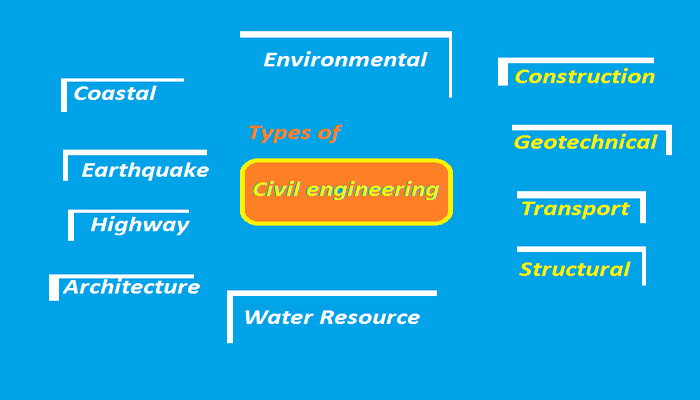
By focusing on a particular civil engineering sub-discipline, engineers can acquire competence in particular areas that apply to various projects and sectors. Civil Engineering specializations often require adherence to established standards, such as IS Codes, to ensure safety, precision, and efficiency in their work. They can support community planning, environmental preservation, and large-scale infrastructure development by becoming authorities in their field. The decision to specialise is influenced by a person's hobbies, career goals, and particular obstacles in the sector. Here are a few popular specialisations in civil engineering that are briefly explained:
1. Structural Engineering
Salary: INR 3,00,000 to INR 8,00,000
This civil engineering area focuses on working on the design and analysis of load-bearing structures such as buildings, bridges, and dams. They make sure about the safety, stability, and ability of the structures to resist various forces including gravity, wind, earthquakes, and temperature changes. They use all the principles of physics and mathematics for detecting the efficiency and cost of the structural systems by selecting appropriate materials and configuration. They have to do all the calculations, simulations, and collaboration with architects to convert design concepts with functionality, durability, and aesthetic pleasing structures that meet the requirements and serve client needs. New Age Structural engineers use structural design and analysis softwares to reduce time span involved in project and create an impactful and sturdy design.
Also Read - Ultimate Career Guide for Structural Engineering Roles
2. Environmental Engineering
Salary - INR 3,00,000 to INR 7,00,000
This civil engineering area focuses on the concepts of engineering for security and improvement of the environment. Primary concerns are waste management, environmental sustainability, and air and water pollution. Engineers create plans to manage solid and hazardous waste by controlling air pollution from industrial operations and transportation and designing and installing systems for treating and purifying water and wastewater. In addition, they create technology to lessen environmental harm and carry out environmental impact evaluations for building projects. Their primary goal is to provide present and future generations with a cleaner, healthier, and more sustainable planet through the integration of technical solutions and environmental science.
3. Geotechnical Engineering
Salary - INR 3,00,000 to INR 8,00,000
Geotechnical Engineering focuses on how materials behave and interact with the environment and structures, including rock and soil. The quality of subsurface materials is calculated by the engineers to design building foundations, bridges, and other infrastructure. They also create retaining structures, assess the stability of slopes, and reduce seismic and landslide risks. They make sure that structures which are built on stable ground are resilient to various loads and climatic conditions with a thorough understanding of soil mechanics and geology. The safe and sustainable development of infrastructure projects depends heavily on geotechnical engineering, which guarantees the projects' durability and resistance to both natural and man-made dangers.
Also Read: Become a Highly Successful Geotechnical Engineer in 2026
4. Transportation Engineering
Salary - INR 3,00,000 to INR 7,00,000
This civil engineering area focuses on the administration, operation, design, and transportation network planning to enable the effective flow of people and products. Transportation engineers plan roads, highways, trains, airports, and public transportation systems in addition to analysing traffic flow and doing traffic impact analyses. Through the integration of sustainable practices and software tools, they seek to minimise environmental consequences, improve safety, and reduce traffic. Infrastructure and transportation network optimization increases accessibility and connection, promoting economic growth and a higher living standard. To accommodate changing transportation needs, promote resilient and sustainable transportation systems, and shape urban and regional mobility, transportation engineering is essential.
5. Construction Engineering
Salary - INR 3,00,000 to INR 8,00,000 or more
Building projects are planned, coordinated, and executed in this branch of civil engineering which makes sure about the time, safety, and economy. Construction Engineers collaborate with architects, contractors, and other stakeholders to analyse design blueprints, schedule work, and manage on-site activities. They supervise resources, deal with technical problems, and establish quality control methods to meet project specifications and legal requirements. From subtle house projects to large-scale infrastructure projects, engineers are crucial at every stage, from site preparation to the last inspection. With their expertise, constructions that satisfy functional, aesthetic, and structural requirements are guaranteed to be completed effectively.
Also Read - 10 Online Courses & Certification For Construction Engineers to Upskill
Career Opportunities In Civil Engineering
Here's a more detailed table outlining various career opportunities in civil engineering, along with their specific roles, average salaries, and example companies:
|
Role |
Description |
Average Salary |
Companies |
|
Civil Engineer |
Designs, plans, and oversees construction projects; may specialise in areas like structural, transportation, or environmental engineering |
₹300,000 - ₹800,000 p.a. |
Larsen & Toubro, Tata Projects, Gammon India |
|
Structural Engineer |
Designs and analyses structures such as buildings, bridges, dams, and tunnels to ensure they are safe and stable |
₹400,000 - ₹1,200,000 p.a. |
Shapoorji Pallonji Group, Systra, Hindustan Construction Company |
|
Transportation Engineer |
Plans and designs transportation systems including roads, highways, airports, and railways; focuses on improving traffic flow and safety |
₹300,000 - ₹900,000 p.a. |
AECOM India, RITES Limited, L&T Infrastructure Engineering Ltd |
|
Geotechnical Engineer |
Studies soil and rock mechanics to determine the suitability of sites for construction; provides recommendations for foundations, retaining walls, and earthworks |
₹300,000 - ₹900,000 p.a. |
Geotechnical Engineering Consultants India (GECI), Indian Geotechnical Society, Soiltech Consultants |
|
Water Resources Engineer |
Designs and manages water-related projects such as dams, levees, flood control systems, and water supply networks |
₹300,000 - ₹900,000 p.a. |
WAPCOS Limited, Jain Irrigation Systems Ltd, Tata Consulting Engineers Limited |
|
Oversees construction projects from planning to completion; manages budgets, schedules, and subcontractors to ensure projects are delivered on time and within budget |
₹400,000 - ₹1,200,000 p.a. |
L&T Construction, Shapoorji Pallonji Group, Simplex Infrastructures Limited |
Read more: BIM in Civil Engineering: A Civil Engineer's Successful Journey to BIM
Top 3 Courses For Better Career Opportunities
Here are the top courses that will help you get the best career opportunities after Btech:
1. BIM Professional Course for Civil Engineers – Novatr
Duration: Seven months
Mode: Online
Building Information Modelling (BIM) is reshaping civil engineering with its advanced technology, offering valuable skills for construction professionals.
Build a future-ready career in construction with Novatr’s BIM Professional Course for Civil Engineers. A hands-on, industry-aligned program designed to help you master Building Information Modeling (BIM) from design to execution. Learn how top global firms use BIM to plan, coordinate, and deliver smarter, more efficient projects, while gaining the technical confidence to work on large-scale infrastructure and building developments.
Here’s what you’ll learn:
- 5+ industry softwares, including Autodesk Revit, Navisworks, Autodesk Construction Cloud: Docs, Coordination & Collaboration.
- Master essential plugins such as EF-Tools, DiRoots.One, pyRevit, ProSheets, Issue and Model Checker for Revit to automate documentation and improve precision.
- Learn complete BIM workflows — from digital design development, estimation & BOQ, and information modeling to clash detection, sequencing, and multidisciplinary coordination.
- Get hands-on experience working on real commercial and residential projects following ISO 19650 standards, guided by mentors from the global AEC industry.
- Develop professional construction documentation, audits, and deliverables aligned with international BIM practices.
Earn globally recognized certifications:
- Novatr Course Certificate, signed by the Academic Director.
- Autodesk User Certification, validating your command over Autodesk tools.
- NSDC Certificate, officially recognizing your BIM expertise.
- Optional Specialization Certificates, for learners who wish to deepen their skills in niche BIM applications.
2. Advanced Construction Management- CACM by Construction Management Training Institute, Bengaluru
Mode: Online
Duration: 12 weeks
Curriculum:
- Material management
- Soil investigation and foundations
- Understanding BOQs and specifications
- Quantity Surveying
- Rate analysis
- 3D printing in construction
- Augmented and Virtual Reality
- Entrepreneurship opportunities for civil engineers
- Formwork in Construction
- Construction supervision
Bangalore-based CMTI equips civil engineers with the necessary skills for success. Utilising a vast network, the institute provides relevant training and job opportunities to boost career prospects. The Certificate Course on Advanced Construction Management is ideal for working professionals or aspiring engineers aiming to align with industry standards.
3. M.Tech In Environmental Engineering by Birla Institute of Technology (BITS)
Mode: Online
Duration: Two years
Curriculum:
- Environmental chemistry
- Environmental Management Systems
- Applied transport phenomena
- Environmental sampling and analytical methods
- Environmental remote sensing and GIS
- Environmental systems modelling
- Air pollution control technologies
- Solid waste management
- Environmental process engineering
- Environmental impact and risk assessment
- Physico–Chemical treatment principles and design for wastewater systems
- Biological treatment principles and design for wastewater systems
- Environmental Statistics
Through the BITS WILP program, working professionals and graduates can enhance their knowledge and broaden their perspectives in environmental engineering. The course emphasises environmental laws, waste and water management, air pollution control, environmental safety, impact assessment studies, and other relevant subjects. This enables professionals to incorporate their learning into their current and future professional endeavours, leading to career progression and personal development.
Conclusion
Civil engineering continues to be a high-potential career after B.Tech, with strong demand across infrastructure, buildings, transportation, and environmental projects. By choosing the right specialization and building skills in modern tools and methods, you can shape projects that matter while enjoying clear growth opportunities.
If you want a structured path into design and BIM-led roles, the BIM Professional Course for Civil Engineers by Novatr is a strong starting point. It connects multiple tools, real projects, and career support into one pathway so you’re better prepared for the future of civil engineering work.
For additional information about relevant professions and software, visit our Resources page.
Frequently Asked Questions
1. What are the best career options after B.Tech Civil Engineering?
Some of the best career opportunities after B.Tech Civil Engineering include roles like site engineer, design engineer, structural engineer, transportation engineer, water resources engineer, BIM engineer, and construction manager. Your ideal role depends on whether you prefer design, site execution, planning, or sustainability-focused work.
2. Which specialization is most in demand for civil engineers?
Specializations such as structural engineering, transportation engineering, environmental engineering, and BIM-driven design are in strong demand.
3. What skills are required for a successful civil engineering career?
Core skills include understanding structural behavior, materials, and construction methods, along with reading drawings and codes. On top of that, you should build skills in tools like AutoCAD, Revit, ETABS, STAAD.Pro, Civil 3D, or BIM platforms, plus soft skills such as communication, coordination, and problem-solving.
4. Which courses help improve job opportunities after civil engineering?
Courses in BIM, structural design, construction management, environmental engineering, and infrastructure design can significantly improve your job prospects.
5. Is BIM a good career path for civil engineers?
Yes, BIM is a very strong career path for civil engineers because most top companies are shifting to model-based design and coordination. BIM skills let you work closely with architects, MEP teams, and project managers, and often lead to better salaries, global project exposure, and long-term growth in digital construction roles.