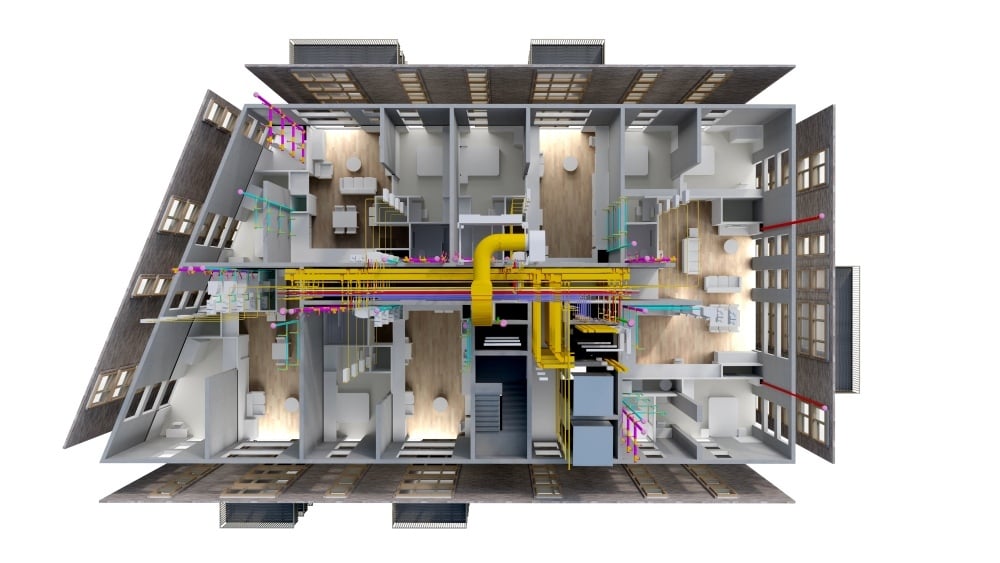




What are the Top Things Recruiters Look for in BIM Portfolio?
A BIM portfolio should demonstrate more than software knowledge. Recruiters assess your technical expertise, practical experience, BIM workflow skills understanding, and ability to contribute to project coordination across different project stages.
-
Technical BIM Skills
Demonstrate proficiency in tools such as Revit, Navisworks, or other BIM software through models, drawings, schedules, and coordinated deliverables. Recruiters want evidence that you can apply software skills to practical project requirements.
-
Project Experience and Your Contribution
Clearly explain your role in each project, whether it involves modelling, documentation, coordination, or design development. Even academic or course-based projects can strengthen your portfolio if your contribution and outcomes are well presented.
-
BIM Workflow and Coordination Experience
Show how you managed different stages of the BIM workflow, from model development and information management to project coordination and design reviews. Including coordination examples demonstrates that you understand collaborative project delivery.
-
Problem-Solving and Quality Control
Include examples of clash detection, model validation, design revisions, or issue resolution. Recruiters value candidates who can identify project challenges, improve model quality, and support smoother construction processes.
-
Professional Presentation and Documentation
Organise your portfolio with clear project summaries, high-quality visuals, and complete construction documentation. A structured portfolio that explains your process and technical decisions reflects professionalism and attention to detail, qualities employers expect in BIM professionals.
Best BIM Portfolio Examples for Architects
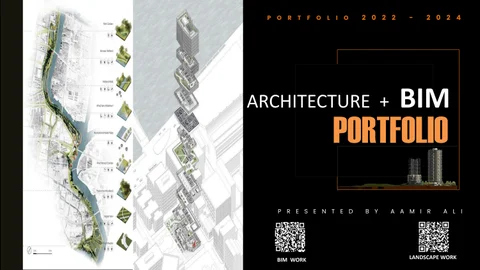
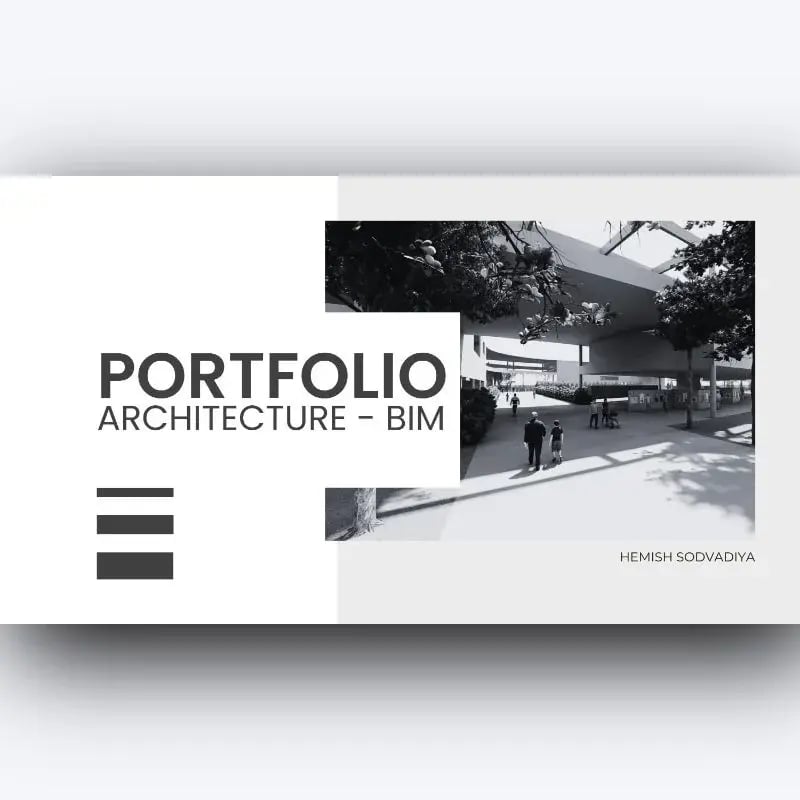
A strong design portfolio should demonstrate how you apply BIM across different project types rather than showcasing only finished visuals. Including a variety of projects helps recruiters evaluate your technical expertise, problem-solving ability, and readiness for professional roles.Architecture + BIM Portfolio Example
-
Residential Building Project
Showcase a complete residential project with BIM models, floor plans, sections, elevations, schedules, and rendered views. This demonstrates your understanding of modelling, documentation, and project organisation.
-
Commercial or Office Building Project
Include a commercial building that highlights multidisciplinary coordination between architectural, structural, and MEP models. This strengthens your architect portfolio by showing collaboration across different disciplines.
-
Renovation or Scan-to-BIM Project
Present a project where existing building data was converted into an accurate BIM model. Explain how the model supported renovation planning, documentation, or facility management.
-
Clash Detection and Coordination Project
Add examples of coordination reviews, clash reports, and design revisions that improved project quality. This demonstrates your ability to identify issues before construction begins.
-
Construction Documentation Project
Include drawing sheets, schedules, quantity take-offs, annotations, and technical details generated from your BIM model. These deliverables show employers that your design portfolio goes beyond modelling and reflects practical project execution.
Best BIM Portfolio Examples for Civil & Structural Engineer
A strong project portfolio should showcase your ability to develop safe, efficient, and buildable structural solutions using BIM. Including projects with detailed technical drawings and practical applications of structural engineering helps employers assess your design approach, analytical thinking, and readiness for real-world projects.
-
Multi-Storey Building Structure
Showcase a reinforced concrete or steel-frame building with structural models, framing plans, sections, reinforcement details, and construction drawings.
-
Bridge or Infrastructure Project
Include a bridge, flyover, or infrastructure model that demonstrates structural planning, member detailing, and coordination with other engineering disciplines.
-
Foundation and Structural Analysis Project
Present foundation layouts, column arrangements, footing details, and structural calculations alongside BIM models to highlight engineering decision-making.
-
Structural Coordination Project
Demonstrate how structural models were coordinated with architectural and MEP disciplines, including clash detection, design revisions, and issue resolution before construction.
-
Structural Quantity Estimation and Material Planning
Include a project that extracts concrete volumes, reinforcement quantities, and steel schedules directly from BIM models. This demonstrates how BIM supports estimation, procurement, and construction planning while strengthening your project portfolio.
Best BIM Portfolio Examples for MEP Engineers
A portfolio for MEP engineers should showcase your understanding of MEP design through coordinated building services projects. Employers look for portfolios that demonstrate system integration, spatial coordination, and the ability to deliver accurate construction documentation for real-world project requirements.
-
HVAC System Design Project
Showcase duct layouts, equipment placement, airflow diagrams, and coordinated HVAC models that demonstrate efficient system planning and installation.
-
Electrical Services Project
Include power layouts, lighting plans, cable routing, panel schedules, and single-line diagrams generated from BIM models to demonstrate electrical design capabilities.
-
Plumbing and Fire Protection Project
Present water supply networks, drainage systems, fire protection layouts, pipe schedules, and coordination drawings that reflect practical building services design.
-
MEP Coordination Project
Add examples of multidisciplinary coordination, including clash detection between MEP, architectural, and structural models. Explain how design issues were identified and resolved before construction.
-
BIM Execution and Asset Information Project
Include a project that demonstrates model organisation, information management, or BIM execution planning. This shows employers that you understand how BIM supports facility management, handover, and the complete building lifecycle beyond MEP design.
How to create a Winning BIM Portfolio? Step by Step Process
A well-planned portfolio helps employers understand your practical skills and readiness for BIM jobs. Follow these steps to present your BIM projects in a clear and professional way.
-
Choose Your Best Projects: Select projects that showcase different BIM skills, such as modelling, coordination, documentation, or clash detection.
-
Explain Your Role: Briefly describe your responsibilities, the software used, and the objectives you achieved in each project.
-
Include Technical Deliverables: Add floor plans, sections, schedules, quantity take-offs, and other outputs generated directly from your BIM models.
-
Show Your Workflow: Present the project from model development through coordination and final documentation to demonstrate your understanding of BIM processes.
-
Highlight Challenges You Solved: Include examples where you resolved coordination issues, improved model quality, or supported project delivery.
-
Keep the Portfolio Professional: Use a clean layout, consistent formatting, and concise project descriptions so recruiters can quickly review your work and understand your capabilities.