

 Thanks for connecting!

Sejal
14 min read
April 21, 2024


Table of Contents
Civil engineering graduates today face an important career decision. Traditional master’s degrees have long been viewed as the default path for specialization, yet the industry is rapidly shifting toward digital delivery models that demand BIM-driven skills.
With infrastructure projects becoming more complex, firms now prioritize professionals who can coordinate data, manage multidisciplinary workflows, and support lifecycle-based project delivery. This shift has increased demand for BIM-skilled civil engineers, creating new digital coordination roles beyond site-based execution.
This guide compares online BIM courses and master’s degrees for civil engineering graduates, analysing cost, duration, skill relevance, career opportunities, and industry demand to support informed career decisions.
Imagine a bustling cityscape filled with skyscrapers, bridges stretching across rivers, highways winding through mountains, and intricate networks of water supply and sewage systems. All these marvels of modern civilisation are the result of the creative genius and meticulous planning of civil engineers.
In the civil engineering field, one needs to stay updated with the latest technologies and methodologies as they are the ones who are building the future cities, quite literally. But doing so wouldn’t be possible without constant updation of technology and skills. The questions we are trying to raise here is:
How much will a civil engineer grow with outdated technology and knowledge?
One needs to upskill at regular intervals to stay relevant for professional growth. But, how do we do that? While some do master’s degrees in civil engineering, some prefer online courses for civil engineers. Naturally, this creates a dilemma in many professions, i.e., which is the best option for them - a master's degree or online course. We know how mentally and emotionally tiring this confusion can be, especially when your entire career is dependent on it. But worry no more. Read the blog to understand the difference between a master’s program for civil engineers and an online course to make an informed career decision.
What is Civil Engineering?
Civil engineering is an engineering branch that deals with the design, construction, and maintenance of infrastructure projects essential for a society's functioning. A Civil engineer is not just a builder; they are problem solvers, visionaries, and guardians of safety and sustainability. The professionals who practice the above roles are known as civil engineers.
The Vital Role of Civil Engineers

A civil engineer blends science, technology, and creativity to build public infrastructure. Whether it's making earthquake-resistant buildings, creating sustainable transportation systems, or ensuring access to clean water, civil engineers are at the forefront of innovation and progress. But being a civil engineer is not limited to that. A civil engineer collaborates with architects, urban planners, environmental scientists, and government officials to create spaces that are functional, resilient, and beautiful.
Growing Importance of BIM in Civil Engineering
A civil engineer works to leave a lasting impact on the world, shaping how people live, work, and interact with their environment. It's a profession that demands both technical expertise and a deep sense of responsibility towards society and the planet. So as technology continues to reconstruct the industry, professionals need to adapt and equip themselves with the latest tools and skills. That’s where BIM comes in.

BIM (Building Information Modelling) has emerged as a revolutionary tool evolving the way projects are designed, constructed, and managed. While a traditional master’s degree undoubtedly holds merit, online BIM courses offer a much better targeted and efficient approach for civil engineers who are seeking a chance to enhance their expertise.
Check out this video to learn more about BIM for civil engineers:
The Key Benefits of Upskilling in BIM for Civil Engineers
In 2026, the civil engineering field continues to play a pivotal role in shaping the infrastructural landscape globally. With rapid advancements in technology and increasing complexity in construction projects, there's a growing need for specialised skills beyond the foundational knowledge obtained during B.Tech in Civil Engineering. Pursuing specialised courses and skills like BIM after completing their graduation has become crucial for staying competitive and relevant in the industry.
Read more: 6 Emerging Technologies Transforming the Construction Industry Today
Master's Programs for Civil Engineers
Generally, students go for a master's degree after graduation. Typically, it’s a two-year course where students further specialise in theoretical knowledge, forging a deeper understanding of the specialisation. A master’s degree helps advance a career and pursue further education, such as a doctoral degree.
However, the curriculum of a master's degree is not updated regularly. For instance, today BIM has become an indispensable part of the AEC (Architecture, Engineering, and Construction) industry. However, many educational institutions are lagging in providing comprehensive BIM training to students.
Undergraduate and postgraduate programs in civil engineering cover only basic concepts of BIM, leading to students not having knowledge of BIM software tools like Revit. So without a comprehensive and updated curriculum, graduates struggle to meet the industry demands, adapt to BIM workflows, and optimise project outcomes.
Online Courses in BIM for Civil Engineers

There has been a rise in online education in recent years which has democratised learning, offering flexible and accessible opportunities for professionals to enhance their skills and knowledge without taking a break from their jobs.
Online courses cater to the specific new and upgraded needs of civil engineers seeking to master this transformative technology. Online BIM courses are one such course designed to deliver specific skills on the intricacies of BIM. These courses are taught by industry experts who have firsthand knowledge of the trends that are reshaping the overall AEC landscape.
Online courses are also an affordable and flexible option as the fees are comparatively less than a traditional master’s degree, and even a working professional can pursue these courses as per their schedule.

Master's Degrees V/S Online BIM Courses
To explain the benefits of online BIM courses, here’s a comparative analysis between Online BIM courses and a Master’s Degree in Civil Engineering.
|
Basis |
Online BIM Course |
Master’s Degree |
|
Focused Learning |
Designed to deliver specialised knowledge. Focuses on the intricacies of BIM, ensuring practical skills and insights that are immediately applicable to real-world projects. |
Often encompasses broader topics and subjects. |
|
Flexibility and Accessibility |
Professionals juggling between demanding work and other commitments can access the course materials and lectures at their convenience. |
Mostly offline options are available, hence a professional will have to solely commit to this degree and won’t have the flexibility to work alongside upskilling. |
|
Cost Effectiveness |
Typically offers more affordable options, with EMI options. Also, there are no additional expenses like living expenses, commute, relocation, etc. since the course is online. |
Entails significant financial investment, including tuition fees, living expenses. and potential loss of income. |
|
Industry Relevant Content |
BIM courses are developed and taught by industry experts who possess firsthand knowledge of the challenges and trends shaping the overall civil engineering landscape. The course is highly relevant and up-to-date, reflecting the latest advancements in BIM technology and its applications. |
The curriculum goes back to the 1980s and 1990s and still hasn’t been updated as per current industry standards. |
|
Practical Hands-on Experiences |
BIM courses prioritise practical hands-on experience, allowing learners to work on real-life projects. |
Master's programs provide structured laboratory sessions, fieldwork opportunities, and access to research facilities. |
|
Networking Opportunities |
Online BIM courses often facilitate networking opportunities with fellow professionals and industry experts through virtual forums, discussion boards, and collaborative projects. |
Learners get face-to-face interaction with faculty members, classmates, and industry professionals. They can attend seminars, conferences, and networking events to expand their professional network and forge meaningful connections |
How to Choose the Best Online BIM Course?

When selecting the best course in civil engineering, several factors should be considered:
- Accreditation: Ensure the institute and course are accredited by relevant industry bodies or academic institutions.
- Curriculum: Analyse the course curriculum to ensure it covers relevant topics, aligns with your career goals, and is regularly updated as per industry trends and current demands. Check whether software tools such as Autodesk Revit and Bentley MicroStation are included which are important in civil engineering projects. Students should learn about 3D modelling, clash detection, and construction sequencing using BIM.
- Faculty/Mentors: Look for courses taught by experienced professionals with industry expertise.
- Industry Connections: Check if the course provides opportunities for capstone projects, internships, and networking events.
Hopefully the above information will help you choose better, as per your convenience and goals. You can also check out Novatr’s BIM Professional Course for Civil Engineers if you are looking to upskill yourself in a shorter period but with 10X efficiency.
Read more: How BIM Benefits Small Firms and Independent Consultants?
Novatr’s BIM Professional Course for Civil Engineers
Build a future-ready career in construction with Novatr’s BIM Professional Course for Civil Engineers, a hands-on, industry-aligned program designed to help you master Building Information Modeling (BIM) from design to execution. Learn how top global firms use BIM to plan, coordinate, and deliver smarter, more efficient projects, while gaining the technical confidence to work on large-scale infrastructure and building developments.
Here’s what you’ll learn:
- 5+ industry softwares, including Autodesk Revit, Navisworks, Autodesk Construction Cloud: Docs, Coordination & Collaboration.
- Master essential plugins such as EF-Tools, DiRoots.One, pyRevit, ProSheets, Issue and Model Checker for Revit to automate documentation and improve precision.
- Learn complete BIM workflows, from digital design development, estimation & BOQ, and information modeling to clash detection, sequencing, and multidisciplinary coordination.
- Get hands-on experience working on real commercial and residential projects following ISO 19650 standards, guided by mentors from the global AEC industry.
- Develop professional construction documentation, audits, and deliverables aligned with international BIM practices.
Earn globally recognized certifications:
- Novatr Course Certificate, signed by the Academic Director.
- Autodesk User Certification, validating your command over Autodesk tools.
- NSDC Certificate, officially recognizing your BIM expertise.
- Optional Specialization Certificates, for learners who wish to deepen their skills in niche BIM applications.
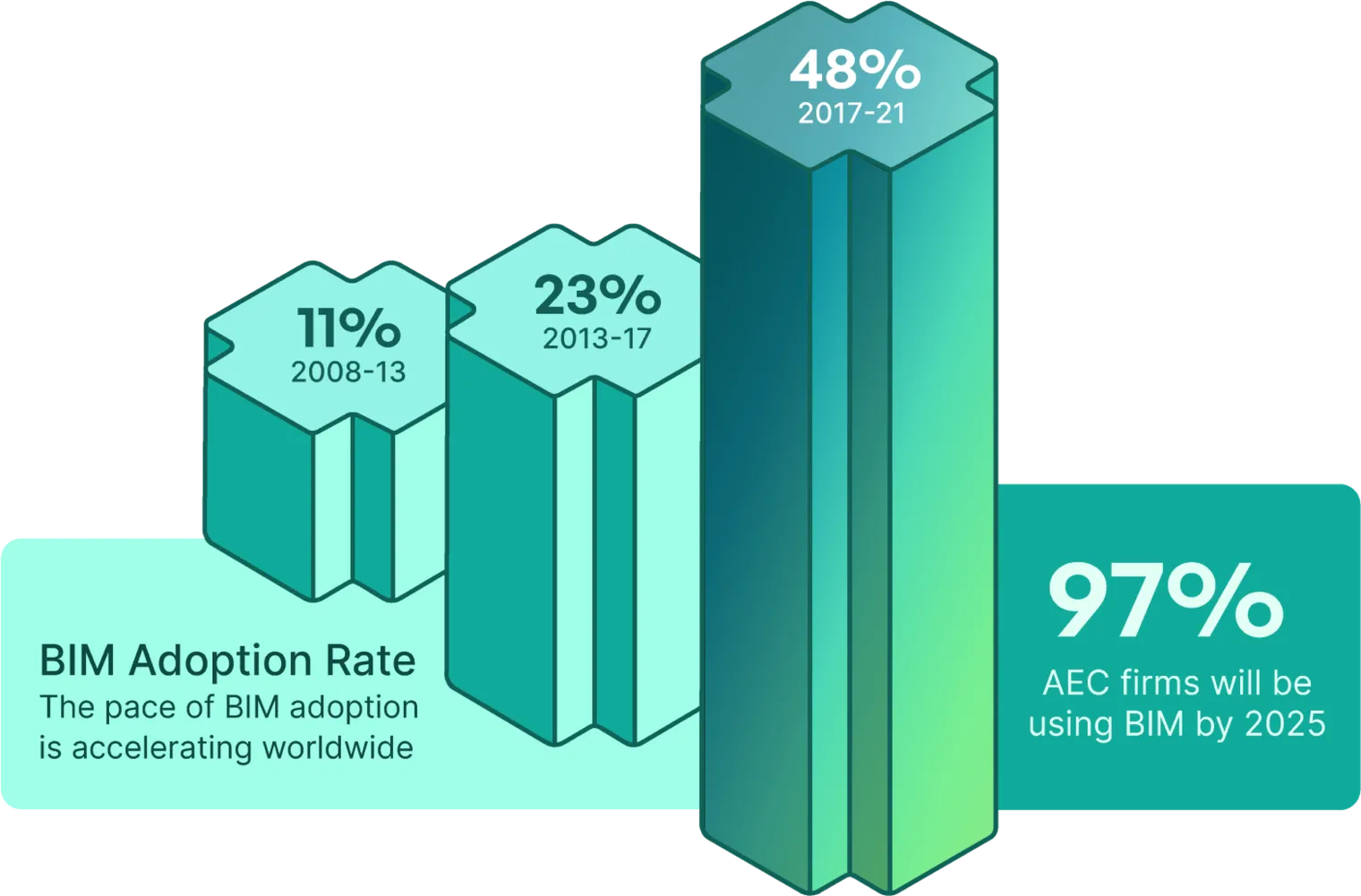
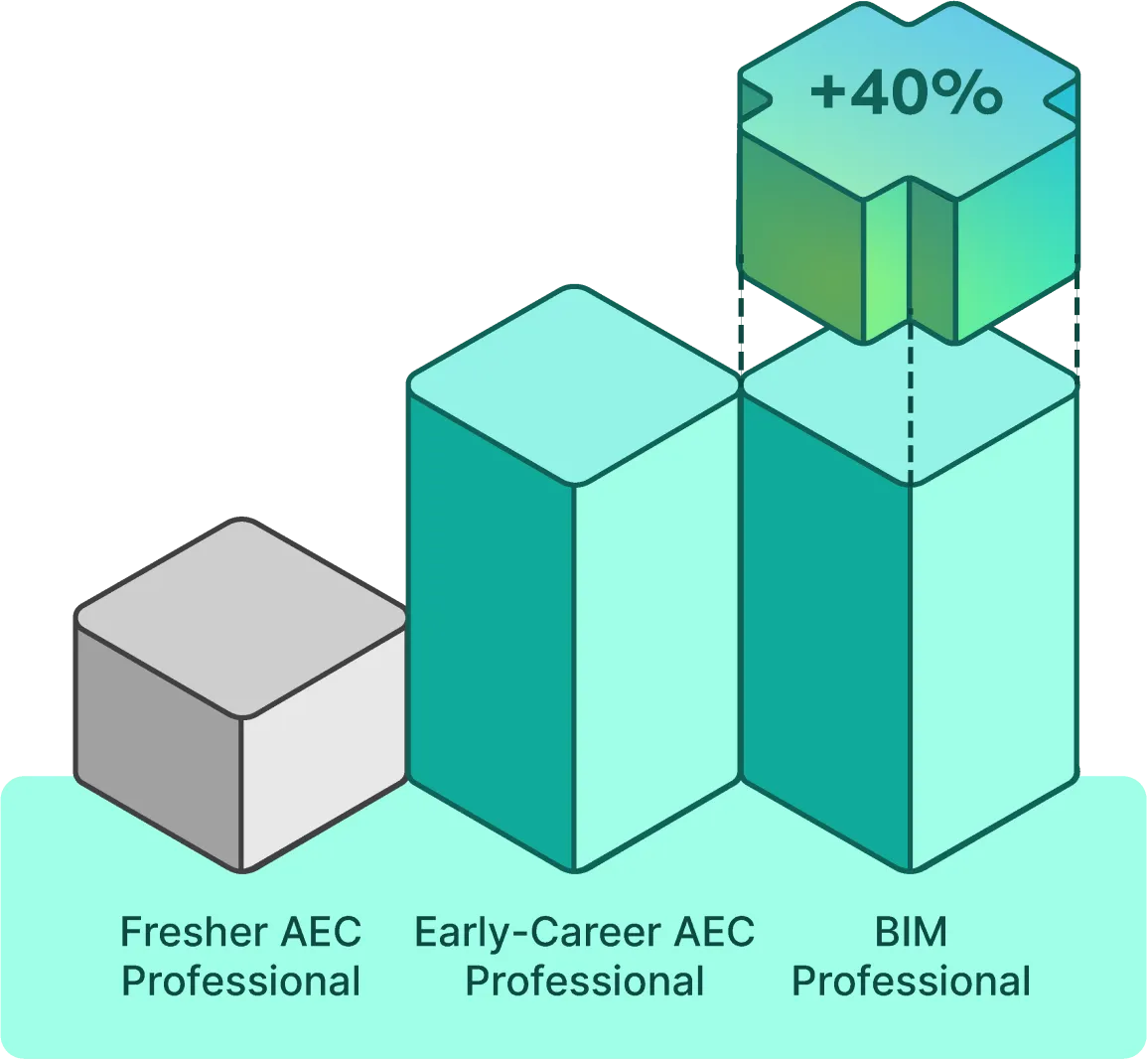
By the end of 2026, 72% of civil engineering firms, 89% of architecture firms, and 69% of construction firms worldwide will be actively using BIM. Plus, BIM-skilled professionals can get an average 40% hike compared to their peers with similar experience. If you are still wondering why it is important to upskill, then check out our course here to understand better.
Go Further with Optional Post-Program Specializations
After completing the core BIM program, learners can choose to add any two specializations to refine their expertise in advanced BIM workflows and tools. These add-on modules let you tailor your learning path based on your career goals and project interests.
Available specializations include:
- Visual Programming with Dynamo – Automate repetitive modeling tasks and customize Revit workflows through parametric scripting.
- 4D, 5D & 6D with BIM – Integrate time, cost, and sustainability data into your BIM models for end-to-end project management.
- Design Development with Autodesk Forma – Explore conceptual design and site analysis with cloud-based environmental data.
- Project Strategy & Optimization with Plannerly – Plan, structure, and audit BIM execution plans with real-world project strategies.
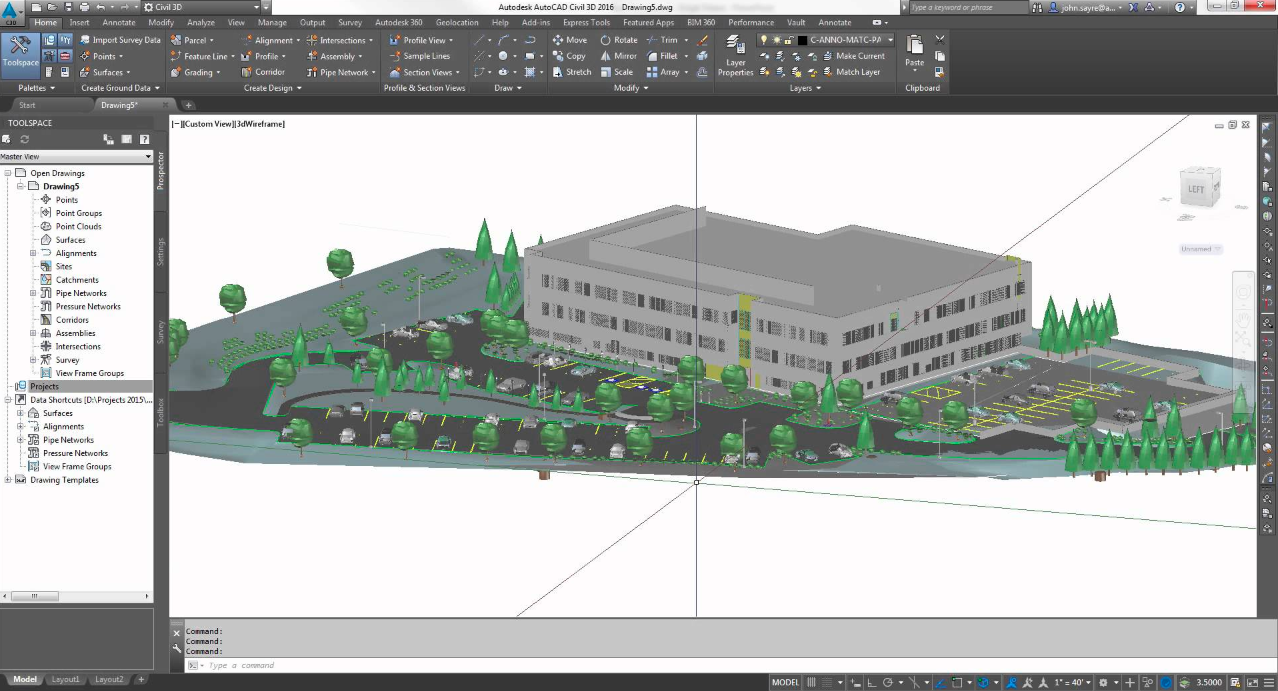
- BIM for Infrastructure with Civil 3D – Model, simulate, and analyze roads, bridges, and other civil infrastructure projects.
- Prefabrication & RCC Modeling with Tekla – Design and coordinate reinforced concrete and steel structures for constructability.
- Visualising Landscape with Enscape – Create immersive real-time visualizations for landscape and site design presentations.
- Interior Detailing & Visual Storytelling with Twinmotion – Transform architectural and interior BIM models into photorealistic, story-driven visuals.
These optional specializations provide an in-depth understanding of how different software and workflows enhance project performance, sustainability, and design visualization, making you a more versatile BIM professional.
Conclusion
Both Master's programs and online courses offer valuable opportunities for civil engineers to specialise and advance their careers. The choice between the two depends on career goals, availability, and flexibility. Master's programs provide in-depth knowledge and formal credentials, while online courses offer flexibility, accessibility, and industry-relevant curriculum
For civil engineers, Novatr offers a BIM Professional Course for civil engineers who are instructed by industry professionals with years of practical expertise in the field. Additionally, you will get to work on live capstone projects. Check out our Resources page if you want to learn more about related careers and software.
FAQs
1. Is an online BIM course better than a master’s degree for civil engineers?
An online BIM course is often better for engineers seeking faster, job-aligned skill development. Master’s degrees suit research-focused careers, while BIM courses align more closely with current industry workflows and digital coordination roles.
2. Do BIM courses offer better job opportunities than a master’s degree?
BIM courses can offer stronger job alignment because employers value software proficiency and coordination skills. Graduates with BIM training often qualify for roles tied directly to project delivery, digital planning, and model-based collaboration.
3. Can BIM certifications replace a master’s degree in civil engineering?
BIM certifications cannot replace a master’s degree academically, but they can substitute it for many industry roles. Employers often prioritize BIM capability over academic credentials for coordination, modelling, and infrastructure delivery positions.
4. What is the ROI of online BIM courses compared to postgraduate degrees?
Online BIM courses typically have lower costs and shorter durations, leading to faster employability. This often results in a higher return on investment compared to postgraduate degrees that require longer study and higher financial commitment.
5. Which option is better for working civil engineers: BIM courses or a master’s degree?
For working civil engineers, BIM courses are usually better due to flexible schedules and focused learning. They allow professionals to upskill without leaving jobs while gaining skills directly applicable to ongoing infrastructure projects.

.png)


.png)




.svg)

.svg)
.svg)