

.png)

How Is BIM Transforming Airport Construction in India?
Modern Indian airports are now considered multi-system infrastructure projects that require seamless coordination between architects, structural engineers, MEP engineers, and other government bodies.
For example, for Navi Mumbai International Airport, BIM in airport construction was extensively used for design, helping teams manage an extraordinarily challenging site, one that involved rocky terrain, marshy land, and two rivers running through it.
The Airports Authority of India (AAI) has also formally advocated BIM construction as the design and planning platform for new terminal buildings, as seen with Guwahati's Lokpriya Gopinath Bordoloi International Airport. (source)
Mumbai International Airport's Terminal 2 further showed how digital construction through BIM improves project coordination and collaboration among all stakeholders, setting a benchmark for airports across the country. As India pushes forward with Jewar and other upcoming smart airports, BIM in airport construction is now becoming a non-negotiable component of large-scale airport projects.
What Role Does BIM Play in Airport Projects? (Mention project names and use of BIM)
BIM in airport construction serves a practical purpose at every stage. Here is how it has played out across Indian airport projects:
-
Navi Mumbai International Airport is one of the most popular examples. BIM was extensively used for airport design on a site that was difficult to work with, as we mentioned above. Once the design was finalised, it was integrated into a BIM workflow using Revit and Dynamo to generate construction-ready models and schedules, ensuring accuracy and consistency from concept to construction.
-
Noida International Airport (Jewar) is also using BIM construction from its early stages. The construction of Noida Airport is being facilitated through BIM 360 software, which has been integrated since the early design stages to streamline project workflows.
-
Guwahati's Lokpriya Gopinath Bordoloi International Airport used Autodesk Revit to enhance collaboration across design, fabrication, construction, and operations, with cloud-based work-sharing allowing teams across multiple sites to co-author models in real time.
-
Bengaluru Kempegowda International Airport's expansion leveraged digital construction through BIM to streamline design, improve spatial coordination, and enhance facility management, making it one of the strongest benchmarks for BIM airports in India.

Why Is BIM Critical for Managing Complex Airport Infrastructure Projects?
Airports are significantly more complex than most infrastructure projects because terminals, runways, control towers, baggage systems, MEP networks, security zones, and retail areas must be considered during design. In addition, they must also be built to strict operational and safety standards (source).
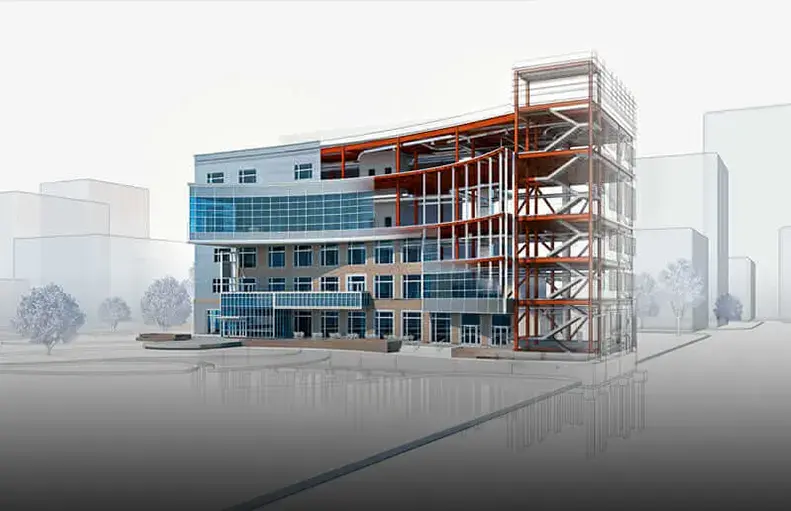
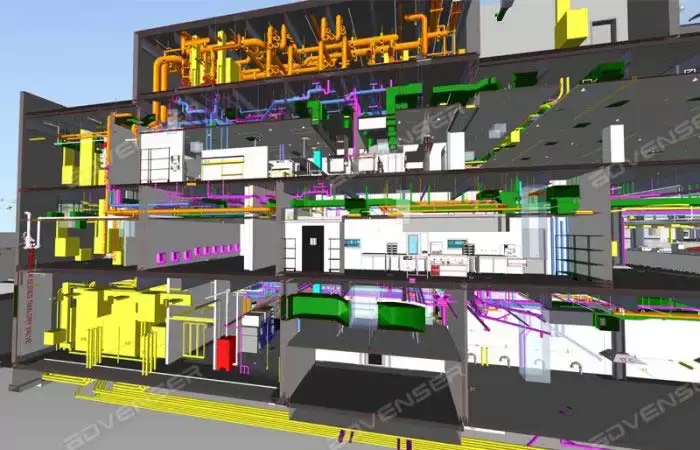
Managing this across multiple teams, over several years, is where traditional project delivery methods fall short. BIM in airport construction brings all of these complex systems into a single cohesive model, ensuring that designers, engineers, and contractors work from the same information and that conflicts among critical systems such as HVAC, electrical, and security are identified before construction begins. (source).
Beyond design, digital construction through BIM helps with scheduling, cost tracking, and long-term facility management. A study published in Springer Nature found that BIM construction reduces project timelines by an average of 20% and costs by 15% on complex infrastructure projects, while also cutting design errors by 30% (source).
Once an airport is operational, BIM continues to add value, giving facility managers a detailed digital model along with real-time data to monitor critical systems and maintain safe operations.
How Does BIM Improve Cost, Time, and Coordination in Airport Construction?
Airport projects are among the most likely construction projects to run over budget and behind schedule. The reason is usually the same: too many teams, too much information, and not enough coordination. Understanding why BIM is important for airport construction projects starts here.
On Cost: BIM construction can reduce costs by up to 10% by enabling accurate cost estimation, real-time project tracking, and reduced rework throughout the airport construction process. A real example is the airport project in Muscat, Oman, which saved $7 million in six months by using a clash-free MEP model developed through BIM in airport construction (source).
On Time: By integrating data related to time through 4D modeling, project teams can simulate construction sequencing and resource allocation before work begins on site, while identifying scheduling conflicts that would otherwise cause delays. This is how BIM improves large infrastructure projects in practice.
On Coordination: The most important benefit of BIM in airport design projects is reduced errors and rework in construction documents, with owners realizing cost savings through clash detection during construction, which saves time and reduces rework.
When you look at the benefits of BIM in airport design collectively, it’s tighter budgets, faster delivery, and fewer on-site reworks. Airports designed with BIM workflows are more efficient, cost-effective, and better coordinated.

Which BIM Courses Help Professionals Work on Large Infrastructure Projects?
Working on large infrastructure projects like airports requires more than knowledge of tools; it also requires understanding how BIM workflows come together across disciplines, teams, and project phases.
Novatr's BIM Professional Course for Architects is built to tackle this gap. This program is particularly relevant because professionals aiming to work on complex BIM construction projects:
-
It covers 10+ industry-standard BIM tools, taught within real project workflows rather than in isolation
-
Live sessions and mentor interactions are led by RIBA and Autodesk-certified professionals with hands-on project experience
-
The curriculum includes coordination, clash detection, documentation, and infrastructure design workflows, skills most in demand on large airport construction and smart airports projects
-
A real-world project component gives learners direct experience applying BIM to a real project scenario before entering the industry
-
Career support, portfolio building, and placement assistance are built into the program