



Why Commercial Architecture Needs Computational Workflows?
Commercial architecture operates under conditions that rarely tolerate approximation. Projects involve thousands of components, interdependent systems, and parallel consultant inputs. Every design decision carries technical, financial, and regulatory consequences.
A façade module must perform consistently across hundreds of repetitions. A shading strategy must satisfy both energy models and planning authorities. A late-stage revision must cascade through geometry, quantities, and specifications without destabilising delivery.
In traditional workflows, these dependencies are managed mentally and through fragmented documentation. This approach breaks down as complexity grows. When designers attempt to track multiple systems manually, errors multiply and coordination slows.
Grasshopper becomes valuable because it externalises logic. Instead of relationships remaining implicit, they are made explicit. Geometry, environmental inputs, fabrication constraints, and BIM parameters become part of a transparent system.
Design intent is no longer stored only in drawings and individual judgement. It is embedded in structured processes that can be tested, modified, and audited.
Use Cases of Grasshopper in Commercial Architecture
1. Facade Rationalization and Environmental Control
Project: Al Bahar Towers
Architect: Aedas
Large commercial façades operate as environmental systems before they are visual statements. Solar exposure, glare, and heat gain directly influence operational costs.
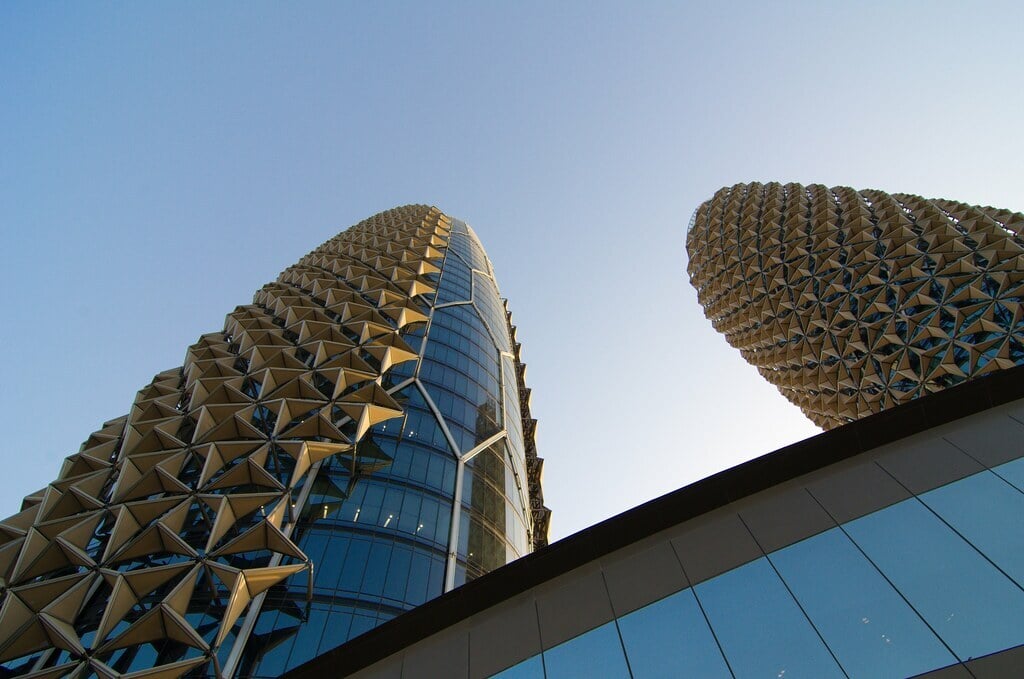
At Al Bahar Towers in Abu Dhabi, the design intent centred on responsive shading. Thousands of façade units adapted to orientation and solar position. Each followed the same principles but responded to different inputs.
The challenge was rule-based variation at scale. Manual adjustment would have collapsed under its own workload.
Grasshopper allowed solar data to drive geometric parameters directly. When performance criteria shifted, the façade recalibrated as a whole. Geometry, structure, and fabrication logic remained aligned.
2. Daylight and Envelope Performance Analysis
Project: Bloomberg European Headquarters
Architect: Foster + Partners
In dense urban contexts, daylight is both a regulatory requirement and a productivity factor. Envelope performance affects energy use, visual comfort, and spatial quality.
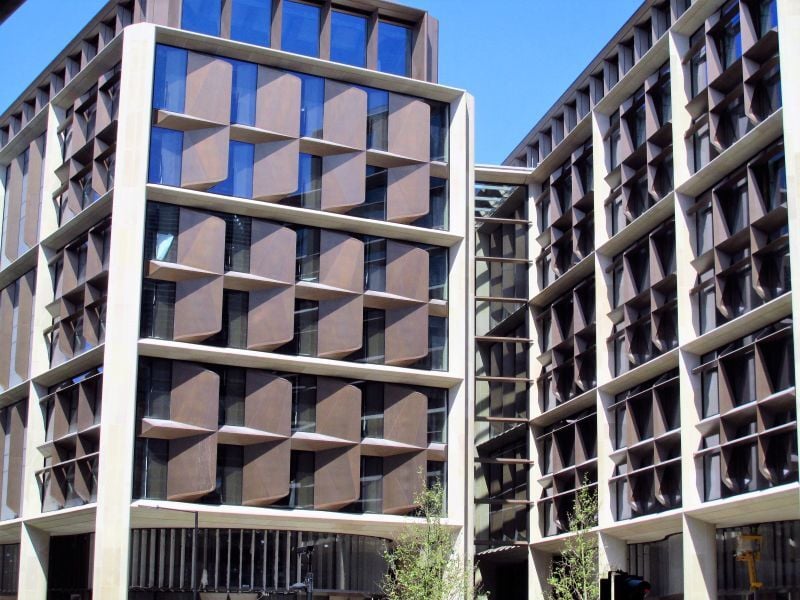
At the Bloomberg European Headquarters in London, early-stage performance evaluation became central to design decision-making. Multiple envelope strategies were compared before geometry was fixed.
Grasshopper workflows connected simulation tools with design models. Daylight, glare, and energy metrics became part of iterative design discussions rather than post-rationalised reports.
This approach shifted performance from verification to exploration. Decisions were supported by data without replacing architectural judgement.
3. BIM Interoperability and Documentation Support
Project: Beijing Daxing International Airport
Architect: Zaha Hadid Architects
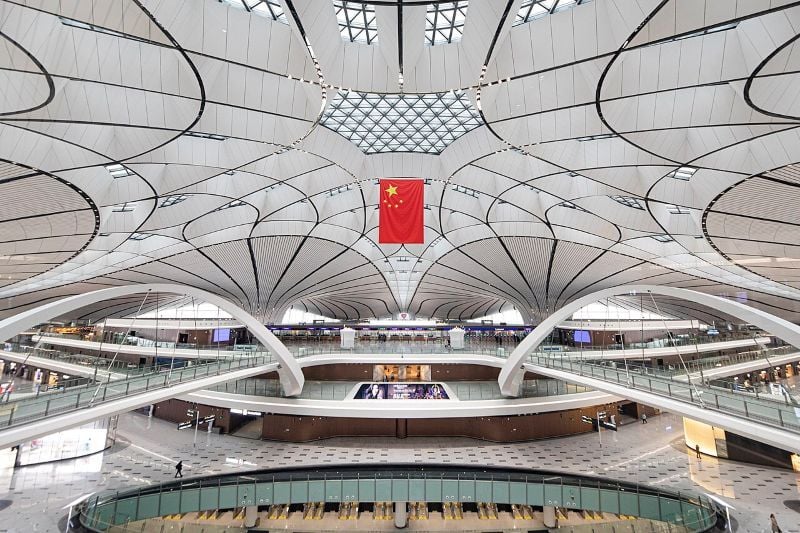
Mega-projects reveal the fragility of file-based coordination. Beijing Daxing International Airport involved complex roof structures, variable components, and extensive documentation demands.
The core problem was change propagation. Minor geometric adjustments could trigger inconsistencies across modelling, scheduling, and drawing systems. Manual retranslation between platforms introduced risk at every stage.
Studies in large infrastructure projects indicate that coordination failures contribute significantly to rework costs. In this context, reliability becomes as important as creativity.
Grasshopper functioned as a translation layer. Instead of geometry being reinterpreted at each stage, relationships were preserved computationally. Parameters governing structure, envelope, and interior systems remained consistent across software environments.
Coordination shifted from reactive correction to controlled management. This reduced uncertainty and supported long-term delivery stability.
4. Geometry Rationalization for Fabrication Control
Project: The Broad Museum
Architect: Diller Scofidio + Renfro
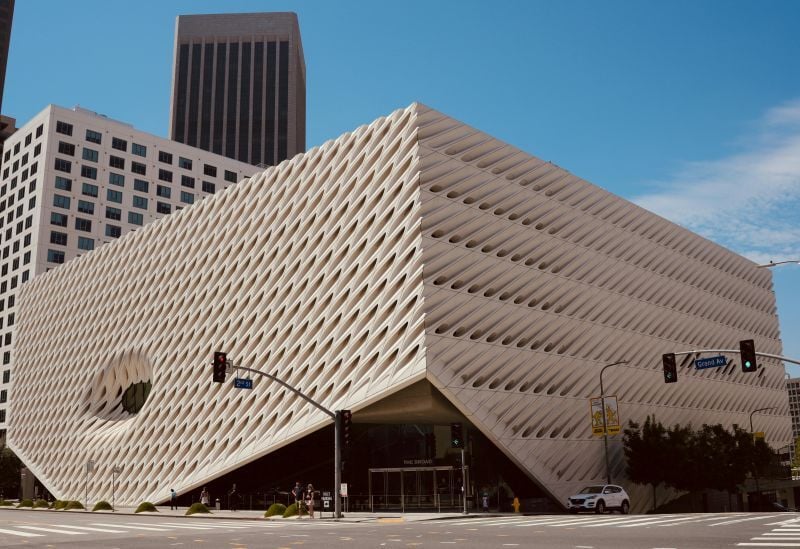
Complex geometry does not automatically justify complex fabrication. At The Broad Museum in Los Angeles, the façade appeared highly differentiated. Treating each panel as unique would have escalated costs and risk.
Fabrication industries depend on repetition and tolerance control. Excessive variation undermines efficiency and quality assurance.
The design challenge was therefore economic as much as aesthetic. Visual richness needed to be preserved within manageable production systems.
Grasshopper enabled rationalisation into limited panel families. Variation emerged through controlled parameter shifts rather than uncontrolled uniqueness.
This illustrates a recurring pattern in computational practice: complexity is most effective when it results from disciplined simplification. The system becomes richer by being more constrained.
5. Climate-Responsive Commercial Design
Project: One Airport Square
Architect: Mario Cucinella Architects
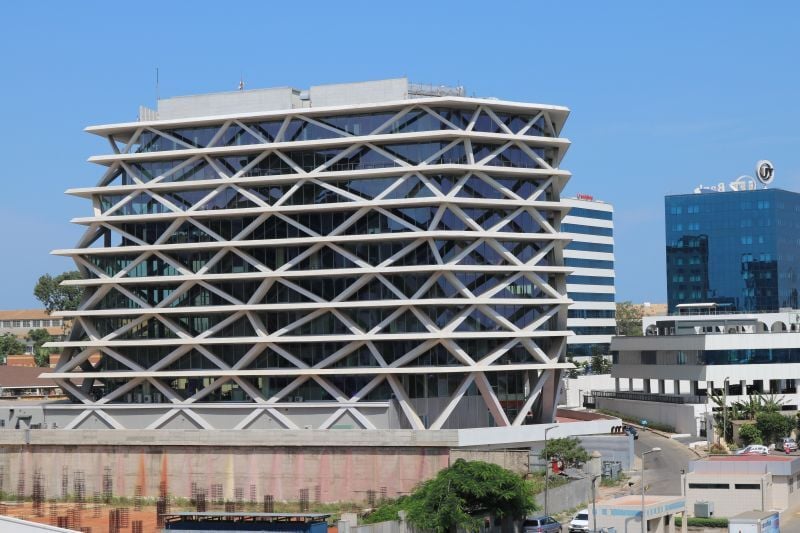
In hot and mixed climates, operational energy dominates lifecycle costs. Passive strategies such as shading and ventilation only succeed when tuned precisely to environmental conditions.
At One Airport Square in Accra, the building envelope had to respond to varying solar exposure across elevations. Generic assumptions would have produced either overheating or excessive shading.
Grasshopper supported iterative testing of shading depth, orientation, and spacing. Environmental simulations were linked directly to geometric models.
Design decisions were therefore evaluated in terms of comfort, energy performance, and constructability simultaneously. Mechanical dependence was reduced through embedded climatic logic.
The building’s environmental performance was not added after design completion. It was integrated into the design process itself.
Cons of Grasshopper in Architectural Projects
Despite its strengths, Grasshopper is not universally appropriate. Experienced teams avoid it deliberately in certain conditions.
-
Overhead Versus Benefit
Computational workflows require upfront investment. Script development, testing, and documentation consume time and resources. For small or stable projects, this overhead may outweigh potential gains. When the scope is limited, manual methods often remain more efficient.
-
Team Skill Mismatch
Grasshopper concentrates knowledge. If only one individual understands the system, dependency risks emerge. Project continuity becomes vulnerable to staffing changes. Without shared literacy, computational models become bottlenecks rather than enablers.
-
Maintainability Issues
Poorly structured scripts deteriorate over time. Unclear naming and undocumented assumptions make systems fragile. Late-stage modifications become risky. Instead of reducing uncertainty, the model introduces it. Computational design succeeds when it is selective, intentional, and institutionally supported.
Grasshopper Skills Commercial Firms Expect You Should Know
In professional recruitment, visual experimentation carries limited weight. Firms prioritise reliability under real constraints. Strong candidates consistently demonstrate:
- Translating design intent into structured parametric logic
- Building modular, readable, and documented definitions
- Managing geometric and non-geometric data systematically
- Integrating environmental analysis workflows
- Linking Grasshopper models with BIM platforms
- Debugging complex dependencies under pressure
- Version-controlling parametric systems
- Communicating computational logic to non-specialists
- Evaluating when not to use parametric methods
- Maintaining long-term script usability