---
title: Top BIM Misconceptions And How Firms Can Fix It 2026
description: Discover the misconceptions that undermine BIM’s potential, and why technology is not the problem. Learn what leaders can fix this with a perception shift.
image: https://blog.novatr.com/hubfs/The%20Most%20Common%20Misconceptions%20About%20BIM%20(and%20the%20Truth%20Behind%20Them).png
---
[Blogs](https://www.novatr.com/learning-hub)
- [Architecture & Construction](https://www.novatr.com/learning-hub?category=Architecture+%26+Construction)
- [BIM](https://www.novatr.com/learning-hub?category=BIM)
- [Computational Design](https://www.novatr.com/learning-hub?category=Computational+Design)
- [Company News](https://www.novatr.com/learning-hub?category=Company+News)
- [Expert Talks](https://www.novatr.com/learning-hub?category=Expert+Talks)
Explore Courses
[Just Launched  BIM Professional Program v.2026 Take your career to the next level by mastering the real-world application of BIM. Know More](https://www.novatr.com/courses/bim-professional-program)
[ Master Computational Design Course Break into an advanced career by learning to apply the power of computation to the art of design. Know More](https://www.novatr.com/courses/computational-design)
[Blogs](https://www.novatr.com/learning-hub)
Explore Blogs
- [Architecture & Construction](https://www.novatr.com/learning-hub?category=Architecture+%26+Construction)
- [BIM](https://www.novatr.com/learning-hub?category=BIM)
- [Computational Design](https://www.novatr.com/learning-hub?category=Computational+Design)
- [Company News](https://www.novatr.com/learning-hub?category=Company+News)
- [Expert Talks](https://www.novatr.com/learning-hub?category=Expert+Talks)
Courses
- [BIM Professional Program v.2026](https://www.novatr.com/courses/bim-professional-program)
- [Master Computational Design](https://www.novatr.com/courses/computational-design)
- [Archi/](https://www.novatr.com/learning-hub?category=BIM)
Featured Article
# SME Perspective: The Most Common Misconceptions About BIM (and the Truth Behind Them)
Ashdeep Singh
April 16, 2026
5 min read
.png)

Building Information Modeling (BIM) has seen exponential growth over the last decade.
But this growth was only among elite organizations globally.
Findings from a BIM maturity survey by[Frontier in Built Environment](https://www.frontiersin.org/journals/built-environment/articles/10.3389/fbuil.2025.1714009/full) showed that only 32% of firms use BIM for the Project lifecycle and data management.
BIM is widely viewed as a 3D modeling / visualization software, rather than a data-driven workflow.
Hence, it is not failing as a technology, but it is misunderstood at a foundational level.
Unlock High-Paying Careers With BIM
Master BIM workflows, software and skills on real projects.
Apply Now
\*Limited seats available
## **Why "BIM is Just 3D Modeling" Remains the Most Damaging Misconception in Practice.**
Many organizations think of BIM as a fancy tool, while BIM involves data, scheduling, cost integration, project tracking, and a lot more.
This mindset prevents them from unlocking BIM’s true potential, even after investing in licensed software.
They sacrifice critical BIM capabilities that could drive productivity and cost efficiency across project phases. It only turns BIM into an expensive drafting package and not a digital transformation.
This misconception shows up in client briefs, where they only ask for 3D models, without any data-driven approach. If an organization is charging BIM fees, priced like drafting, then there is a loss of strategic value.
To shift the focus from BIM-as-geometry to BIM-as-data, three major changes are necessary. These are,
- When collecting and organizing construction data becomes mandatory.
- When BIM is treated as part of the organization’s infrastructure
- When teams think in terms of data and not just modeling
**What Architects Get Wrong About Who BIM is Actually For.**
Even many architects and construction professionals still believe that BIM exists to support design.
This belief is incomplete as BIM is not just for architects, designers, or visualizers. It equally serves other engineering disciplines, such as contractors, project managers, cost consultants, facility managers, and asset owners.
When BIM is treated as a design visualization tool, its value becomes limited. And this misunderstanding begins from the early project stages.
Because of this perception, firms overlook critical areas where BIM enhances processes and outputs. These are:
- Quantity extraction
- Cost estimation
- Clash resolution
- Site coordination
and then post-construction management, which includes asset management, maintenance planning, and operations.
Since architectural firms misread BIM’s audience, most project stakeholders are excluded from its benefits. General contractors can rely on BIM for construction sequencing, coordination, and site logistics.
However, if they get a 3D model with incomplete data, this value is undermined for them.
Further, modern building maintenance workflows also depend on accurate BIM data. But when overlooked at a foundational level, facility managers and clients forgo its value.
Firms need to change their language while framing BIM’s purposes to clients. Instead of believing that “we deliver models”, they should change their perspective to “we deliver project intelligence”.
Data makes the construction project live, where every aspect can be tracked with metrics, and the project shows where it needs greater attention.
## **Why "We do BIM" Often Means Far Less Than the Firms Saying it Thinks it Does.**
Many firms claim to utilize BIM across projects, but what they do is not a complete BIM implementation.
They work keeping BIM as an adjacent support, rather than driving the project with it.
The core gap lies between claiming BIM compliance without operational maturity. A firm that does not yet deliver true BIM value will only be capable of producing 3D models, generating somewhat accurate shop drawings, and running occasional clash detection.
However, firms that follow true BIM-driven project execution deliver data-rich models via coordinated workflows, automated quantity extraction, and lifecycle-ready asset data.
It is possible to assess this gap between claiming and compliance through these three indicators. These are:
- Presence of documented standards
- Consistent data integrity across models
- Maintenance-ready BIM models
Firms should set up standards that guide their practices to achieve higher BIM adoption rates. Rather than being marketing claims, these standards should be translated into disciplined operations across project stages.
These are the most critical benchmarks to set up:
- Forming BIM Execution Plans (BEP) before the project starts
- Reliable BIM models prepared with standard naming conventions, classifications, and parameters.
- Workflow follows consistent data exchange across projects.
## **How the Misconception that BIM Slows Down Design is Holding Firms Back**
**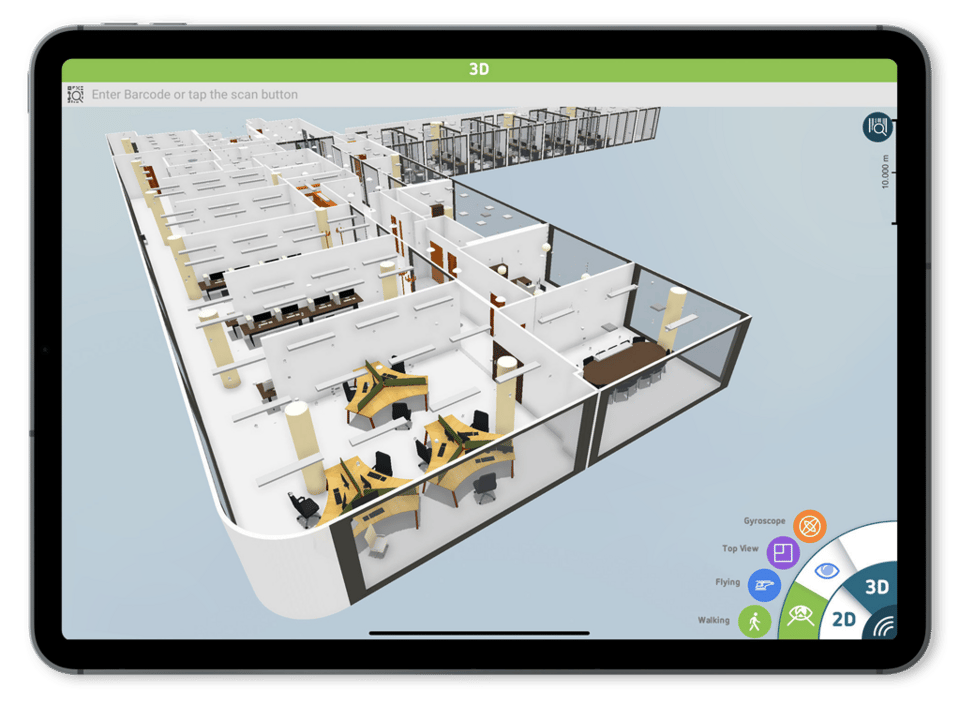**
The misconception that BIM slows down design comes from the early adoption pains. While the challenge is only short-term, most firms fail to overcome it because of a lack of leadership determination.
Organizations looking forward to a fully functional BIM plan should not judge it during the initial phases. Achieving a full-proof BIM framework that is unique to your organization involves a periodic optimization process.
BIM consultants help firms optimize their newly implemented workflows through constant assessment of performance, reliability, and compliance with construction codes and standards.
This misconception occurs in the early adoption phases, where firms need to follow the complete implementation process.
However, BIM can sometimes take longer to become functional due to poorly structured implementation, inexperienced teams, and a lack of an execution plan.
Many architects and BIM firms have had chaotic experiences during initial BIM exposure. However, they can follow the below practices to bring out the true advantages of BIM.
- **Measurable Workflow Gains:** Theoretical benefits will not facilitate real outcomes. Hence, the focus should be on real performance metrics that drive project efficiency and elevate deliverable quality.
- **Starting with Pilot Projects:** Firms need to start implementing BIM pilot projects to come up with their unique workflow preferences.
- **Focusing on Lifecycle Gains:** Firms should see BIM as a long-term investment, where it provides greater benefits to later project stages. With BIM, organizations can offer maintenance-level data to contractors, which will substantially increase their market value.
The point in a firm’s BIM maturity where the speed equation flips is when BIM becomes faster than traditional workflows.
Firms need to focus on these three maturity milestones:
- Standardized templates
- Fully trained BIM teams
- Stable workflow integration
## **What the Industry Gets Wrong about BIM's Relationship with Innovation and Creativity.**
Architects and construction firms usually start with BIM, without critical things like poor templates, over-controlled workflows, and non-standard file sharing.
This causes coordination issues and project delays that slowly reduce trust in BIM.
The real fact is that BIM is not a constraint on design thinking, but the above reasons are.
Optimized BIM workflows act as a framework for design exploration, parametric modeling, rapid design iterations, and performance-driven design.
Professionals use these capabilities of mature BIM workflows to enhance design creativity:
- Rapid design iterations through BIM software applications
- Parametric designs for accurate design updates
- Assessing building performance through simulation before even construction starts
A practice culture where BIM and design ambition reinforce each other is through iterative workflow testing. Organizations need to start with pilot implementation and constantly track workflow performance. With strategic optimization, they will be able to execute projects with end-to-end digital workflows.
Master BIM and Get Hired Faster
Join a community of 8500+ Architects and Engineers.
Explore Now
\*Limited seats available
## **Conclusion**
The gap between BIM ambition and execution often stems from misconceptions. Those are about how it serves and what the ideal implementation process is. Firms struggle with leadership roles not willing to shift their mindset and treat BIM as a process. The ones realizing that BIM implementation requires constant monitoring and optimization can unlock its true potential. Strategic investment in BIM training can substantially remove this perception gap and turn BIM into an integrated workflow rather than a modeling tool.
If you wish to join the upskilling route,[**Novatr’s BIM Course for Architects**](https://www.novatr.com/courses/building-information-modelling) can be a good place to start. The BIM certification for architects offers you the opportunity to learn in-depth about BIM processes, tools, and workflows.
Was this content helpful to you
Like Yes
Dislike No
.png)
TABLE OF CONTENTS
BIM Is The New Standard. Are You Certified?
Get Certified in BIM
SHARE ON YOUR SOCIALS
Link Copied Successfully
Related articles
[ SME Insight: What BIM Tool Investments Give the Best ROI for Firms? 25 February 2026 4 min read](https://blog.novatr.com/blog/bim-tool-investments-best-roi-for-firms) [ Building Information Modelling Top 10 Architecture Firms in Wichita 11 June 2025 6 min read](https://blog.novatr.com/blog/top-architecture-firms-in-wichita) [ Building Information Modelling Top 10 Architecture Firms in San Jose 26 May 2025 11 min read](https://blog.novatr.com/blog/top-architecture-firms-in-san-jose) [ Building Information Modelling Top 10 Architecture Firms In Oakland 2026 22 May 2025 6 min read](https://blog.novatr.com/blog/top-architecture-firms-in-oakland)
Download Syllabus
## BIM Professional Program
Next Cohort
June 2026
Program Duration
7 Months
Premium Program benefits
8 Credentials from Autodesk, NSDC, Novatr
1 program. 10 career paths. Infinite Growth.
40+ ISO 19650 & RIBA real-world projects to practice
1-on-1 guidance. Access 400+ industry experts.
Access the biggest AEC-Tech community on the planet. 8500+ and counting
Curated for you by 100+ global BIM leaders.
Lifelong access to course content
Enter your details to download the program syllabus.
##### BIM Professional Program
June 2026, 7 Months
Your Name Invalid name.
Phone Number Enter a valid phone number
Email Please enter a valid email address.
Select years of experience\* Currently studying 0-1 years 1-2 years 2-4 years 4-8 years 8-10 years 10-12 years 12+ years Invalid selection.
Specialisation Select your background\* Architecture Civil Engineering Mechanical Engineering Electrical Engineering Invalid selection.
Are you professionally trained in interior design?
Yes
No
I agree to the [Terms of Use](https://www.novatr.com/terms-and-conditions) and [Privacy Policy](https://www.novatr.com/privacy-policy), and consent to be contacted by Email, Call, WhatsApp, or SMS.
Submit
Ready to skyrocket your career?
Begin your next chapter in AEC
with Novatr!
We are here to help you take the industry by storm with advanced, tech-first skills.
[Explore Courses](https://www.novatr.com/#courses)
Join our newsletter
Submit
Thank you for signing up.
We’ll send you a nice letter once per week. No spam.

Dare to Disrupt.
Join thousands of people who organise
work and life with Novatr.
Company
- [About Us](https://www.novatr.com/about)
- [BIM Professional Program v.2026](https://www.novatr.com/courses/bim-professional-program)
- [Masters Computational Design](https://www.novatr.com/courses/computational-design)
- [Become a Mentor](https://www.novatr.com/apply-as-mentor)
- [Hiring from Us](https://www.novatr.com/hire-from-us)
- [Careers at Novatr](https://www.novatr.com/career)
Resources
- [Blog](https://www.novatr.com/learning-hub)
- [Media Room](https://www.novatr.com/media-room-home-page)
- [Career Builder](https://www.novatr.com/career-navigator)
- [Events & Webinars](https://www.novatr.com/webinars)
- [FAQs & Support Center](https://www.novatr.com/contact-us)
- [Contact Us](https://www.novatr.com/contact-us)
- [Privacy Policy](https://www.novatr.com/privacy-policy)
- [Terms of Use](https://www.novatr.com/terms-and-conditions)
©2023 Oneistox Network Pvt. Ltd.
All Rights Reserved
```json
{
"@context" : "https://schema.org",
"@type" : "BlogPosting",
"author" : {
"@type" : "Person",
"name" : "Ashdeep Singh",
"url" : "https://blog.novatr.com/blog/author/ashdeep-singh"
},
"dateModified" : "2026-04-16T08:17:22.799Z",
"datePublished" : "2026-04-16T07:46:12.000Z",
"headline" : "Top BIM Misconceptions And How Firms Can Fix It {{year}}",
"image" : [ "https://blog.novatr.com/hubfs/The%20Most%20Common%20Misconceptions%20About%20BIM%20(and%20the%20Truth%20Behind%20Them).png" ],
"mainEntityOfPage" : {
"@id" : "https://blog.novatr.com/blog/top-bim-misconceptions-and-how-firms-can-fix-it",
"@type" : "WebPage"
},
"publisher" : {
"@type" : "Organization",
"logo" : {
"@type" : "ImageObject",
"url" : "https://blog.novatr.com/hubfs/Novatr%20Prev%20OX-2.svg"
}
}
}
```