


.png)

What Is Predictive Maintenance in MEP Systems and How Does It Work?
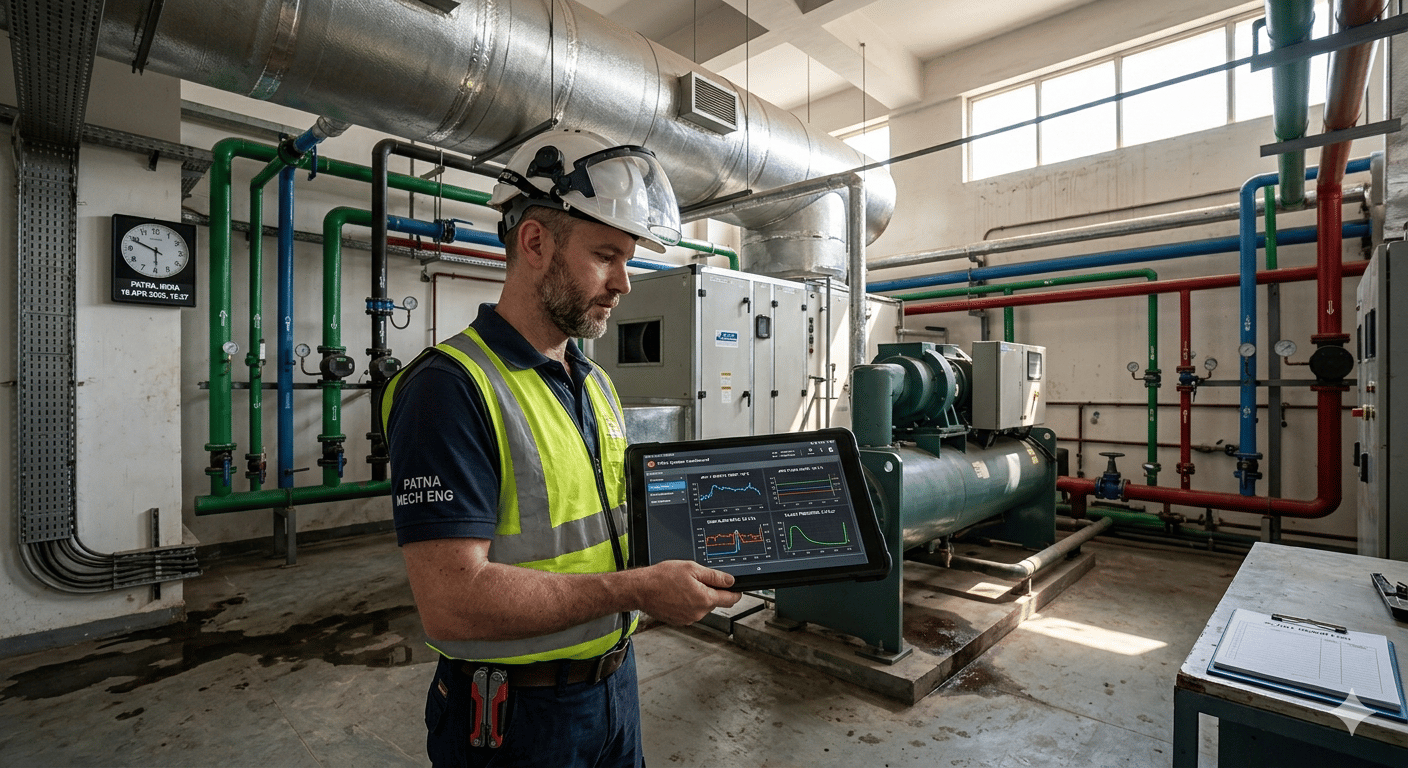
Previously, maintenance was on the basis of fixed schedules. The equipment would be inspected at a predetermined period within a specified number of days with or without the need to fix any issue.Sometimes this worked, but often it led to unnecessary work or missed issues. So, what is predictive maintenance in MEP systems? It is a method of monitoring systems continuously to identify problems early.
In actual use, this usually involves:
-
Collecting sensor data from equipment like chillers, pumps, and panels
-
Using IoT monitoring to track conditions such as temperature, pressure, and vibration
-
Observing performance trends instead of relying only on schedules
-
Detecting unusual behavior that may lead to faults
-
Connecting with facility management systems to trigger alerts
The main difference here is that maintenance decisions are based on real conditions, not assumptions. In simple terms, predictive maintenance helps MEP engineering teams act before a failure happens instead of reacting after it.
How Does Real-Time Sensor Data Help Predict MEP System Failures Before They Happen?
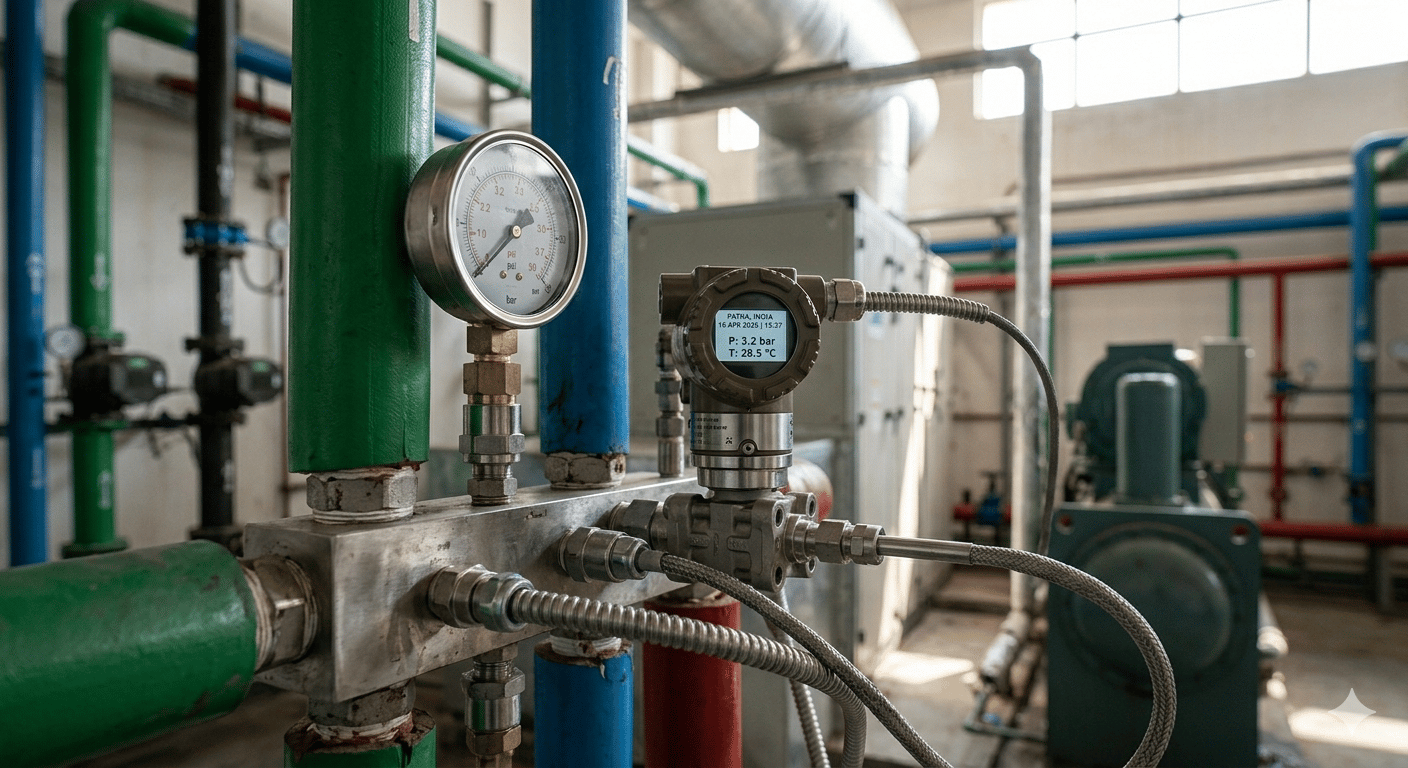
Real-time data has become one of the most important parts of modern building systems. Without it, most issues remain hidden until they become serious. If we talk about how to predict MEP system failures using sensor data, it is important to track how system performance changes over time and spot early signs of failure.
Real-time sensor data helps teams with the following:
-
Monitor equipment continuously instead of checking occasionally
-
Notice small changes in temperature, pressure, or energy use
-
Identify patterns that suggest wear or inefficiency
-
Receive alerts through maintenance systems before breakdown
-
Support better decisions in day-to-day facility management
For example, a pump that slowly starts vibrating more than usual may not fail immediately, but it signals a problem. Without real-time tracking, this kind of change is easy to miss.
This also explains how real time data help in building maintenance, it gives visibility that was not available earlier.
How Do AI and Machine Learning Improve MEP Failure Prediction Accuracy?
Collecting data is one part of the process, but understanding it is another challenge. In large buildings, MEP systems generate a large volume of data that is difficult to manage manually. To handle the data, AI and machine learning are used.
They help teams with the following:
-
Processing large amounts of data from IoT monitoring systems
-
Finding patterns that are not obvious through manual checks
-
Improving fault detection by comparing current data with past failures
-
Predicting possible issues before they become critical
-
Reducing unnecessary alerts over time as systems learn
This also connects with how to use IoT for building system failure prediction, since IoT collects the data and AI makes sense of it.
In many smart buildings, these tools are already being used to improve both maintenance and energy performance. In simple terms, AI helps turn raw data into useful insights for better decision-making.
What Are the Most Critical MEP Systems That Benefit From Real-Time Monitoring?
MEP systems require different levels of monitoring. Some systems require more attention because, if they fail, they directly affect comfort, safety, or daily operations. That is why they need closer attention. At the same time, there are systems that operate more reliably or do not cause major issues if they fail, such as minor lighting circuits or secondary equipment, so they do not require the same level of monitoring. This is where real-time monitoring is mainly used to handle the more critical MEP systems.
Real-time monitoring is especially useful for:
-
HVAC systems, which affect comfort and energy consumption
-
Electrical systems, where faults can lead to outages or safety risks
-
Plumbing systems, where leaks can cause damage over time
-
Fire safety systems, where reliability is essential
-
Pumping systems in high-rise buildings
With this kind of monitoring in place, even small issues can be noticed early, before they turn into bigger problems or affect how the system works.
What Are the Challenges of Implementing Real-Time MEP Monitoring in Existing Buildings?
Real-time monitoring may seem easy, but it's not always practical in existing buildings. In many cases, the problem isn't the technology itself, but how it fits into what's already there. For instance, some problems may arise in older buildings because they weren't designed with digital systems in mind.
The following are some common challenges with real-time MEP monitoring system implementation:
-
Cost of installing sensors and upgrading systems
-
Difficulty in integrating new tools with existing building systems
-
Limited digital infrastructure in older setups
-
Managing large amounts of sensor data
-
Need for trained professionals to interpret data
In India, many older buildings face these issues, especially where modernization happens in phases rather than all at once. Still, more buildings are starting to adopt predictive maintenance during upgrades, mainly to avoid downtime and keep systems running more reliably.

.png)
.png)