---
title: "Industrial vs Commercial MEP Systems: Key Differences 2026"
description: Learn how industrial and commercial buildings differ in HVAC, electrical, and plumbing through a clear MEP system design comparison guide.
image: https://blog.novatr.com/hubfs/Industrial%20vs.%20Commercial%20MEP%20Systems%20What%E2%80%99s%20the%20Difference%20(1).png
---
[Blogs](https://www.novatr.com/learning-hub)
- [Architecture & Construction](https://www.novatr.com/learning-hub?category=Architecture+%26+Construction)
- [BIM](https://www.novatr.com/learning-hub?category=BIM)
- [Computational Design](https://www.novatr.com/learning-hub?category=Computational+Design)
- [Company News](https://www.novatr.com/learning-hub?category=Company+News)
- [Expert Talks](https://www.novatr.com/learning-hub?category=Expert+Talks)
Explore Courses
[Just Launched  BIM Professional Program v.2026 Take your career to the next level by mastering the real-world application of BIM. Know More](https://www.novatr.com/courses/bim-professional-program)
[ Master Computational Design Course Break into an advanced career by learning to apply the power of computation to the art of design. Know More](https://www.novatr.com/courses/computational-design)
[Blogs](https://www.novatr.com/learning-hub)
Explore Blogs
- [Architecture & Construction](https://www.novatr.com/learning-hub?category=Architecture+%26+Construction)
- [BIM](https://www.novatr.com/learning-hub?category=BIM)
- [Computational Design](https://www.novatr.com/learning-hub?category=Computational+Design)
- [Company News](https://www.novatr.com/learning-hub?category=Company+News)
- [Expert Talks](https://www.novatr.com/learning-hub?category=Expert+Talks)
Courses
- [BIM Professional Program v.2026](https://www.novatr.com/courses/bim-professional-program)
- [Master Computational Design](https://www.novatr.com/courses/computational-design)
- [MEP/](https://www.novatr.com/learning-hub?category=BIM)
Featured Article
# Industrial vs. Commercial MEP Systems: What’s the Difference?

Neha Singh
February 9, 2026
10 min read
.png)

Industrial and commercial MEP systems differ in purpose, scale, and performance expectations across building types. Industrial facilities support production-driven processes, while commercial buildings prioritize occupant comfort and efficiency. These contrasting demands shape system sizing, redundancy, and control approaches. Within building services engineering, recognizing these distinctions is critical for accurate planning and coordination and execution overall.
Design complexity also varies greatly between industrial and commercial projects. In the United States, the average MEP engineer salary is about [$101,752](https://www.ziprecruiter.com/Salaries/Mep-Engineer-Salary) per year. This reflects the advanced technical demands of industrial facility design, where continuous operation, safety, and process integration drive system configuration across all major building zones and supporting infrastructure without compromise.
Unlock High-Paying Careers With BIM
Master BIM workflows, software and skills on real projects.
Apply Now
\*Limited seats available
## **What Defines Industrial And Commercial MEP Systems, And Why Do They Differ?**
Industrial and commercial MEP systems are defined by the functions they support and the environments they serve. Industrial systems are built around process-driven operations, while commercial systems focus on occupant comfort and daily business activities. Within MEP engineering, these distinctions shape how systems are planned, coordinated, and integrated into each facility type.
Here’s why these systems differ in practice:
- Industrial facilities must support heavy equipment, while commercial buildings mainly support people and typical building services.
- Industrial systems require higher capacity and durability, whereas commercial systems prioritize energy-efficient MEP systems.
- Industrial layouts change with production needs, while commercial layouts remain relatively stable.
- Industrial environments demand stricter safety controls than most commercial spaces.
- Industrial projects integrate closely with construction engineering systems tied to manufacturing processes.
- Industrial systems often need specialized ventilation and cooling solutions to handle equipment heat loads, while commercial systems maintain standard comfort levels for occupants.
## **Key Design And Operational Difference Between Industrial And Commercial MEP Systems**
**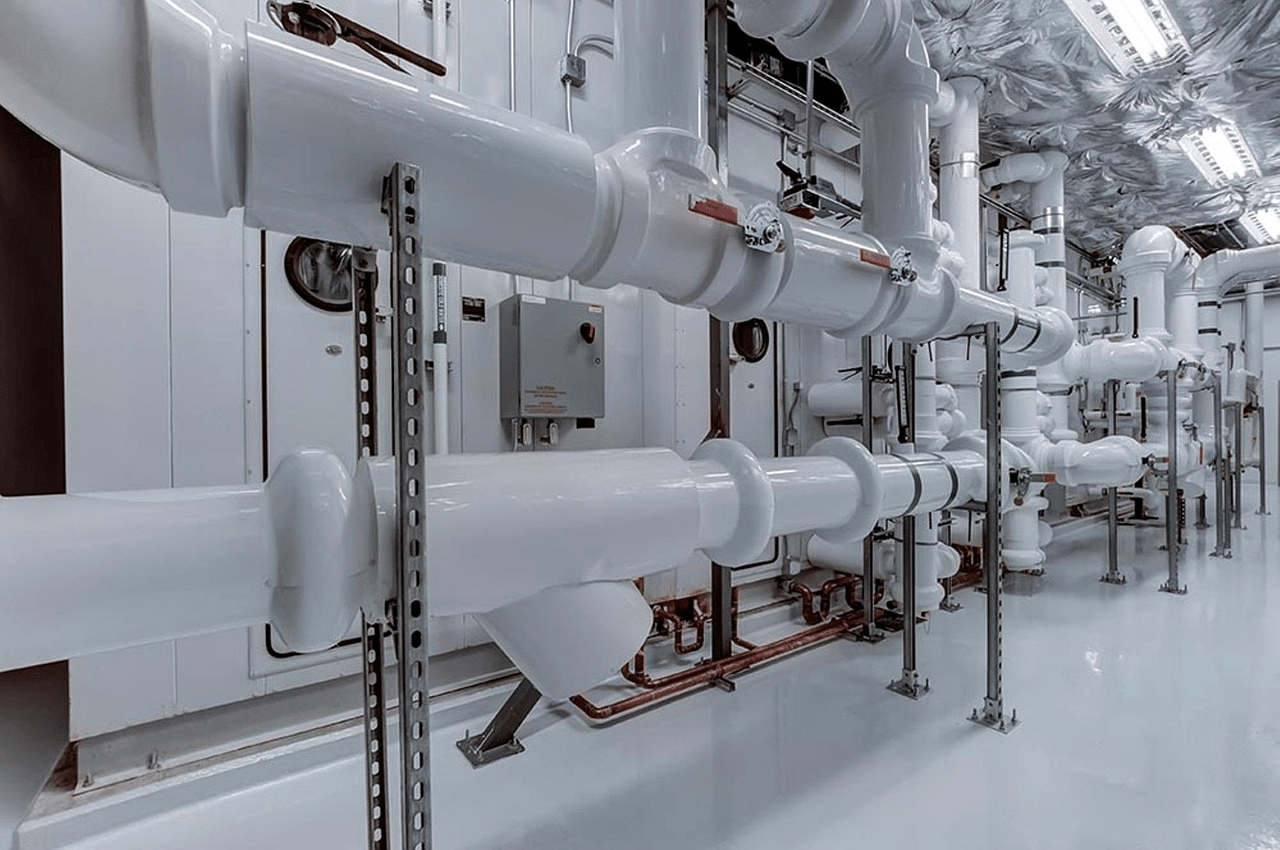**
Design and operational strategies vary significantly based on building purpose, usage intensity, and risk level. These differences influence system layout, control methods, and long-term maintenance planning. In projects tied to commercial building infrastructure, design often centers on efficiency and consistency, while industrial environments require more specialized and resilient solutions.
Below is a clear comparison:
| **Aspect** | **Industrial MEP Systems** | **Commercial MEP Systems** |
| --- | --- | --- |
| System Capacity | Built to handle continuous high-demand operations | Sized for typical occupant and tenant loads |
| Redundancy Level | Designed with fail-safes and backup configurations | Backups applied only where code or risk requires |
| Control Complexity | Uses layered automation tied to process functions | Uses standard building automation controls |
| Maintenance Frequency | Requires ongoing technical servicing | Follows scheduled preventative maintenance |
| Space Allocation | Dedicates extensive areas for equipment | Limits equipment areas to essential space |
| Integration Needs | Directly connected to manufacturing machinery | Primarily supports building functions |
## **How do HVAC, Electrical, And Plumbing Needs Vary Across These Sectors?**
HVAC, electrical, and plumbing systems are designed based on building use, operating intensity, and environmental demands. Industrial facilities often require high-capacity power and precise climate control, while commercial buildings focus on comfort and standard utilities. These differences directly affect design and planning, making it essential to consider MEP system requirements for manufacturing plants when aligning system layout and operational needs.
| **System Type** | **Industrial Buildings** | **Commercial Buildings** |
| --- | --- | --- |
| HVAC | Manages heat from equipment and controls air quality | Regulates indoor temperature for occupants |
| Electrical | Feeds high-demand machinery and systems | Powers lighting and general equipment |
| Plumbing | Supports process fluids and specialized drainage | Supports domestic water and sanitation |
| Ventilation | Extracts fumes and airborne contaminants | Provides fresh air circulation |
| Cooling | Controls temperatures for machinery and production processes | Maintains comfortable indoor temperatures for occupants |
| Load Profile | Fluctuates with production activity | Remains relatively steady |
| Typical Setting | Manufacturing and processing facilities | commercial MEP systems for office and retail spaces |
## **What Challenges Do Engineers Face When Designing For Industrial Vs. Commercial Projects?**
**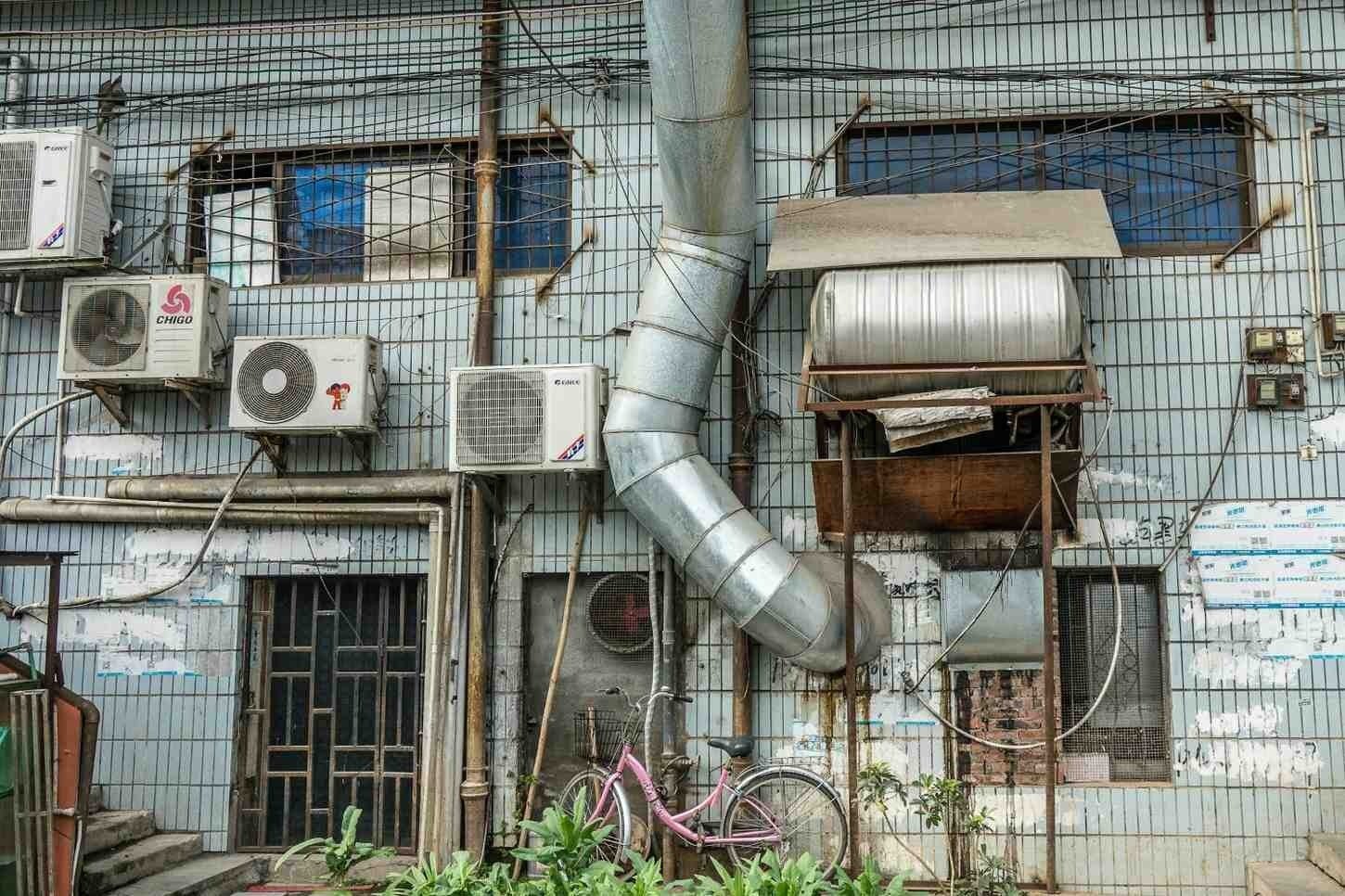**
Industrial and commercial projects present different technical and coordination demands that directly affect design decisions. Engineers must account for contrasts in system scale, operational risk, and integration requirements. These differences often surface through key design challenges in industrial MEP systems and the distinct constraints found in commercial developments.
Some of the most common challenges that engineers deal with include:
- Predicting future production changes that affect system sizing in industrial facilities.
- Designing around fixed machinery in industrial spaces versus movable layouts in commercial buildings.
- Managing higher heat, vibration, and noise levels generated by industrial equipment.
- Accounting for factors affecting MEP design in industrial environments such as dust, humidity, and contaminants.
- Coordinating shutdown windows in industrial plants versus occupied commercial spaces.
- Applying different permitting and inspection requirements across project types.
## **Did You Know?**
The global commercial MEP services market is projected to grow from [USD 15.89 billion](https://www.techsciresearch.com/report/commercial-mechanical-electrical-and-plumbing-services-market/16250.html) in 2026 to [USD 21.55 billion](https://www.techsciresearch.com/report/commercial-mechanical-electrical-and-plumbing-services-market/16250.html) by 2031, highlighting the expanding importance of advanced MEP systems across industrial and commercial buildings.
## **How BIM And Digital Tools Help Optimize Both Types Of MEP Systems**
Building Information Modeling (BIM) is a digital approach that creates a detailed virtual representation of a facility’s systems, enabling engineers to plan, analyze, and coordinate design work efficiently. By simulating operations and evaluating system interactions, BIM helps align mechanical, electrical, and plumbing planning with building needs.
For industrial and commercial projects, these tools clarify layouts, highlight potential constraints, and support informed decision-making. Courses like the [BIM Course for MEP Engineers](https://www.novatr.com/us/courses/bim-for-mep-engineers) by Novatr train professionals to apply these tools effectively, improving precision and project coordination while reducing uncertainties.
Key ways these tools provide optimization include:
- **Clash Detection:** Uses coordinated 3D models to spot conflicts in mechanical, electrical, and plumbing layouts before construction.
- **System Performance Checks:** Runs simulations with MEP software to refine equipment sizing and efficiency.
- **Installation Planning:** Highlights potential construction or space issues early to prevent delays.
- **Layout Flexibility:** Lets engineers quickly adjust designs when equipment or floor plans change.
- **Maintenance Forecasting:** Tracks assets and schedules maintenance for long-term system reliability.
- **Team Collaboration:** Provides a shared digital environment for engineers, architects, and contractors to coordinate effectively.
Master BIM and Get Hired Faster
Join a community of 8500+ Architects and Engineers.
Explore Now
\*Limited seats available
## **Conclusion**
Industrial and commercial MEP systems are shaped by different operational priorities, risk levels, and spatial demands. Understanding these distinctions supports better planning, coordination, and long-term performance. Factors such as cooling and ventilation differences in industrial vs commercial projects and system integration needs directly influence design decisions. Clear evaluation helps teams align solutions with actual building use.
Effective outcomes rely on informed design choices and the right technical skills. Structured learning, such as the [BIM Course for MEP Engineers](https://www.novatr.com/us/courses/bim-for-mep-engineers) offered by [Novatr](https://www.novatr.com/us), can support stronger application of sustainable design practices in industrial and commercial MEP. For deeper technical insights, visit our [resource page](https://www.novatr.com/learning-hub) to explore related guides and references.
## **FAQs**
### **1. How do design requirements vary for industrial vs. commercial buildings?**
Industrial buildings prioritize system capacity, process integration, and operational safety, while commercial spaces focus on occupant comfort, energy efficiency, and space optimization. Design decisions reflect differences in load demands, equipment density, and usage patterns.
### **2. What types of HVAC systems are used in industrial facilities compared to commercial spaces?**
Industrial HVAC systems often include high-capacity air handling units, process cooling, and ventilation for machinery, whereas commercial buildings rely on standard rooftop units, VRF systems, and air distribution for occupant comfort. System sizing and airflow requirements differ accordingly.
### **3. How do maintenance needs differ between industrial and commercial MEP systems?**
Industrial MEP systems require frequent technical inspections and preventive servicing due to heavy-duty equipment and process-critical operations. Commercial systems follow routine maintenance schedules focusing on comfort systems, lighting, and general utility services.
Was this content helpful to you
Like Yes
Dislike No
.png)
TABLE OF CONTENTS
BIM Is The New Standard. Are You Certified?
Get Certified in BIM
SHARE ON YOUR SOCIALS
Link Copied Successfully
Related articles
[.png) Using Dynamo Scripts to Automate MEP Workflows in Revit 23 June 2025 5 min read](https://blog.novatr.com/blog/dynamo-scripts-to-automate-mep-workflows-in-revit) [ Types of Plumbing Fixtures Used in MEP Projects 25 September 2025 5 min read](https://blog.novatr.com/blog/plumbing-fixtures-used-in-mep-projects) [ Revit vs. Navisworks for Coordination in MEP: Which Tool Is Better? 23 June 2025 6 min read](https://blog.novatr.com/blog/revit-and-navisworks-for-effective-mep-coordination) [ Top MEP Consultants in Navi Mumbai 2026 12 September 2025 6 min read](https://blog.novatr.com/blog/top-mep-consultants-in-navi-mumbai)
Download Syllabus
## BIM Professional Program
Next Cohort
June 2026
Program Duration
7 Months
Premium Program benefits
8 Credentials from Autodesk, NSDC, Novatr
1 program. 10 career paths. Infinite Growth.
40+ ISO 19650 & RIBA real-world projects to practice
1-on-1 guidance. Access 400+ industry experts.
Access the biggest AEC-Tech community on the planet. 8500+ and counting
Curated for you by 100+ global BIM leaders.
Lifelong access to course content
Enter your details to download the program syllabus.
##### BIM Professional Program
June 2026, 7 Months
Your Name Invalid name.
Phone Number Enter a valid phone number
Email Please enter a valid email address.
Select years of experience\* Currently studying 0-1 years 1-2 years 2-4 years 4-8 years 8-10 years 10-12 years 12+ years Invalid selection.
Specialisation Select your background\* Architecture Civil Engineering Mechanical Engineering Electrical Engineering Invalid selection.
Are you professionally trained in interior design?
Yes
No
I agree to the [Terms of Use](https://www.novatr.com/terms-and-conditions) and [Privacy Policy](https://www.novatr.com/privacy-policy), and consent to be contacted by Email, Call, WhatsApp, or SMS.
Submit
Ready to skyrocket your career?
Begin your next chapter in AEC
with Novatr!
We are here to help you take the industry by storm with advanced, tech-first skills.
[Explore Courses](https://www.novatr.com/#courses)
Join our newsletter
Submit
Thank you for signing up.
We’ll send you a nice letter once per week. No spam.

Dare to Disrupt.
Join thousands of people who organise
work and life with Novatr.
Company
- [About Us](https://www.novatr.com/about)
- [BIM Professional Program v.2026](https://www.novatr.com/courses/bim-professional-program)
- [Masters Computational Design](https://www.novatr.com/courses/computational-design)
- [Become a Mentor](https://www.novatr.com/apply-as-mentor)
- [Hiring from Us](https://www.novatr.com/hire-from-us)
- [Careers at Novatr](https://www.novatr.com/career)
Resources
- [Blog](https://www.novatr.com/learning-hub)
- [Media Room](https://www.novatr.com/media-room-home-page)
- [Career Builder](https://www.novatr.com/career-navigator)
- [Events & Webinars](https://www.novatr.com/webinars)
- [FAQs & Support Center](https://www.novatr.com/contact-us)
- [Contact Us](https://www.novatr.com/contact-us)
- [Privacy Policy](https://www.novatr.com/privacy-policy)
- [Terms of Use](https://www.novatr.com/terms-and-conditions)
©2023 Oneistox Network Pvt. Ltd.
All Rights Reserved
```json
{
"@context" : "https://schema.org",
"@type" : "BlogPosting",
"author" : {
"@type" : "Person",
"name" : "Neha Singh",
"url" : "https://blog.novatr.com/blog/author/neha-singh"
},
"dateModified" : "2026-02-09T09:09:22.411Z",
"datePublished" : "2026-02-09T08:58:47.000Z",
"headline" : "Industrial vs Commercial MEP Systems: Key Differences {{year}}",
"image" : [ "https://blog.novatr.com/hubfs/Industrial%20vs.%20Commercial%20MEP%20Systems%20What%E2%80%99s%20the%20Difference%20(1).png" ],
"mainEntityOfPage" : {
"@id" : "https://blog.novatr.com/blog/industrial-vs-commercial-mep-systems",
"@type" : "WebPage"
},
"publisher" : {
"@type" : "Organization",
"logo" : {
"@type" : "ImageObject",
"url" : "https://blog.novatr.com/hubfs/Novatr%20Prev%20OX-2.svg"
}
}
}
```