


Who is a BIM Automation Specialist?
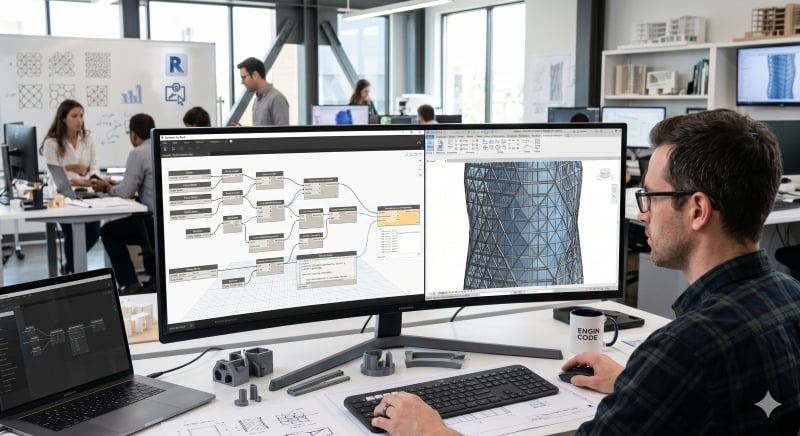
A BIM automation specialist works with digital building models, but the role differs from that of a regular BIM modeler. Instead of focusing only on creating models, they work on reducing repetitive tasks through automation and improving workflows.
In many civil and infrastructure projects, teams handle large datasets and tight deadlines, where automation becomes necessary. The role combines engineering knowledge with some scripting to make tasks like model updates, data handling, and coordination easier.
Key Responsibilities
These are the main tasks handled by BIM Automation Specialist.
Key responsibilities include:
- Create scripts using tools like Dynamo and Python to support BIM workflows
- Cut down repeated work in modeling, documentation, and scheduling
- Link BIM models with external data sources like Excel or databases
- Help different teams coordinate better across structural, architectural, and MEP systems
- Build parametric components that adjust with design changes
- Assist in applying BIM automation process across different project stages
- Spot inefficiencies in workflows and find ways to reduce them through automation
- Maintain model accuracy while automation is being used
These responsibilities may sound technical at first, but the idea is straightforward. The goal is to make BIM work more consistent, cut down on manual work, and avoid common mistakes.
How to Become a BIM Automation Specialist? Education & Key Skills
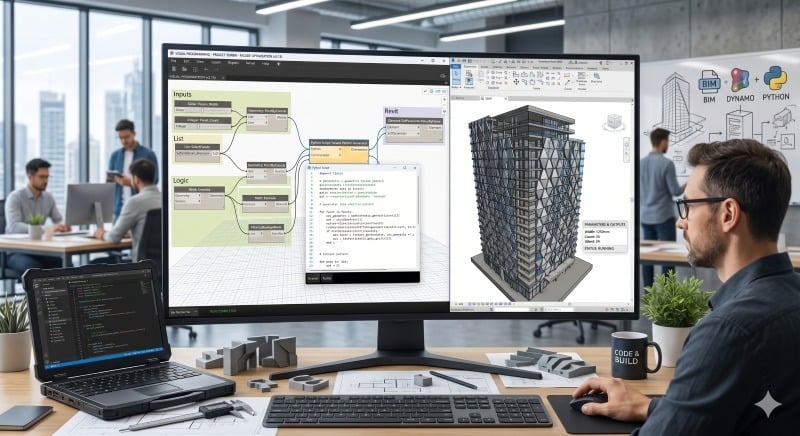
Most people don't start BIM automation with coding. They usually come from an engineering or BIM background first. Over time, as you get comfortable with tools and workflows, scripting becomes part of the process, along with understanding how different systems connect within a project. Most people move into this role after working in BIM for some time.
Qualification
People in Bim Automation usually have a similar kind of background.
Typical qualifications include:
- A degree in Civil Engineering or Architecture
- Some exposure to BIM tools during college or internships
- Understanding how drawings and BIM models are put together
- Awareness of how projects move from design to execution
- Certifications can help, but they are not always required
A technical background helps because automation should match real site work, not just what looks correct in software.
Technical Skills
BIM automation usually comes with practice. You don't need everything at once, but over time these skills start to matter:
- Revit and Navisworks are used regularly, so being comfortable with them helps
- Tools like Dynamo or Grasshopper come in when you start automating tasks
- Some scripting, especially Dynamo Python BIM, becomes useful as work gets complex
- Parametric modeling is important when designs keep changing
- Tasks like schedules, quantities, and clash checks are often automated
- Different tools need to connect, so a basic idea of APIs helps
- The BIM automation process changes across stages, so understanding that is important
Most people don't start with complex systems. It usually begins with small scripts, and then grows from there.
Soft Skills
Technical skills alone don't carry the work. Some basic habits make a difference:
- Thinking step by step helps when workflows get complicated
- Problem-solving becomes important when things don't run as expected
- Communication matters because multiple teams are involved
- Attention to detail is needed, especially with large models
- Learning never really stops, since tools keep changing
Without these, even good technical knowledge can fall short in real project situations.
BIM Automation Specialist Salary Around The World
The salary in BIM automation varies based on experience, location, and how advanced the role is within a company. As automation is used more in construction, the gap between regular BIM roles and automation-focused roles is easier to notice.
|
Region |
Average Salary |
|
USA |
|
|
India |
₹6 LPA to ₹18 LPA |
|
Middle East |
$40,000 to $85,000 per year |
In the United States, salaries are typically higher because BIM automation is already standard across many large infrastructure and commercial projects. Many firms prefer people who can handle both BIM work and some scripting, since it helps in everyday project work.
In most regions, people with automation skills often earn more than those working only in regular BIM roles.
Career Path for BIM Automation Specialist
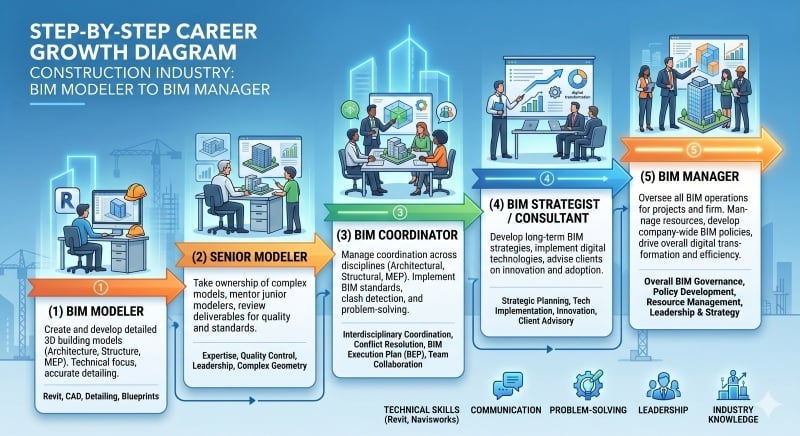
A career in BIM automation usually does not start directly with automation. Most professionals begin with core BIM roles and gradually shift toward scripting and optimization.
Career Hierarchy
- BIM Modeler / Revit Technician
- BIM Coordinator
- BIM Engineer (Civil / Structural / MEP)
- BIM Automation Specialist
- BIM Manager
- Digital Construction Manager
- Head of BIM / Digital Engineering
At the beginning, the focus is on creating and managing models. As you progress, the role becomes more about improving systems, handling teams, and making decisions.
For civil engineers, this path opens up opportunities beyond traditional site or design roles. BIM automation jobs for civil engineers are becoming more common, especially in firms working on large-scale projects.
How to Start Your Career in BIM?
To enter a career in BIM (Building Information Modeling), the software is not all you need to know, but how contemporary construction projects are planned, coordinated and delivered through data-driven processes. As the AEC industry shifts toward smarter, collaborative workflows, BIM professionals are in high demand for their ability to bridge design, engineering, and execution.
Take your civil engineering career to the next level with Novatr’s BIM Professional Course for Civil Engineers — a project-based program that prepares you to plan, design, and manage construction projects using 12+ industry software and essential BIM plugins.
Learn how to work with Autodesk Revit, Navisworks, construction cloud and key plugins like DiRoots.One, pyRevit, EF-Tools, ProSheets, Issue and Model Checker for Revit to improve automation, accuracy, and project efficiency.
Here’s what you’ll gain:
- End-to-end understanding of BIM workflows — modeling, estimation, coordination, sequencing, and documentation.
- Hands-on training aligned with ISO 19650 standards and real residential + commercial projects.
- Globally recognized certifications:
- Novatr Course Certificate
- Autodesk User Certification
- NSDC Skill Certificate
- Novatr Specialization Certificate, if opted
After completing the core modules, learners can also choose 2 additional specializations, including:
- Visual Programming with Dynamo – for automation and parametric workflows
- 4D, 5D & 6D with BIM – for time, cost, and facility integration
- Tekla for RCC Modeling – for detailed steel and concrete modeling
- Civil 3D for Infrastructure – for roadways, railways, and utilities
- Project Strategy & Optimization with Plannerly - Plan, structure, and audit BIM execution plans.
Equip yourself with practical BIM skills and become job-ready for global infrastructure and construction opportunities.

.jpg)