---
title: How Learning Computational Design Elevates BIM Architects 2026
description: Discover how learning computational design boosts BIM architects’ efficiency, creativity, and career opportunities in modern architectural workflows.
image: https://blog.novatr.com/hubfs/How%20Learning%20Computational%20Design%20Elevates%20BIM%20Architects.png
---
[Blogs](https://www.novatr.com/learning-hub)
- [Architecture & Construction](https://www.novatr.com/learning-hub?category=Architecture+%26+Construction)
- [BIM](https://www.novatr.com/learning-hub?category=BIM)
- [Computational Design](https://www.novatr.com/learning-hub?category=Computational+Design)
- [Company News](https://www.novatr.com/learning-hub?category=Company+News)
- [Expert Talks](https://www.novatr.com/learning-hub?category=Expert+Talks)
Explore Courses
[Just Launched  BIM Professional Program v.2026 Take your career to the next level by mastering the real-world application of BIM. Know More](https://www.novatr.com/courses/bim-professional-program)
[ Master Computational Design Course Break into an advanced career by learning to apply the power of computation to the art of design. Know More](https://www.novatr.com/courses/computational-design)
[Blogs](https://www.novatr.com/learning-hub)
Explore Blogs
- [Architecture & Construction](https://www.novatr.com/learning-hub?category=Architecture+%26+Construction)
- [BIM](https://www.novatr.com/learning-hub?category=BIM)
- [Computational Design](https://www.novatr.com/learning-hub?category=Computational+Design)
- [Company News](https://www.novatr.com/learning-hub?category=Company+News)
- [Expert Talks](https://www.novatr.com/learning-hub?category=Expert+Talks)
Courses
- [BIM Professional Program v.2026](https://www.novatr.com/courses/bim-professional-program)
- [Master Computational Design](https://www.novatr.com/courses/computational-design)
- [Archi/](https://www.novatr.com/learning-hub?category=BIM)
Featured Article
# SME Insight: How Learning Computational Design Elevates BIM Architects
Ashdeep Singh
April 7, 2026
5 min read


Ashdeep Singh is a BIM Manager who completed his B.Arch from Amity University. Currently working with Novatr, he has been involved in projects such as the Diriyah Arena in Saudi Arabia and the New Life Arena in Chennai. You can learn more about his work and connect with him on **[LinkedIn](https://www.linkedin.com/in/ashdeepsingh-bim/)****.**
Computational design is transforming the way BIM architects work by introducing algorithmic thinking into design processes. This approach helps professionals handle complex geometries, automate repetitive tasks, and explore multiple design options efficiently. By combining technical precision with analytical thinking, architects can produce models that are more accurate, adaptable, and structured, enhancing decision-making while improving the overall quality and clarity of architectural designs within BIM workflows.
In addition to improving efficiency, computational design broadens the scope of what BIM workflows can achieve. Parametric tools and visual programing enable architects to simulate performance, test structural variations, and maintain better model accuracy. These methods strengthen problem-solving across different project types, giving architects the ability to address design challenges that standard BIM processes alone may not fully manage, improving outcomes and supporting more informed design strategies.
Unlock High-Paying Careers With BIM
Master BIM workflows, software and skills on real projects.
Apply Now
\*Limited seats available
## **Why Computational Design Is Becoming Essential for Modern BIM Workflows**
Computational design is increasingly central to modern BIM workflows, shaping how architects approach complex projects and structure modeling processes. By incorporating algorithm-based thinking and parametric methods, professionals gain a more systematic way to explore design alternatives, identify potential issues, and adapt models as projects evolve. This shift emphasizes analytical problem-solving, data-informed decision-making, and workflow efficiency. Understanding computational principles within BIM helps architects anticipate challenges, manage complexity, and prepare for the growing technological demands of contemporary architectural practice.
The following highlights why computational design is essential for BIM workflows:
- It generates parametric models that automatically update when design inputs change, reducing errors and rework.
- Algorithm-driven processes improve speed and efficiency for tasks that would otherwise require repetitive manual effort.
- Computational methods allow architects to simulate structural performance, energy use, and environmental impacts before construction begins.
- Designers can produce multiple design options quickly, enabling comparison and selection of the most effective solutions.
- Integration of computation within BIM improves coordination between teams by linking design, analysis, and documentation seamlessly.
- Architects who understand computational design can optimize complex project requirements, meeting technical standards while supporting innovative outcomes.
## **How Computational Design Expands What Architects Can Do With BIM Tools**
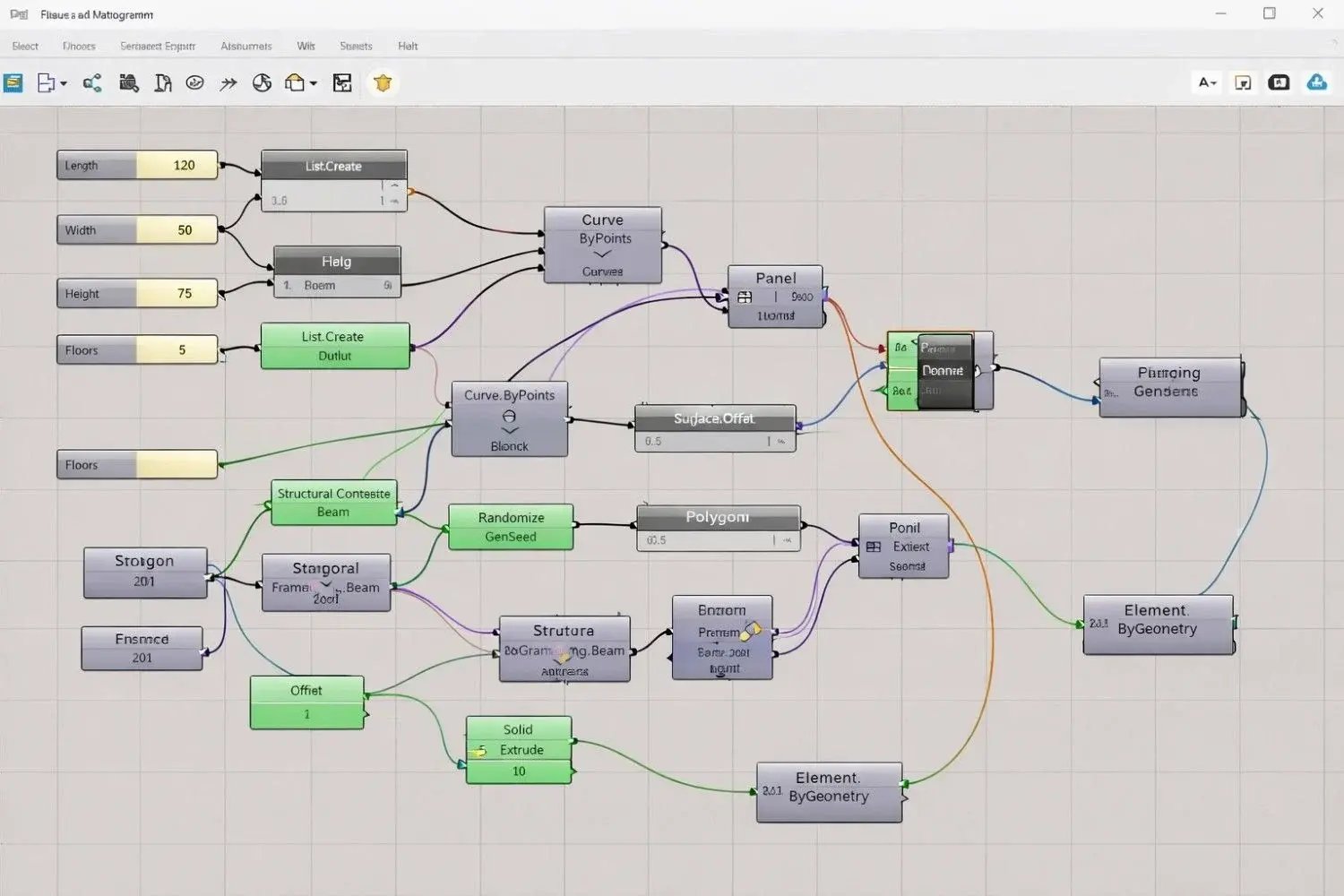
Computational design is transforming the way architects engage with BIM tools by introducing algorithmic thinking, parametric approaches, and automation into the modeling process. This evolution enhances how professionals approach complex design challenges, experiment with multiple alternatives, and incorporate data-driven insights into their work.
Adopting these methods provides architects with a broader perspective on design possibilities, improves adaptability, and strengthens overall modeling practices. It establishes a foundation for more precise, dynamic, and innovative workflows without relying solely on traditional BIM processes.
Here’s how computational design specifically expands BIM capabilities:
- Architects can generate parametric structures that adapt instantly to changes in design requirements, increasing flexibility.
- Visual programing enables automated placement and adjustment of building elements, reducing repetitive manual modeling.
- Algorithmic analysis allows designers to simulate structural, environmental, or performance scenarios directly within the BIM model.
- Data-driven workflows integrate calculations, constraints, and rules, enabling architects to explore complex solutions that manual modeling cannot handle.
- Computational tools facilitate advanced coordination, linking multiple model components and interdisciplinary data for comprehensive design management.
- Architects can create irregular or highly complex forms with precision, solving geometric challenges that traditional BIM methods cannot achieve.
## **Real-World Impact: Career Growth, Portfolio Strength & Competitive Advantage**
Computational design is reshaping the professional landscape for BIM architects by influencing how design processes are structured and executed. Its adoption broadens skill sets, encourages analytical thinking, and introduces new ways to approach complex projects. Architects exploring these methods can enhance their problem-solving capabilities, demonstrate technical versatility, and strengthen their professional presence. This shift highlights the growing importance of integrating computational thinking into architectural practice and sets the stage for greater career opportunities, project variety, and portfolio distinction.
The following illustrates how computational design impacts career growth and professional opportunities:
- Architects with computational design skills can take on advanced roles involving parametric and algorithm-driven workflows.
- Portfolio projects featuring computational techniques attract more complex, high-profile assignments.
- Professionals gain a competitive edge by combining BIM expertise with algorithmic and data-driven design methods.
- Computational design proficiency enables architects to contribute to interdisciplinary teams with technical and analytical insights.
- Architects can explore specialized projects, such as performance-driven or generative design challenges, inaccessible to peers with only BIM knowledge.
- Firms increasingly recognize computationally skilled architects for leadership or innovation-focused positions, accelerating career progression.
## **The Future: Why BIM Architects Must Evolve Into Computational Thinkers**
As BIM technology advances, architects are increasingly expected to integrate computational thinking into their workflows. Understanding algorithmic methods, data-driven modeling, and automation is becoming central to handling complex projects efficiently. Emerging AI tools and intelligent design platforms will further transform design expectations, requiring architects to work with dynamic models, predictive simulations, and adaptive workflows. Developing these skills positions professionals to meet evolving project demands and leverage technology for innovative architectural solutions.
The following outlines key aspects shaping the future of computational BIM expertise:
- Mastery of visual programing and parametric logic will become essential for creating adaptable BIM models.
- AI-assisted design tools will require architects to interpret predictive outputs and integrate them into decision-making.
- Automation of repetitive tasks will enable architects to focus on high-value design and optimization work.
- Knowledge of data analytics within BIM will open opportunities for performance-driven and sustainability-focused projects.
- Computational skills will enable architects to lead interdisciplinary teams, connecting design, engineering, and analysis seamlessly.
- New roles such as computational design strategist or BIM-AI integration specialist will emerge in architecture firms.
## **SME Recommendations: Where Architects Should Start With Computational Design**
For architects starting their computational design journey, selecting the right software, learning path, and practical exercises is essential for building a strong foundation. Early exposure to parametric modeling, scripting, and visual programing equips learners to manage increasingly complex models over time. Combining guided tutorials, small-scale projects, and structured exercises helps architects develop confidence and refine analytical skills.
This approach supports the gradual integration of computational workflows into BIM projects. It ensures smoother adoption, measurable improvements in efficiency, and stronger capability in design outcomes.
Here are key recommendations for starting with computational design:
- Beginners should start with node-based visual programing tools like Dynamo or Grasshopper to grasp parametric concepts.
- Learning basic Python scripting within BIM environments accelerates automation and extends workflow capabilities.
- The structured online courses and tutorials present architects with an efficient method to learn new skills through defined instructional steps.
- Hands-on mini-projects, such as creating adaptive facades or parametric furniture, reinforce conceptual understanding.
- Experimenting with small-scale simulations, like daylight or energy analysis, offers quick insight into model-driven design decisions.
- Iterative exercises that modify parameters and explore multiple design outcomes help build confidence and adaptability.
Master BIM and Get Hired Faster
Join a community of 8500+ Architects and Engineers.
Explore Now
\*Limited seats available
## **Conclusion**
Learning computational design significantly enhances the capabilities of BIM architects by integrating algorithmic thinking, parametric modeling, and automation into everyday workflows. These skills enable architects to manage complex geometries, test multiple design options, and improve accuracy in models. As a result, professionals can approach design problems with greater analytical depth, explore innovative solutions, and create more adaptive, performance-driven architectural outcomes that align with evolving project requirements.
Beyond technical improvement, mastering computational design offers tangible career advantages. Architects with these skills can take on advanced project roles, collaborate effectively with interdisciplinary teams, and contribute to innovative design strategies. Developing computational expertise positions professionals to remain competitive in a technology-driven architectural landscape, strengthen their portfolios, and respond efficiently to the increasing integration of AI, automation, and data-driven workflows in modern BIM practices.
If you wish to join the upskilling route,[**Novatr’s BIM Course for Architects**](https://www.novatr.com/courses/building-information-modelling) can be a good place to start. The BIM certification for architects offers you the opportunity to learn in-depth about BIM processes, tools, and workflows.
Was this content helpful to you
Like Yes
Dislike No

TABLE OF CONTENTS
BIM Is The New Standard. Are You Certified?
Get Certified in BIM
SHARE ON YOUR SOCIALS
Link Copied Successfully
Related articles
[ Computational Design Beyond Code and Tools | Ar. Jayanaveena (Zaha Hadid Architects) 30 October 2025 4 min read](https://blog.novatr.com/blog/computational-design-beyond-code-and-tools-ar.-jayanaveena-zaha-hadid-architects) [ Best Architecture Software for Modern Designers (2026) 26 March 2026 3 min read](https://blog.novatr.com/blog/best-architecture-software-for-modern-designers) [.png) BIM Archi Highest Paying Career Paths for Architects (And How to Get There) 7 May 2026 5 min read](https://blog.novatr.com/blog/highest-paying-career-paths-for-architects) [.png) Building Information Modelling Architectural Drafter Resume Guide with Example \[USA 2026\] 17 July 2025 9 min read](https://blog.novatr.com/blog/architectural-drafter-resume-guide)
Download Syllabus
## BIM Professional Program
Next Cohort
June 2026
Program Duration
7 Months
Premium Program benefits
8 Credentials from Autodesk, NSDC, Novatr
1 program. 10 career paths. Infinite Growth.
40+ ISO 19650 & RIBA real-world projects to practice
1-on-1 guidance. Access 400+ industry experts.
Access the biggest AEC-Tech community on the planet. 8500+ and counting
Curated for you by 100+ global BIM leaders.
Lifelong access to course content
Enter your details to download the program syllabus.
##### BIM Professional Program
June 2026, 7 Months
Your Name Invalid name.
Phone Number Enter a valid phone number
Email Please enter a valid email address.
Select years of experience\* Currently studying 0-1 years 1-2 years 2-4 years 4-8 years 8-10 years 10-12 years 12+ years Invalid selection.
Specialisation Select your background\* Architecture Civil Engineering Mechanical Engineering Electrical Engineering Invalid selection.
Are you professionally trained in interior design?
Yes
No
I agree to the [Terms of Use](https://www.novatr.com/terms-and-conditions) and [Privacy Policy](https://www.novatr.com/privacy-policy), and consent to be contacted by Email, Call, WhatsApp, or SMS.
Submit
Ready to skyrocket your career?
Begin your next chapter in AEC
with Novatr!
We are here to help you take the industry by storm with advanced, tech-first skills.
[Explore Courses](https://www.novatr.com/#courses)
Join our newsletter
Submit
Thank you for signing up.
We’ll send you a nice letter once per week. No spam.

Dare to Disrupt.
Join thousands of people who organise
work and life with Novatr.
Company
- [About Us](https://www.novatr.com/about)
- [BIM Professional Program v.2026](https://www.novatr.com/courses/bim-professional-program)
- [Masters Computational Design](https://www.novatr.com/courses/computational-design)
- [Become a Mentor](https://www.novatr.com/apply-as-mentor)
- [Hiring from Us](https://www.novatr.com/hire-from-us)
- [Careers at Novatr](https://www.novatr.com/career)
Resources
- [Blog](https://www.novatr.com/learning-hub)
- [Media Room](https://www.novatr.com/media-room-home-page)
- [Career Builder](https://www.novatr.com/career-navigator)
- [Events & Webinars](https://www.novatr.com/webinars)
- [FAQs & Support Center](https://www.novatr.com/contact-us)
- [Contact Us](https://www.novatr.com/contact-us)
- [Privacy Policy](https://www.novatr.com/privacy-policy)
- [Terms of Use](https://www.novatr.com/terms-and-conditions)
©2023 Oneistox Network Pvt. Ltd.
All Rights Reserved
```json
{
"@context" : "https://schema.org",
"@type" : "BlogPosting",
"author" : {
"@type" : "Person",
"name" : "Ashdeep Singh",
"url" : "https://blog.novatr.com/blog/author/ashdeep-singh"
},
"dateModified" : "2026-04-07T10:45:50.661Z",
"datePublished" : "2026-04-07T10:36:15.000Z",
"headline" : "How Learning Computational Design Elevates BIM Architects {{year}}",
"image" : [ "https://blog.novatr.com/hubfs/How%20Learning%20Computational%20Design%20Elevates%20BIM%20Architects.png" ],
"mainEntityOfPage" : {
"@id" : "https://blog.novatr.com/blog/how-learning-computational-design-elevates-bim-architects",
"@type" : "WebPage"
},
"publisher" : {
"@type" : "Organization",
"logo" : {
"@type" : "ImageObject",
"url" : "https://blog.novatr.com/hubfs/Novatr%20Prev%20OX-2.svg"
}
}
}
```