


.png)

What Is Generative Design And How Does It Apply To MEP Engineering?
Generative design is a method that uses algorithms and computational processes to automatically create multiple design options based on defined goals and constraints. It enables engineers to evaluate alternatives efficiently, incorporating performance criteria, materials, and space requirements. This approach highlights the potential of computational design in MEP to improve decision-making and design quality without relying on manual trial-and-error.
Here’s how generative design is used in MEP projects:
-
Create numerous mechanical, electrical, or plumbing layout options automatically for comparison and selection.
-
Adjust parameters such as space, equipment, and routing to generate design variations instantly.
-
Apply AI in MEP engineering to run simulations that test system functionality and identify conflicts.
-
Use parametric design workflows to modify constraints or inputs and regenerate updated designs immediately.
How Does Generative Design Improve Efficiency And Innovation In MEP Projects?
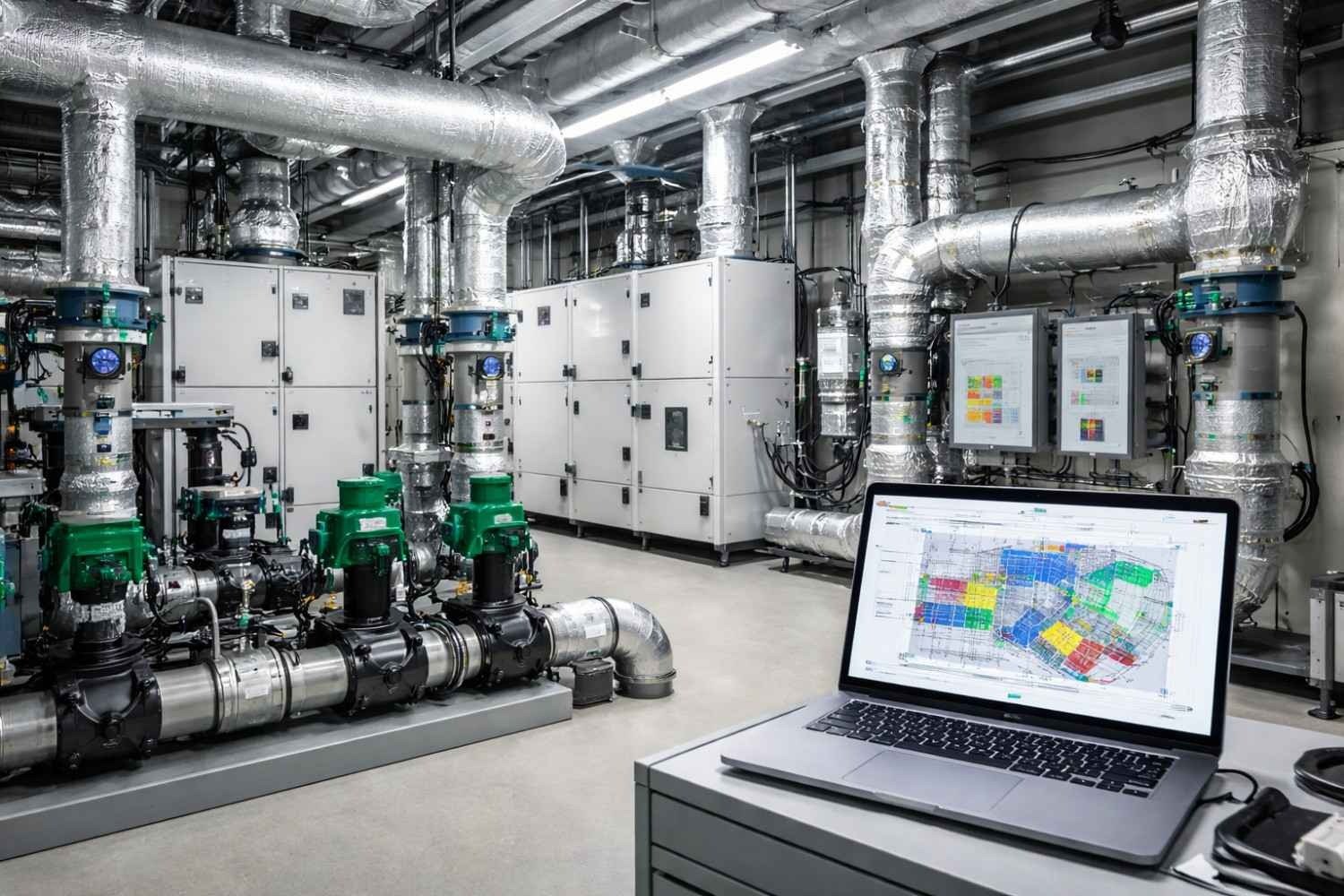
Generative design in engineering leverages computational power to explore countless solutions while adhering to project goals and constraints. It allows engineers to analyze complex configurations quickly, saving time on iterative manual processes. By applying algorithmic MEP design mid-process, systems can be refined continuously, integrating performance criteria and spatial requirements to ensure smarter, more innovative solutions.
Below are key ways this approach enhances MEP projects:
-
Streamlines design iteration by automatically generating multiple layout options for MEP systems, reducing manual trial-and-error.
-
Optimizes routing and spatial coordination to minimize clashes and improve overall design flow.
-
Integrates real-time simulation tools within MEP software to predict performance and adjust designs dynamically.
-
Supports rapid testing of alternative configurations, helping engineers select the most efficient and feasible solutions.
-
Facilitates collaboration by providing data-rich visualizations that communicate design intent across project teams effectively.
Did You Know?
The generative design market size is projected to grow from about USD 145.65 million to USD 172.33 million in 2026, highlighting increasing adoption of automated design technologies in engineering and construction.
Which Tools and Software Enable Generative Design Workflows for MEP Engineers?
Generative design workflows for MEP engineers depend on digital environments that combine building models with automation, rule-based logic, and performance-driven calculations. These platforms convert design goals and constraints into multiple system possibilities, helping engineers explore options, refine layouts, and evaluate outcomes efficiently.
By using generative design tools for MEP, engineers can move beyond manual modeling and work with data-driven processes that support accurate, repeatable, and adaptable system design.
Here are trusted tools and software that enable generative design workflows in MEP engineering:
-
Revit Generative Design: Creates and evaluates multiple layout alternatives automatically based on project constraints and design goals.
-
Dynamo for MEP Design: Visual scripting tool that enables automated, rule‑based workflows and parametric refinement of MEP systems.
-
Hypar: Cloud-based system which creates, compares and exports design options of MEP which are coupled with BIM models.
-
Trimble SysQue: Adds detail and fabrication-ready MEP content to BIM models to create correct independent design cycles.
-
Rhino + Grasshopper: Scripting, exploration environment based on parametric models to explore all forms of complex generative design development as well as BIM processes.
What Are The Key Benefits And Challenges Of Adopting Generative Design?

Adopting generative design involves balancing automated, data-driven methods with real-world implementation realities. Organizations encounter both advantages and limitations as these workflows become part of daily engineering practice. The impact of performance-based MEP design can be seen in how systems are evaluated, coordinated, and integrated within broader project environments.
1. Advantages Of Using Generative Design In MEP
Here are the benefits of generative design for MEP engineers:
-
Enables faster exploration of multiple design alternatives from a single set of inputs.
-
Improves system accuracy by testing designs against defined constraints and performance criteria.
-
Reduces manual drafting effort through automated generation of layout options.
-
Supports data-driven decisions by comparing quantifiable design outcomes.
-
Supports the development of alternative solutions that may not emerge through traditional methods.
2. Common Challenges When Implementing Generative Design
Key challenges in adopting generative design for MEP firms:
-
Requires initial investment in software, hardware, and workflow setup.
-
Demands new technical skills related to scripting, automation, and data handling.
-
May involve longer setup time during early project phases.
-
Can face resistance from teams accustomed to traditional design methods.
-
Needs consistent data quality to produce reliable and usable results.
How Can MEP Engineers Start Learning And Implementing Generative Design In Real Projects?

Learning and applying generative design requires combining technical foundations with applied, project-focused experience. Engineers often begin by strengthening their BIM skills and exploring how automation fits within existing workflows. As BIM and generative design integration becomes more common, structured training can accelerate understanding and confidence. Options such as the BIM Course for MEP Engineers offered by Novatr introduce core concepts alongside hands-on implementation.
Here are effective BIM and generative design integration strategies for MEP engineers:
-
Build BIM models with clean structure, consistent naming, and accurate parameters so automation functions smoothly.
-
Link BIM models with generative design software to create and compare multiple system layout options automatically.
-
Set clear objectives and constraints before running generative tools to guide meaningful results.
-
Review generated options inside BIM and adjust inputs gradually to improve system layouts step by step.
-
Evaluate energy, water, and material performance to show how generative design supports sustainable MEP systems.
-
Save proven workflows and templates so the same approach can be applied to future projects.

.png)