---
title: "Direct vs Parametric Modelling: Which Is the Better Choice for Designers - Know from an Expert!"
description: Understand direct vs parametric modelling with expert insights on workflows, benefits, and when to use each approach.
image: https://blog.novatr.com/hubfs/Direct%20Modelling%20vs%20Parametric%20Modelling_%20Which%20is%20the%20Better%20Choice%20for%20Designers_.jpg
---
[Blogs](https://www.novatr.com/learning-hub)
- [Architecture & Construction](https://www.novatr.com/learning-hub?category=Architecture+%26+Construction)
- [BIM](https://www.novatr.com/learning-hub?category=BIM)
- [Computational Design](https://www.novatr.com/learning-hub?category=Computational+Design)
- [Company News](https://www.novatr.com/learning-hub?category=Company+News)
- [Expert Talks](https://www.novatr.com/learning-hub?category=Expert+Talks)
Explore Courses
[Just Launched  BIM Professional Program v.2026 Take your career to the next level by mastering the real-world application of BIM. Know More](https://www.novatr.com/courses/bim-professional-program)
[ Master Computational Design Course Break into an advanced career by learning to apply the power of computation to the art of design. Know More](https://www.novatr.com/courses/computational-design)
[Blogs](https://www.novatr.com/learning-hub)
Explore Blogs
- [Architecture & Construction](https://www.novatr.com/learning-hub?category=Architecture+%26+Construction)
- [BIM](https://www.novatr.com/learning-hub?category=BIM)
- [Computational Design](https://www.novatr.com/learning-hub?category=Computational+Design)
- [Company News](https://www.novatr.com/learning-hub?category=Company+News)
- [Expert Talks](https://www.novatr.com/learning-hub?category=Expert+Talks)
Courses
- [BIM Professional Program v.2026](https://www.novatr.com/courses/bim-professional-program)
- [Master Computational Design](https://www.novatr.com/courses/computational-design)
- [BIM/](https://www.novatr.com/learning-hub?category=BIM) [BIM/](https://www.novatr.com/learning-hub?category=BIM)
Featured Article
# Direct vs Parametric Modelling: Which Is the Better Choice for Designers - Know from an Expert!

Kanwaljeet Singh
March 30, 2026
4 min read

In contemporary design practice, few debates persist as strongly as the one between direct modelling and parametric modelling. The discussion is often framed in simplified terms around which approach is more advanced or future-ready. That framing misses the deeper reality.
The difference is not about tools. It is about how designers think, structure intent, and respond to change.
In this article, **computational designer [Kanwaljeet Singh](https://www.linkedin.com/in/kj007/)** builds on this distinction, drawing from his experience to examine how these modelling approaches influence design thinking in practice.
Across architecture, engineering, and product design, digital workflows continue to expand in both scale and complexity. According to the UK Office for National Statistics, 61 percent of firms use specialised software while 69 percent rely on cloud-based systems, reflecting a broader shift toward digital design and engineering processes. As these workflows evolve, the way designers manage geometry and logic becomes increasingly significant.
Direct modelling and parametric modelling represent two fundamentally different approaches to shaping form and organising decisions. As Kanwaljeet Singh further explores through his professional insights and discussions on LinkedIn (insert profile link), understanding their difference is less about choosing one over the other and more about recognising when each approach aligns with the problem at hand.
Unlock High-Paying Careers With BIM
Master BIM workflows, software and skills on real projects.
Apply Now
\*Limited seats available
## **Two Ways of Thinking About Design**
At its core, the difference between direct and parametric modelling lies in what is being edited.
In direct modelling, the focus is on geometry. A designer draws a surface, moves a face, scales an object, or trims a curve. Each action directly alters the object in front of them. The model becomes a record of sequential decisions made through interaction with form. Tools such as SketchUp, basic Rhino workflows, AutoCAD 3D, Blender, 3ds Max, and Maya operate primarily within this framework.
In parametric modelling, the focus shifts to relationships. Instead of modifying geometry directly, the designer defines rules that generate it. Dimensions, constraints, dependencies, and parameters control how the model behaves. When one parameter changes, the entire system updates accordingly. Tools such as Grasshopper, Dynamo, and parametric environments within Revit operate on this principle. This introduces a layer of abstraction that supports long-term control.
The difference may appear subtle at first, yet it fundamentally changes how design is approached. Direct modelling shapes objects. Parametric modelling shapes logic.
This shift affects not only workflow but also mindset. One approach prioritises immediate visual interaction, while the other emphasises structured reasoning before form emerges. Over time, designers learn to balance both ways of thinking depending on project demands.
## **Where Direct Modelling Excels**
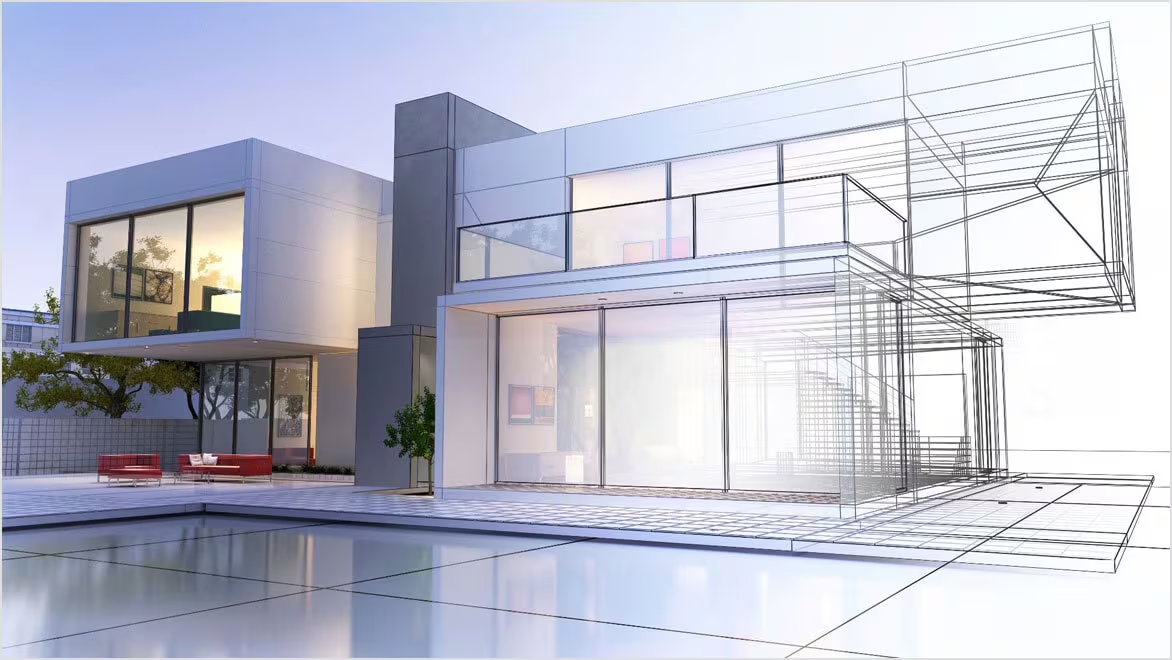
Direct modelling thrives in situations that demand speed and intuitive exploration.
During early-stage design, when ideas are still forming, the ability to sketch in three dimensions without predefined constraints becomes valuable. Designers can quickly test proportions, adjust forms, and iterate without committing to a rigid system. The process remains fluid and responsive. It allows quick decision-making without needing to predict future changes.
Another strength lies in its minimal setup. There is no need to define relationships or build dependency trees before modelling begins. The software opens, and work starts immediately. For small projects, conceptual studies, or time-sensitive tasks, this immediacy supports rapid progress. This makes it particularly effective during brainstorming phases.
Direct modelling also aligns with how many designers naturally operate. The process is tactile and iterative. Decisions are made through observation and adjustment rather than pre-structured logic. This reinforces spatial awareness and visual judgment. Designers can react to form in real time.
However, limitations emerge as complexity increases. When repetitive elements require coordinated updates, manual adjustments can become inefficient. A change applied to one component does not automatically propagate to others unless handled individually.
The model does not inherently understand relationships. It reflects actions rather than systems. This becomes challenging when consistency across multiple elements is required. Over time, this can lead to fragmented workflows.
## **Where Parametric Modelling Excels**
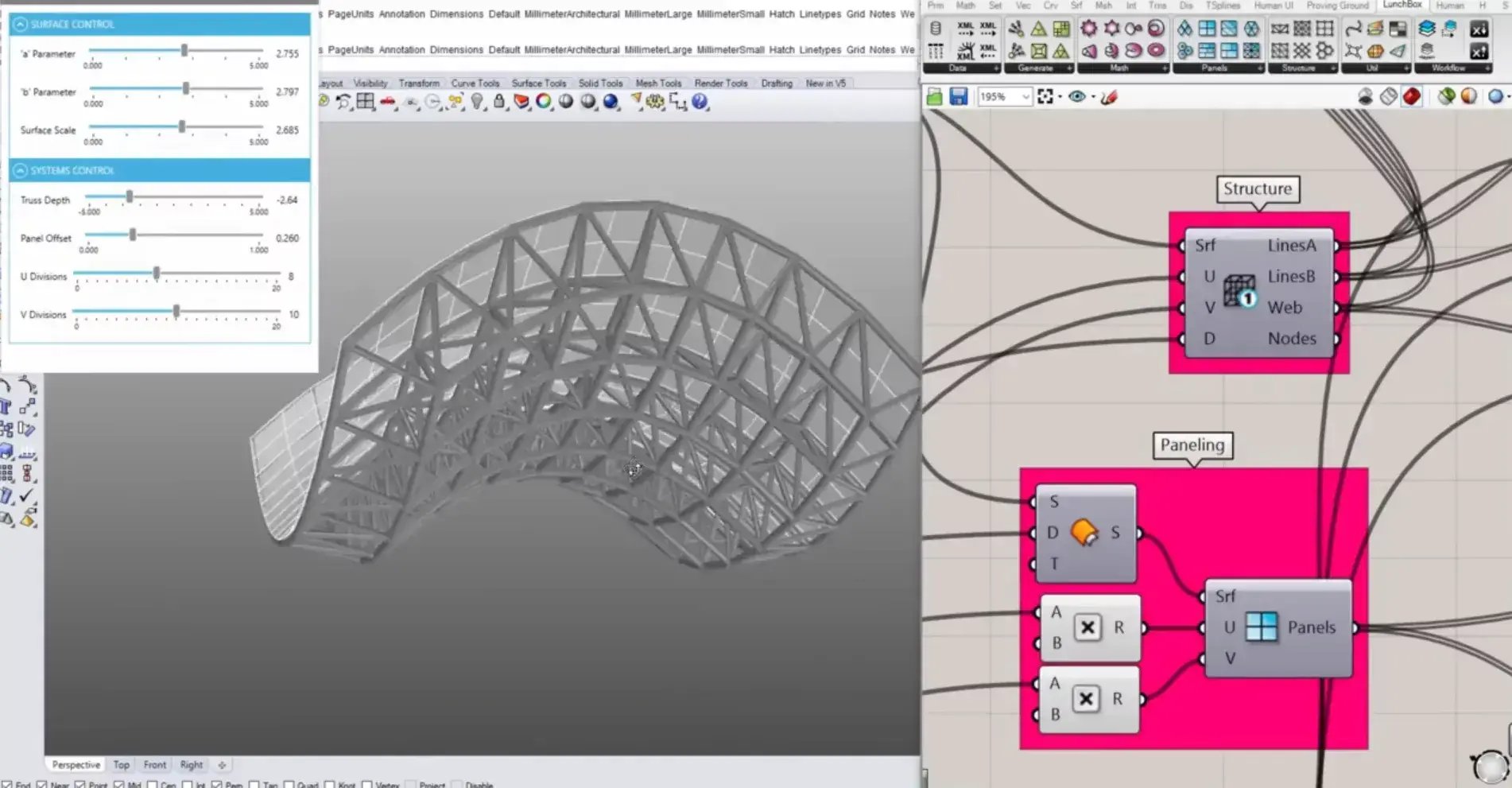
In scenarios where façade systems respond to environmental conditions, structural grids adapt to changing spans, or product families require multiple configurations, manual modelling becomes restrictive. Parametric systems address this by embedding relationships within the model. This ensures consistency across all elements.
Designers define rules such as spacing, curvature limits, or performance criteria. Once established, these rules generate geometry and manage changes automatically. Adjusting a single parameter can update an entire system. This reduces the need for repetitive manual edits.
This approach supports scalability. Designs that evolve frequently or respond to external data benefit from a structure that accommodates change without requiring reconstruction. Iteration becomes more efficient because it operates at the level of logic rather than geometry. This is especially valuable in large-scale projects.
Parametric modelling also enables exploration of multiple outcomes within a defined framework. Designers can test variations quickly by modifying inputs, allowing for more informed decision-making. This expands creative possibilities within controlled limits.
The primary challenge lies in the initial setup. Parametric workflows require clarity before modelling begins. Relationships must be defined, dependencies organised, and logic structured. This shifts the process from visual improvisation to rule-based thinking.
Despite this initial effort, the long-term efficiency gained through controlled updates and scalable systems often justifies the investment. It supports consistency across evolving design stages.
## **The Core Difference That Truly Matters**
The most significant difference between direct and parametric modelling lies in how change is managed.
In direct modelling, change is local. A designer modifies a specific element, and the impact remains contained within that action. Each adjustment is independent unless manually coordinated.
In parametric modelling, change is systemic. A modification to a rule or parameter triggers updates across the entire model. The impact extends beyond a single element and influences the overall system.
This distinction can also be understood through focus.
Direct modelling concentrates on output, which is the visible form. Parametric modelling concentrates on the process, which is the underlying logic generating that form.
As projects grow in scale and involve multiple stakeholders, managing change efficiently becomes critical. Systemic control allows teams to respond to revisions without rebuilding geometry from scratch.
At the same time, direct modelling retains its relevance in situations where flexibility and immediacy are required. Each approach operates within its own domain of strength.
Master BIM and Get Hired Faster
Join a community of 8500+ Architects and Engineers.
Explore Now
\*Limited seats available
## **So, Which Is the Better Choice?**
The better choice depends on the nature of the design problem rather than the perceived sophistication of the tool.
For projects that are exploratory, relatively static, or singular in nature, direct modelling provides efficiency. It supports rapid iteration and allows designers to work without structural overhead.
For projects that are repetitive, data-driven, or subject to continuous change, parametric modelling offers greater control. It enables designers to manage complexity through structured relationships and scalable systems.
In practice, experienced designers rarely rely on a single approach. Early ideas are often explored through direct modelling, where speed and intuition guide form development. As the design matures, parametric systems are introduced to organise logic, manage variation, and maintain consistency.
The transition between these approaches is not rigid. It reflects an evolving understanding of the project rather than a fixed methodology.
Direct modelling develops intuition. Parametric modelling develops structure. Together, they expand a designer’s ability to respond to different challenges.
For those aiming to deepen their understanding of both approaches, structured learning can provide clarity and direction. The [Master Computational Design](https://www.novatr.com/courses/computational-design) Course offered by [Novatr](https://www.novatr.com/) introduces workflows that integrate geometry and logic, enabling designers to move between direct and parametric thinking with confidence. Visit our [resource page](https://www.novatr.com/learning-hub) to explore materials that support long-term development in computational design.
Was this content helpful to you
Like Yes
Dislike No

TABLE OF CONTENTS
BIM Is The New Standard. Are You Certified?
Get Certified in BIM
SHARE ON YOUR SOCIALS
Link Copied Successfully
Related articles
[ UI/UX How to Successfully Shift Your Career from Architecture to UI UX Design 7 July 2021 5 min read](https://blog.novatr.com/blog/architecture-to-uiux) [ CIVIL What Does a Quantity Surveyor Do? Roles, Skills & Software Guide 23 March 2026 6 min read](https://blog.novatr.com/blog/what-does-a-quantity-surveyor-do-roles-skills-software) [ Isometric Drawings in Architecture: Definition, Types & Examples (2026) 22 December 2022 5 min read](https://blog.novatr.com/blog/isometric-drawings-in-architecture) [ Passive Design Strategies for Building in a Hot and Dry Climate(2026) 28 March 2023 12 min read](https://blog.novatr.com/blog/passive-design-strategies-hot-and-dry-climate)
Download Syllabus
## BIM Professional Program
Next Cohort
June 2026
Program Duration
7 Months
Premium Program benefits
8 Credentials from Autodesk, NSDC, Novatr
1 program. 10 career paths. Infinite Growth.
40+ ISO 19650 & RIBA real-world projects to practice
1-on-1 guidance. Access 400+ industry experts.
Access the biggest AEC-Tech community on the planet. 8500+ and counting
Curated for you by 100+ global BIM leaders.
Lifelong access to course content
Enter your details to download the program syllabus.
##### BIM Professional Program
June 2026, 7 Months
Your Name Invalid name.
Phone Number Enter a valid phone number
Email Please enter a valid email address.
Select years of experience\* Currently studying 0-1 years 1-2 years 2-4 years 4-8 years 8-10 years 10-12 years 12+ years Invalid selection.
Specialisation Select your background\* Architecture Civil Engineering Mechanical Engineering Electrical Engineering Invalid selection.
Are you professionally trained in interior design?
Yes
No
I agree to the [Terms of Use](https://www.novatr.com/terms-and-conditions) and [Privacy Policy](https://www.novatr.com/privacy-policy), and consent to be contacted by Email, Call, WhatsApp, or SMS.
Submit
Ready to skyrocket your career?
Begin your next chapter in AEC
with Novatr!
We are here to help you take the industry by storm with advanced, tech-first skills.
[Explore Courses](https://www.novatr.com/#courses)
Join our newsletter
Submit
Thank you for signing up.
We’ll send you a nice letter once per week. No spam.

Dare to Disrupt.
Join thousands of people who organise
work and life with Novatr.
Company
- [About Us](https://www.novatr.com/about)
- [BIM Professional Program v.2026](https://www.novatr.com/courses/bim-professional-program)
- [Masters Computational Design](https://www.novatr.com/courses/computational-design)
- [Become a Mentor](https://www.novatr.com/apply-as-mentor)
- [Hiring from Us](https://www.novatr.com/hire-from-us)
- [Careers at Novatr](https://www.novatr.com/career)
Resources
- [Blog](https://www.novatr.com/learning-hub)
- [Media Room](https://www.novatr.com/media-room-home-page)
- [Career Builder](https://www.novatr.com/career-navigator)
- [Events & Webinars](https://www.novatr.com/webinars)
- [FAQs & Support Center](https://www.novatr.com/contact-us)
- [Contact Us](https://www.novatr.com/contact-us)
- [Privacy Policy](https://www.novatr.com/privacy-policy)
- [Terms of Use](https://www.novatr.com/terms-and-conditions)
©2023 Oneistox Network Pvt. Ltd.
All Rights Reserved
```json
{
"@context" : "https://schema.org",
"@type" : "BlogPosting",
"author" : {
"@type" : "Person",
"name" : "Kanwaljeet Singh",
"url" : "https://blog.novatr.com/blog/author/kanwaljeet-singh"
},
"dateModified" : "2026-03-30T09:58:22.225Z",
"datePublished" : "2026-03-30T09:49:36.000Z",
"headline" : "Direct vs Parametric Modelling: Which Is the Better Choice for Designers - Know from an Expert!",
"image" : [ "https://blog.novatr.com/hubfs/Direct%20Modelling%20vs%20Parametric%20Modelling_%20Which%20is%20the%20Better%20Choice%20for%20Designers_.jpg" ],
"mainEntityOfPage" : {
"@id" : "https://blog.novatr.com/blog/direct-vs-parametric-modelling-which-is-the-better-choice-for-designers-know-from-an-expert",
"@type" : "WebPage"
},
"publisher" : {
"@type" : "Organization",
"logo" : {
"@type" : "ImageObject",
"url" : "https://blog.novatr.com/hubfs/Novatr%20Prev%20OX-2.svg"
}
}
}
```