



Why Computational Design Jobs Are Rising in 2026?
The rise of computational design jobs is often explained through better tools or automation. Architecture has become harder to manage using manual methods alone.
Across more than 40 global architecture, engineering, and construction (AEC) firms, hiring is strongest in innovative design studios, large multi-disciplinary practices, emerging computational design firms, and global architecture practices. These firms handle delivery, coordination, and performance, not just early design ideas.
What stands out is where hiring is lower. AEC technology startups make up a much smaller share. This shows that computation is growing inside firms responsible for real projects. The demand exists because complex projects change often, and teams need systems that respond in a controlled and predictable way.
Skills demand data supports this shift. According to the Autodesk State of Design and Make Report, firms increasingly rely on digital and computational skills to handle project complexity, improve coordination, and keep work consistent at scale. These skills now sit within everyday architectural workflows rather than being treated as specialist or experimental.
Reading the Map: How Geography Quietly Shapes Demand
Geography adds another layer of clarity. Computational roles are concentrated in Europe, Asia, and North America, with many firms operating across several regions.
These locations share similar project conditions. Projects are large, regulated, and involve many teams. Design decisions must meet approval rules, performance targets, and long-term use requirements.
In such settings, relying only on experience or intuition becomes risky. Systems provide consistency. This explains why demand for computational roles grows fastest where mistakes are costly and design changes affect entire projects.
What Computational Designers Actually Do (Beyond the Job Designation)?
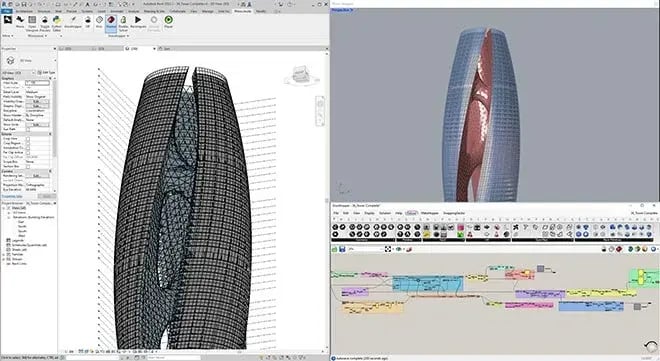
When roles are grouped by responsibility rather than title, four clear categories appear.
1. Design Systems: Where Ideas Become Rules
These roles include Computational Designer, Parametric Modeler, and Generative Designer. The focus is on turning design intent into clear and repeatable rules.
Instead of fixing one final outcome, these professionals define how a design reacts when inputs change. They build parametric systems, manage constraints, and keep models stable during revisions.
2. Delivery Systems: Where Computation Supports Projects
Delivery-focused roles form one of the most stable career paths. Titles include BIM Specialist, design technology specialist, and automation developer.
Here, computation supports real project delivery. The work includes automating repetitive tasks, setting standards, reducing coordination errors, and improving consistency across drawings and models. Over time, many of these roles grow into firm-wide technology leadership positions.
3. Performance and Analysis: Where Design Is Measured
Another group connects geometry with measurable results. These professionals use computation to assess daylight, energy use, comfort, and efficiency early in the design process.
In these roles, computation supports decision-making rather than form generation. These positions are common in engineering-led and multi-disciplinary environments.
4. Lifecycle and Digital Twin Roles: Where Design Continues After Delivery
The final group focuses on how models are used after construction. Digital twin and lifecycle roles organise data so models remain useful during operation and maintenance.
Although titles vary, the core approach remains the same: structuring information clearly and keeping systems understandable over time.
The 3 Skills That Actually Keep You Competitive
Career growth in computational roles is not driven by software knowledge alone. The data consistently rewards three abilities.
1. Problem Framing
Professionals who advance can turn unclear design goals into structured systems. They define limits, decide what can change, and protect what must remain fixed. This skill separates individual scripts from tools teams can rely on.
2. Robust Modeling
Many parametric models fail when projects become complex. Those who progress treat geometry as information, not drawings. They prepare for imperfect inputs and build systems that continue to work when conditions change.
3. Workflow Impact
The strongest long-term roles focus on helping teams work better. These professionals reduce repetitive work, improve coordination, and make workflows easier to adopt. Firms value this impact because it improves delivery reliability.
What the Data Is Really Pointing To?
Across firm types, computational design skills consistently support clearer workflows, better coordination, and complexity management. Research shows digital-computational methods improve collaboration and decision-making in architectural practice, benefits that remain relevant even as specific tools evolve.
Must Read: The Complete Guide on Parametric Modelling: Software, Skills & Job Role
Why Computational Design Tends to Pay More. When It Does?
Computational skills do not immediately increase pay. Early roles often sit close to standard architectural levels. The difference appears later.
When architects move into systems, automation, or design technology roles, they support many teams at once. This shift explains why computational design salary levels rise in senior positions. Higher pay reflects responsibility and impact, not just technical skill.
What the Profiles Reveal (More Than Salary Numbers Ever Could)?
Over time, computationally skilled architects often move into roles such as Design Technology Specialist, Automation Lead, or Head of Technology. These positions focus on systems reused across projects, automation that supports teams, and standards that reduce risk. This shift from producing work to enabling work changes how firms value the role.
Why This Changes Compensation?
Firms pay more when a role affects multiple teams, improves delivery reliability, and helps the organisation scale. Compensation reflects impact and responsibility, not technical novelty.
How This Explains the Regional Signals?
Regional differences reflect how clearly roles are defined. In the United States, higher pay appears mostly in senior computational roles. In India, higher pay shows up when computation is linked to automation or delivery. In the UAE, combined architect and computational roles signal responsibility for complex projects. Across regions, compensation follows responsibility.
Future-Proofing Your Career in Computational Design
Long-term stability comes from combining architecture with systems thinking.
A. For Students
Students often ask how to become a computational designer. The data suggests focusing on depth rather than many disconnected experiments. Instead of showcasing isolated scripts, strong portfolios explain the problem being solved, the rules behind the system, and how the model responds when inputs change. Clear documentation, simple diagrams, and tested variations matter more than visual complexity, especially for entry-level computational design roles.
B. For Professionals
For working architects, progress accelerates when computation moves from personal use to shared tools. Automating recurring problems and creating standards helps teams work faster and more consistently. A structured computational design course can support this transition and strengthen core computational design skills in functional settings.