


What is the Metaverse?

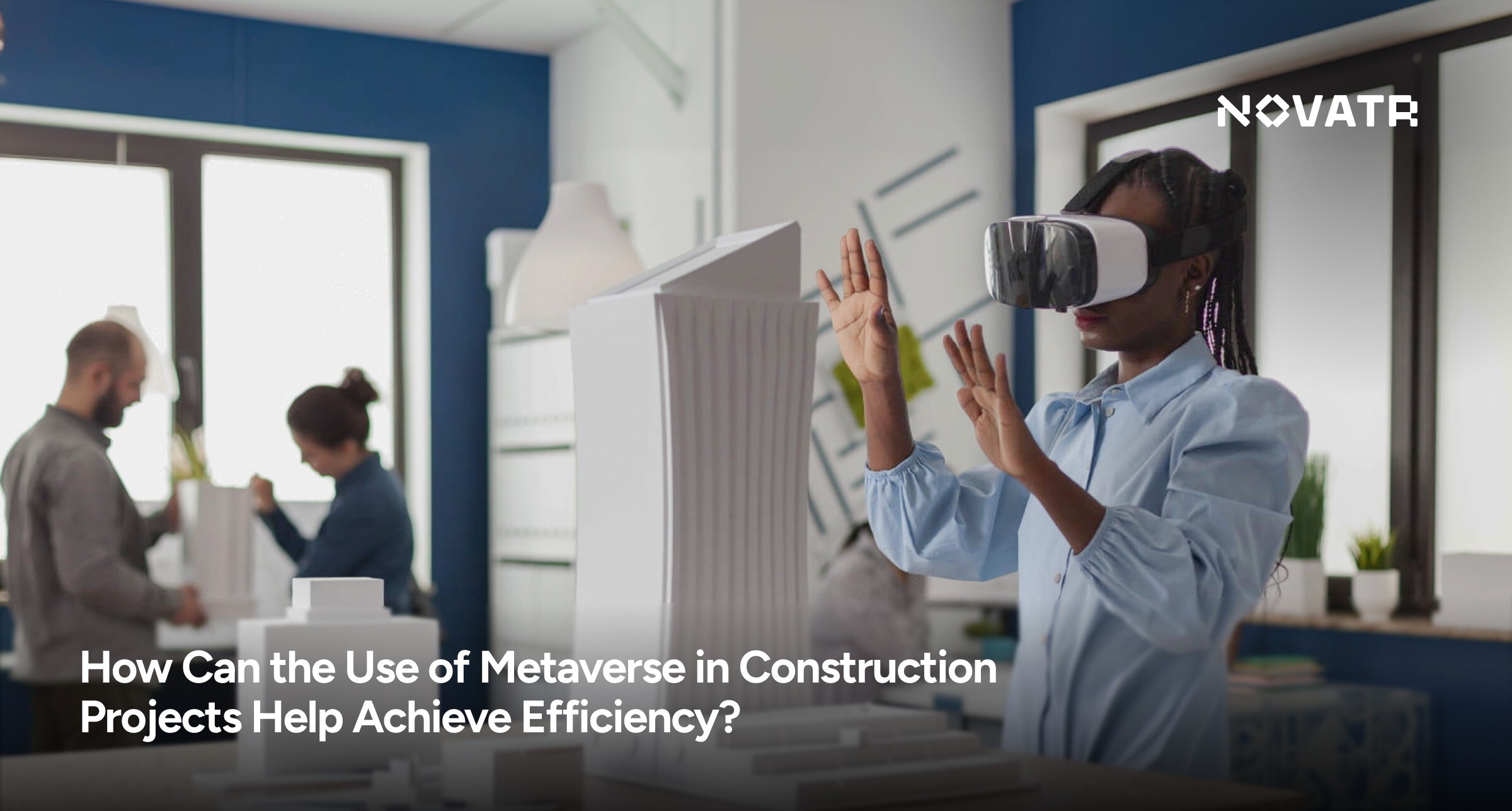
The metaverse is an immersive virtual world where people can interact in real-time with physical and digital elements. This digital world is accessed through Virtual Reality (VR) tools that allow people to seamlessly interact with their environment. Various platforms such as Sandbox, Decentraland, Metahero, and Horizon Worlds provide virtual spaces in the metaverse for people in exchange for Non-Fungible Tokens (NFTs). Apart from these platforms, more open-source and free metaverse platforms are also being built for specific use cases. Architects and engineers can design and build structures in such virtual spaces using building blocks available on the individual platforms. These structures can either be digital twins of existing real-world buildings or completely new structures based on user requirements.
How Can Metaverse be Used in Construction Projects?

Although the uses of metaverse are more prevalent in the hospitality domain, the Architecture, Engineering, and Construction (AEC) industry can make use of the emerging technology in a significant manner in various sectors of work. Let’s have a look at how metaverse in construction is evolving the nature of work.
1. Streamline Construction Processes
AEC professionals can use the metaverse to identify the best design and construction solutions for their projects. It fosters an iterative design process by allowing people to test the feasibility of their ideas based on various parameters such as performance, energy usage, structural stability, durability, user experience, and future relevance. Additionally, the creation of 1:1 scale virtual models helps engineers analyse the effectiveness of their project management schedules, choice of materials, and construction techniques. It can also aid in recognising any errors and execution bottlenecks before the construction work begins.
2. Collaboration and Communication
Using metaverse in construction projects enables project stakeholders to collaborate efficiently. The virtual model can be used to understand the various physical and functional attributes of a building, allowing for better visualisation. Architects, engineers, contractors, and clients can meet in the metaverse and communicate seamlessly. This reduces people’s travel time, reduces the problems with collaborating in different time zones, and speeds up the decision-making process. This also provides the opportunity to engage global construction experts in a project. The ability to see a 1:1 scale representation of structures also allows all stakeholders to see the final results.
3. Workforce Safety and Training
Training workers and testing construction methods in real-world scenarios can be expensive and risky. The metaverse allows for safe, realistic training simulations for construction workers and equipment operators. Construction workers can undergo virtual training, enabling them to practice tasks and operate equipment in a risk-free environment. It reduces accidents and injuries, makes the onboarding and skill development processes more efficient, and encourages experimentation with various construction techniques.
Read : A Closer Look at the Scope of BIM in Civil Engineering
Advantages of Metaverse in Construction Projects
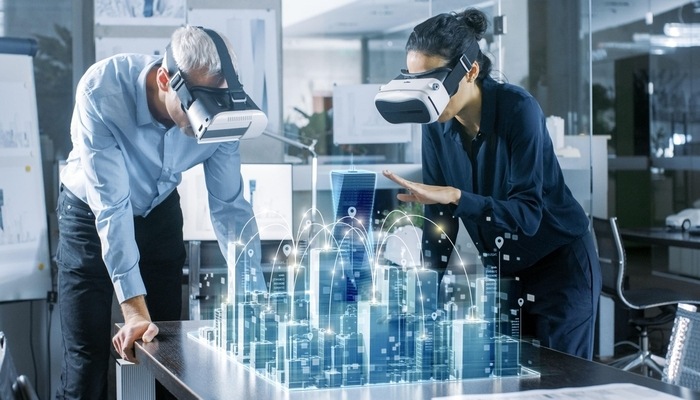
Metaverse in the construction process can be highly beneficial for various phases of design and execution. Let’s have a look at them.
1. Effective Project Management
One of the most compelling advantages of the metaverse in construction is its ability to facilitate real-time collaboration among team members, regardless of their geography. This leads to quicker decision-making, reduced project timelines, and enhanced project outcomes.
2. Sustainable Construction
In times when climate change is a pressing global issue, the metaverse empowers construction teams to integrate environmentally friendly practices into their projects. Professionals can use virtual environments to evaluate energy consumption, material selection, and environmental impact of their designs. This allows engineers to make informed decisions that minimise a project's carbon footprint. This also helps reduce long-term operational costs.
3. Asset Management
In the metaverse, digital twins can be continuously updated with real-time data on a building’s maintenance, performance, and energy usage. This enables predictive maintenance, enhances building efficiency, and supports informed decisions for renovations and upgrades, ultimately extending the lifespan of constructed assets.
4. Inspection and Quality Control
The metaverse provides a safer alternative to traditional site visits by enabling people to virtually navigate construction sites. This can help in identifying and correcting issues, improve safety for inspectors, and reduce project delays. This also aids in saving the money spent on demolition and repairs.
Disadvantages of Metaverse in Construction Projects
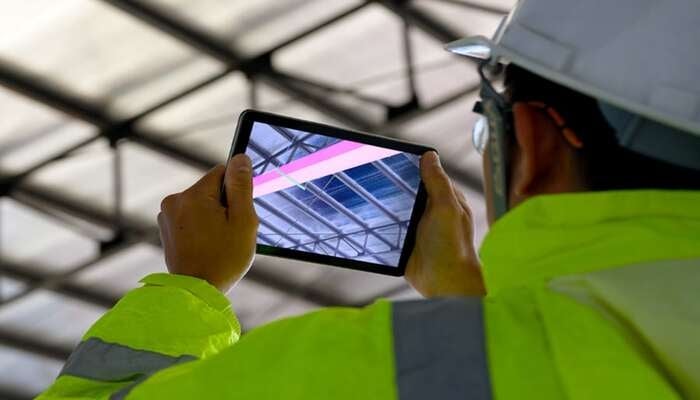
While the use of metaverse in construction presents an excellent opportunity to enhance the quality of work, there are also some associated drawbacks. Let’s have a look at them too.
1. Technology Adoption Cost
Buying hardware, software, and VR tools to construct a building in virtual environments can be an expensive affair. Furthermore, the creation of 3D models and simulations also requires a heavy investment of human resources. While the long-term benefits can justify these expenses, it's essential for organisations to carefully assess their financial capacity before diving into metaverse integration.
2. Knowledge Gap
The process of transitioning to the metaverse will be accompanied by a learning curve for construction professionals. This activity can be strenuous, especially for senior professionals who may not have prior experience with new-age technologies. The training and onboarding of skilled recruits can consume valuable time, affecting the productivity of organisations.
3. Data Security Concern
The use of metaverse in construction relies heavily on data exchange, storage, and sharing. This includes sensitive project information such as working drawings, cost estimation, material specifications, construction details, etc. Consequently, ensuring the protection of this data from breaches, leaks, or unauthorised access can be an ongoing challenge. To deal with such issues, construction companies must invest in robust cybersecurity measures, encryption protocols, and secure data storage.
Read : How BIM & Digitalisation Are Transforming Construction
3 Remarkable Construction Projects in the Metaverse Across the Globe
The applications of the metaverse in construction projects are fast-increasing. Leading construction companies are collaborating with Information Technology (IT) giants to use this technology to their advantage. Mentioned below are the finest examples of metaverse construction so far.
1. Infraverse by Ferrovial
The Infraverse initiative by Ferrovial, a Spanish sustainable infrastructure company, establishes its leadership in innovation within the infrastructure sector. Under the umbrella of Infraverse, the company will undertake about ten projects that combine the metaverse with real-world projects to foster agility, efficiency, and innovation. The project will be executed in partnership with leading corporate firms like Microsoft and Unity.
By integrating metaverse in construction projects, the initiative aims to achieve design flexibility, asset management efficiency, and safety for both workers and users. Additionally, it seeks to contribute to the development of sustainable transport infrastructures. With the use of digital twins, the company will create simulations based on real data, optimising infrastructure operations throughout their lifecycle.
2. Autodesk Tandem by Autodesk
Autodesk Tandem capitalises on Building Information Modelling (BIM) and data-driven collaboration to create a digital twin of construction projects. From design and construction to operations and maintenance, Tandem provides a comprehensive and dynamic representation of a building's entire lifecycle. This approach streamlines collaboration among architects, engineers, and contractors, fostering real-time data sharing and reducing the fragmentation that often plagues construction projects.
Beyond the construction phase, Autodesk Tandem empowers building owners and facility managers with a robust tool for facility management and maintenance. By maintaining an accurate digital twin, Tandem enables proactive facility management, predictive maintenance, and effective decision-making. Facility managers can access real-time data on the building's performance, monitor system health, and plan maintenance activities strategically.
3. Trimble Connect by Trimble
Trimble Connect provides a comprehensive solution for project collaboration and management. It serves as a central hub for construction professionals, offering seamless communication and data-sharing capabilities. With Trimble Connect, all project stakeholders can collaborate in real time, share project information, and access a centralised repository of documents, models, and data. This streamlined approach significantly reduces the likelihood of errors and costly rework, ultimately enhancing project efficiency and reducing delays.
Additionally, Trimble Connect supports the sharing of 3D BIM models, enabling multidisciplinary teams to coordinate and visualise complex projects more effectively. It extends its utility beyond the design and construction phases, providing valuable support for facility and asset management. Building owners and operators can leverage the platform's digital twin capabilities to monitor building performance, conduct maintenance more efficiently, and enhance the overall lifecycle management of their assets.
Impact of the Metaverse on the Construction Industry
This section explains how the metaverse is reshaping construction practices, workforce collaboration, and project delivery models.
The metaverse is influencing construction by changing how teams interact with project data and each other. Immersive environments allow stakeholders to review designs, coordinate activities, and resolve issues without physical site presence. This improves decision speed and reduces dependency on location-based workflows.
By integrating with BIM and digital twins, the metaverse supports better lifecycle visibility, from planning through operations. It also enhances workforce engagement by enabling remote collaboration, virtual inspections, and safer training environments.
Over time, these capabilities are expected to reduce delays, improve coordination quality, and support more consistent project outcomes across regions.
The Future of Construction in the Metaverse
This section explores future adoption trends, integration with BIM, and long-term implications of the metaverse for construction.
As digital maturity increases, the metaverse is expected to become more closely integrated with BIM platforms, cloud systems, and data analytics tools. Construction teams may rely on shared virtual environments for design reviews, progress tracking, and asset monitoring.
Future adoption will likely focus on scalable collaboration, improved interoperability, and stronger data governance. While adoption will vary by project type and region, the metaverse is positioned to complement existing digital workflows rather than replace them, supporting more connected and efficient construction practices.
In Conclusion
While the use of metaverse in construction is still in its nascent stage, it is undoubtedly one of the most revolutionising technologies that will change the face of the AEC industry. In the coming years, we expect to see the integration of the metaverse in every phase of a construction project. To design and construct in the metaverse, professionals will need BIM as an essential tool for efficient stakeholder collaboration and building design. Therefore, professionals need to learn BIM and make their careers future-proof.
If you wish to learn BIM and invest in your professional growth, check out the BIM Professional Course for Civil Engineers offered by Novatr.
FAQs
1. How does the metaverse improve efficiency in construction projects?
The metaverse improves efficiency by enabling immersive collaboration, early issue detection, virtual planning, and shared access to digital models, reducing delays, rework, and coordination gaps across construction teams.
2. What technologies are required to implement the metaverse in construction?
Implementing the metaverse in construction requires BIM platforms, digital twins, cloud collaboration tools, VR or AR hardware, and secure data infrastructure to support real-time interaction.
3. How is the metaverse different from BIM and digital twins?
BIM and digital twins focus on data-rich models, while the metaverse adds immersive environments that allow users to interact with those models collaboratively in real time.
4. What are the challenges of adopting the metaverse in construction projects?
Key challenges include high technology costs, skill gaps, data security risks, and the need for organizational readiness to manage immersive digital workflows.
5. Is the metaverse the future of the construction industry?
The metaverse is expected to complement existing digital tools rather than replace them, supporting collaboration, planning, and asset management as part of broader digital construction strategies.