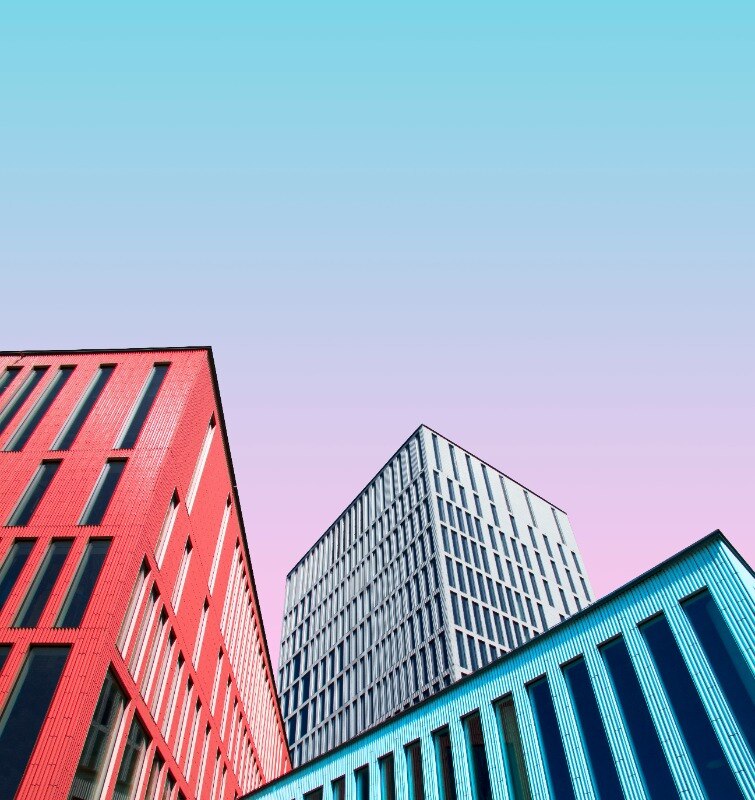

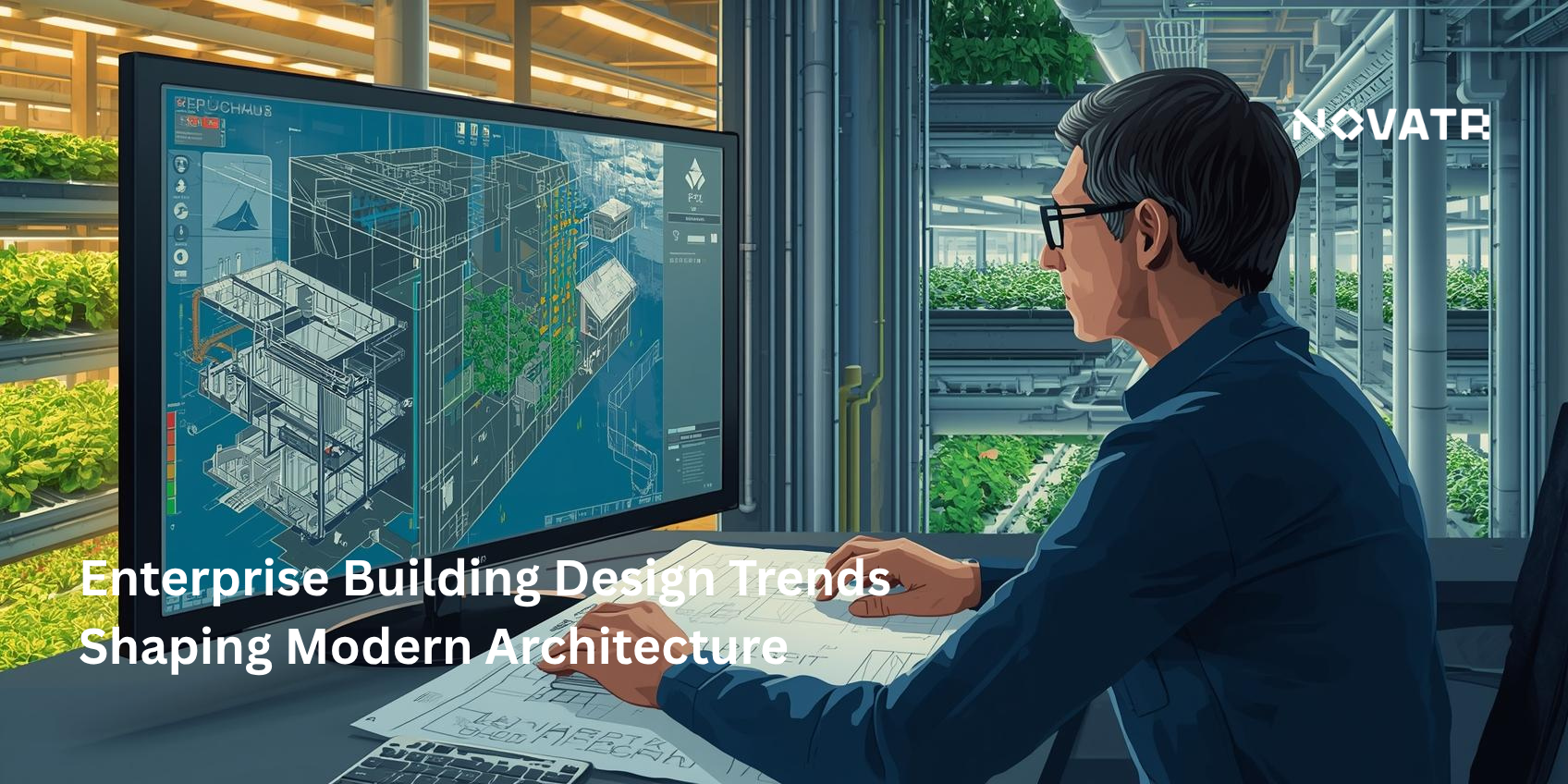

One of the most significant building design trends is the emphasis on sustainability. More companies are recognizing the importance of eco-friendly building design, not just for environmental reasons but also for cost efficiency. Sustainable building design incorporates the use of renewable energy sources, efficient waste management systems, and materials that minimize the carbon footprint. Some examples listed below:
1. Green Roofs and Living Walls
Green roofs and living walls have become popular features in modern architecture trends. These elements not only improve a building's insulation but also contribute to air quality and biodiversity. They create a visually appealing environment while enhancing the building's ecological footprint.
2. Energy-Efficient Technologies
Advancements in smart building technology have led to the development of smart building solutions. These include energy-efficient lighting, heating, and cooling systems that adapt to the building's occupancy and usage patterns. Such systems reduce energy consumption and operational costs.
The Rise of Smart Building Solutions
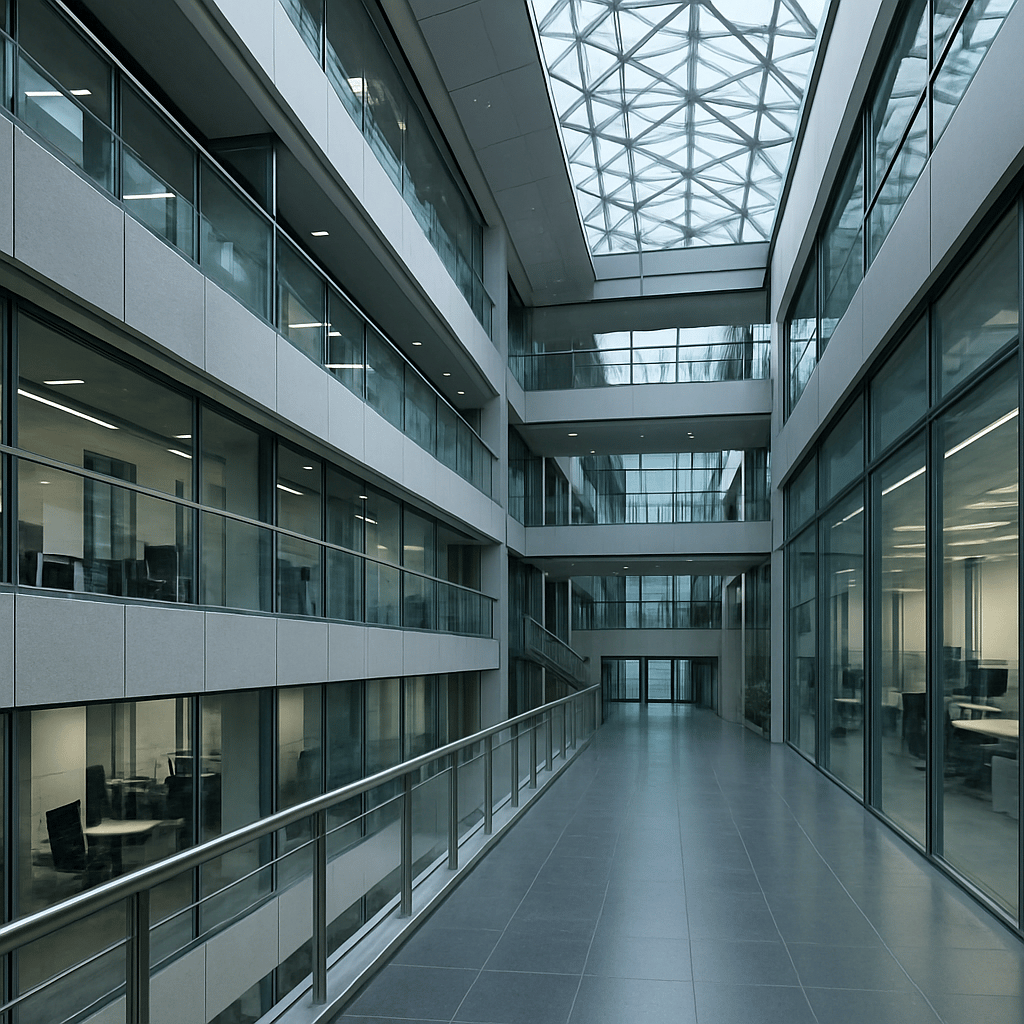
Smart building solutions, powered by smart building technology, are transforming the way we think about workplace design trends. Integrating technology into building design allows for greater efficiency, convenience, and security. These solutions include automated systems for lighting, climate control, and security.
1. Internet of Things (IoT) Integration
The Internet of Things (IoT) is revolutionizing commercial design trends and is a cornerstone of smart building technology. IoT devices enable seamless communication between different building systems, allowing for real-time monitoring and control. This integration enhances the overall functionality of a building, making it smarter and more responsive to its occupants' needs.
2. Adaptive Workspaces
Modern architecture trends are increasingly focused on creating adaptive workspaces. These are designed to be flexible, allowing for easy reconfiguration to suit different tasks and team dynamics. Adaptive workspaces foster collaboration and creativity, making them ideal for the evolving nature of work.
Biophilic Design: Bringing Nature Indoors
Biophilic design is another innovative design concept gaining traction. This approach emphasizes the connection between humans and nature, incorporating natural elements into the built environment to enhance well-being and productivity.
1. Natural Lighting and Ventilation
Incorporating natural lighting and ventilation is a key aspect of biophilic design. Large windows, skylights, and open floor plans allow for ample sunlight and fresh air, creating a healthier indoor environment. This design approach not only boosts employee morale but also reduces reliance on artificial lighting and HVAC systems.
2. Use of Natural Materials
Biophilic design encourages the use of natural materials such as wood, stone, and bamboo. These materials add warmth and texture to spaces, creating a calming and inviting atmosphere. The presence of natural elements can help reduce stress and enhance creativity.
Future Architecture Styles: Minimalism and Beyond
While minimalism continues to be a popular choice in future architecture styles, new trends are emerging that push the boundaries of traditional design.
1. Open and Collaborative Spaces
Open and collaborative spaces are at the forefront of workplace design trends. These spaces promote interaction and teamwork, breaking down the barriers of traditional office layouts. The use of movable partitions and modular furniture allows for easy reconfiguration to accommodate different activities.
2. Innovative Design Concepts
Innovation is key to staying ahead in the competitive world of architecture. Architects are experimenting with unconventional shapes, materials, and technologies to create iconic structures that stand out. From futuristic skyscrapers to avant-garde office buildings, innovative design concepts are reshaping skylines worldwide.