---
title: How Much Practical Exposure Do You Get in a BIM MEP Course? 2026
description: Find how much practical exposure a BIM MEP course offers, including project work, tools, and real-world training for better job readiness.
image: https://blog.novatr.com/hubfs/Blog%20Image%20(26).png
---
[Blogs](https://www.novatr.com/learning-hub)
- [Architecture & Construction](https://www.novatr.com/learning-hub?category=Architecture+%26+Construction)
- [BIM](https://www.novatr.com/learning-hub?category=BIM)
- [Computational Design](https://www.novatr.com/learning-hub?category=Computational+Design)
- [Company News](https://www.novatr.com/learning-hub?category=Company+News)
- [Expert Talks](https://www.novatr.com/learning-hub?category=Expert+Talks)
Explore Courses
[Just Launched  BIM Professional Program v.2026 Take your career to the next level by mastering the real-world application of BIM. Know More](https://www.novatr.com/courses/bim-professional-program)
[ Master Computational Design Course Break into an advanced career by learning to apply the power of computation to the art of design. Know More](https://www.novatr.com/courses/computational-design)
[Blogs](https://www.novatr.com/learning-hub)
Explore Blogs
- [Architecture & Construction](https://www.novatr.com/learning-hub?category=Architecture+%26+Construction)
- [BIM](https://www.novatr.com/learning-hub?category=BIM)
- [Computational Design](https://www.novatr.com/learning-hub?category=Computational+Design)
- [Company News](https://www.novatr.com/learning-hub?category=Company+News)
- [Expert Talks](https://www.novatr.com/learning-hub?category=Expert+Talks)
Courses
- [BIM Professional Program v.2026](https://www.novatr.com/courses/bim-professional-program)
- [Master Computational Design](https://www.novatr.com/courses/computational-design)
- [MEP/](https://www.novatr.com/learning-hub?category=BIM)
Featured Article
# How Much Practical Exposure Do You Actually Get in a BIM MEP Course?

Neha Singh
May 21, 2026
4 min read
.png)

With digital construction being adopted as the norm in construction projects, the demand for skilled BIM professionals is also rising. Recent industry reports also indicate that more than 70% of AEC companies are more interested in candidates with applied BIM experience than theoretical knowledge.
This is an important reason for selecting a BIM MEP course for exposure. A number of students would ask if these courses actually get them ready for employment or do they concentrate more on concepts?
Knowing the amount of hands-on experience you'll acquire and what kind of work will be part of the program helps you select the appropriate program and develop skills that will make you job ready.
## **Key Takeaways**
- A good BIM MEP course should incorporate good hands-on training using real-life scenarios.
- Project based learning is better than theory based modules.
- There are fewer training courses that provide real project exposure.
- The training provided using software-based BIM affects the workforce readiness.
- During the real project, the importance of practical training in BIM MEP becomes evident.
Unlock High-Paying Careers With BIM
Master BIM workflows, software and skills on real projects.
Apply Now
\*Limited seats available
## **What Does Practical Exposure Mean in a BIM MEP Course?**
Practical exposure during theBIM MEP course is the volume of work one is exposed to during the training period. Learning tools or concepts are not the only thing that is important. It involves application of the knowledge in project situations.
This includes:
- Manipulating the model of a building, either real or simulated.Manipulating a real or simulated building model.
- Creating HVAC, electrical and plumbing layouts for MEP design works.
- Employing Industry tools in design training sessions.
- Addressing coordination problems between disciplines.
- Delivering outputs similar to real project submissions.
Practical training is critical to make sure that learners not only grasp the theory of BIM, but can also put it into practice in actual contexts.
Many learners tend to ask this question, how hands on is BIM MEP course? Depending on the course structure, wrong or incorrect answers could be given. Assignments, case studies, and live projects are better than lectures.
## **How Does Hands-On Project Work Compare to Theory-Based Learning?**
Theory oriented learning and hands on learning are very different concepts in BIM MEP course.
### Theory-Based Learning
- Explores concepts and definitions, and workflows.
- Limited use of software tools
- The project does not have any real-life simulation.
- Lacks in training or employment roles that require specific skills, knowledge, and understandings.
### Hands-On Project Work
- Implements project based learning and simulates real work.
- Manages and creates BIM models.
- Coordinating between architecture, structure and MEP is included.
- Assists in developing real-world BIM skills.
Hands on learning provides a chance for learners to understand how tasks are done as they relate to real projects. So the answer to the question is is BIM MEP course more practical or theoretical, is clearly and directly addressed here. The most effective courses are practical-first and theory is used as a support.
Employers like to see candidates who have worked on projects rather than just studied concepts. Therefore, it is important that MEP training incorporates practical exercises.
[Also Read: Top 10 MEP Engineering Courses in India ](https://www.novatr.com/blog/top-mep-engineering-courses-in-india)
## **Where Do Most BIM MEP Courses Fall Short in Practical Training?**
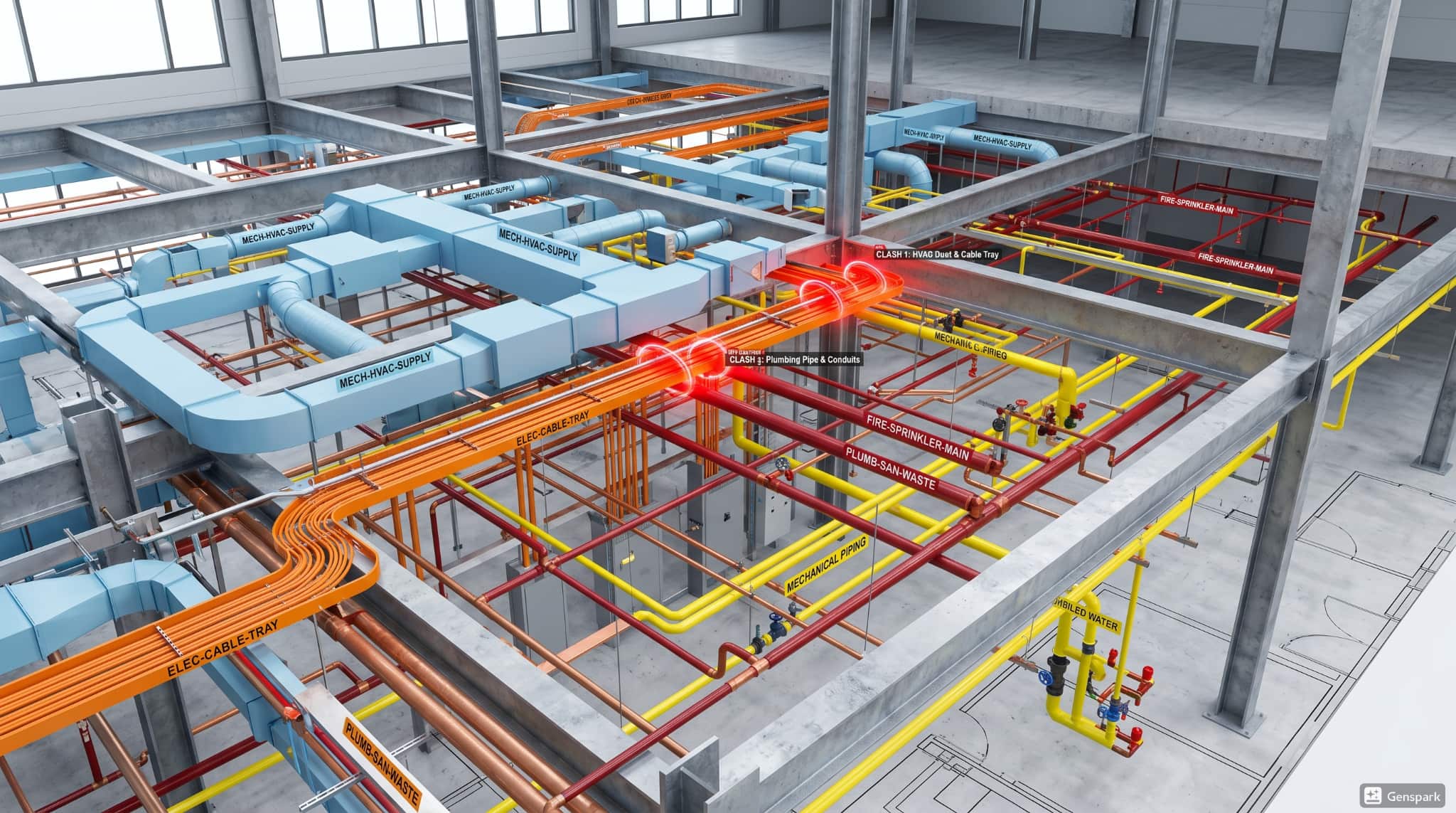
Some training courses offer a greater exposure than others. There are many programs that have learning gaps.
Common issues include:
- Theoretical approach more than practical training.
- Lack of or insufficient real project work.
- This is a basic software tutorial – no application.
- There were no coordination and clash detection exercises.
- Lacking the necessary workflows to keep up with industry demands.Need for industry-relevant workflows.
Some courses provide a demonstration of the tools but do not give students an opportunity to use them. This places a gap between learning and the requirements of the job.
The other problem is lack of clarity around project scope. One of the most popular questions asked by learners is what kind of projects are included in BIM MEP training. Weaker programs: projects are too easy or not meeting industry standards.
If not designed and trained appropriately, learners find difficulty in their transition to work. This is one of the reasons for the importance of practical training in BIM MEP, particularly in complex building projects.
## **How Do Software and Tools Training Impact Real Project Readiness?**
While software training is an integral component of any BIM MEP course, the approach to teaching software is important.
A good BIM training should cover:
- Real-time modeling exercises
- Adopting industry tools such as Revit MEP.
- Interdisciplinary collaboration processes
- Tasks associated with data management and documentation
Without application, there will be no confidence. Understanding is enhanced through practical sessions in which simulated real workflows are used.
For example:
- Creating HVAC systems in a model
- Designing electrical layouts
- Plumbing systems in BIM systems.
These are real tasks that develop MEP design capabilities.
Effective hands on learning using tools enables learners to be autonomous in doing projects. It also enhances their problem solving skills, which are essential to their job readiness.
[Also Read: Top 50 MEP Interview Questions & Answers ](https://www.novatr.com/blog/best-mep-engineer-interview-questions)
## **What Kind of Real Project Experience Should You Expect From a Good Course?**
**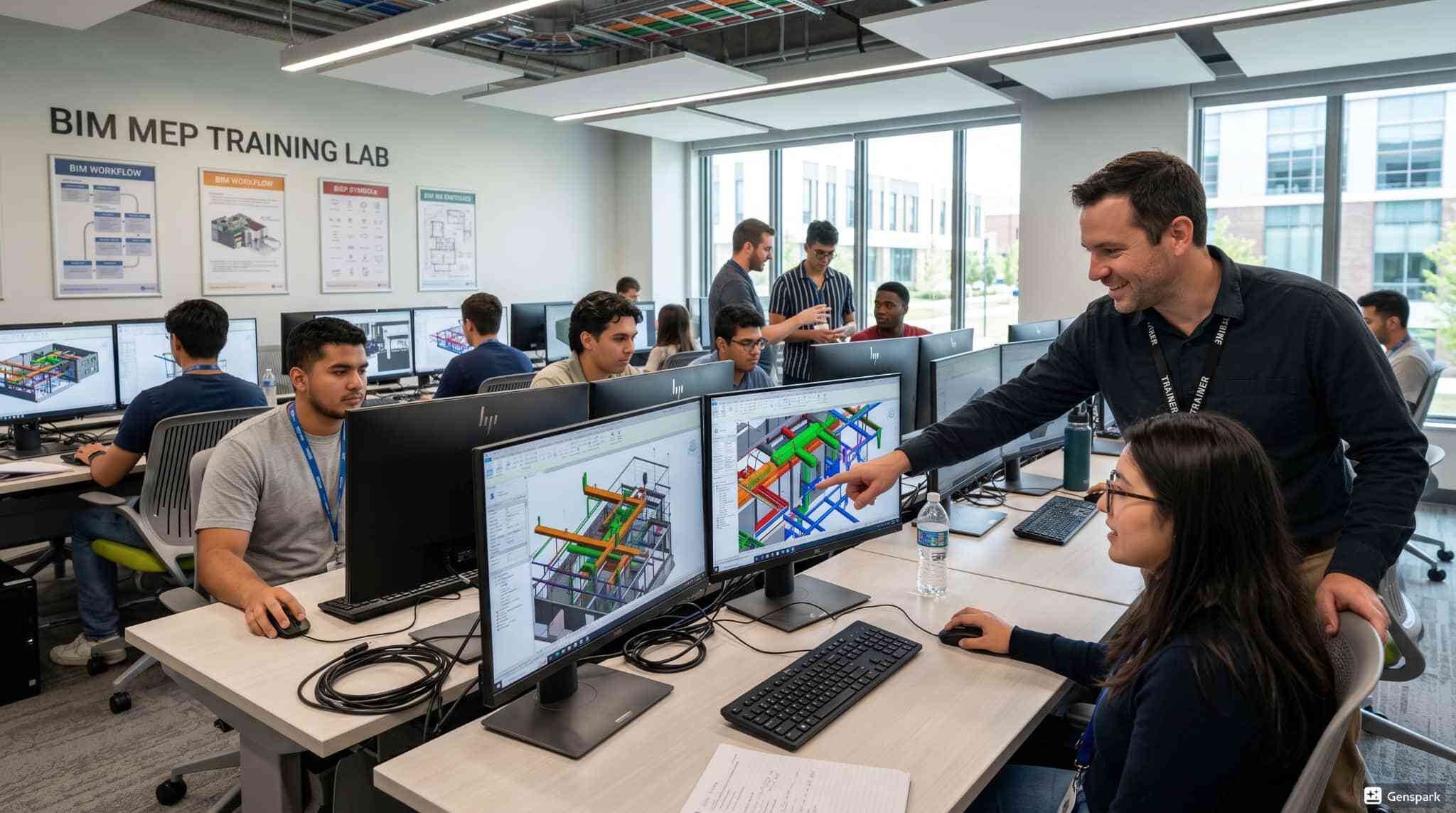**
Any good BIM MEP course should give students relevant project practical experience aligned with industry practice.
Here are a few guidelines to keep in mind:
### Real Building Projects
- Do you need a model for a residential or commercial project?
- Multi-disciplinary coordination tasks
- End-to-end workflow execution
### Industry-Level Assignments
- The design and modelling of systems.
- Identify and resolve conflicts involving schedules, budgets, and other project resources.
- Documentation and reporting
### Structured Learning Approach
- project based learning based on a step-by-step approach
- Guided and independent tasks.Guided and independent tasks.
- Input from the industry
### Real Workflows Exposed
- Collaboration between teams
- Use of shared BIM environments
- Keeping track and reporting on the project.
Courses with these elements are strong in practical training and develop job ready BIM skills.
Certain more sophisticated programs also provide mentoring, portfolio building, and career assistance. Companies such as Novatr are recognized for their ability to integrate mentoring from industry professionals, practical work, and structured MEP learning to enhance learning outcomes.
Master BIM and Get Hired Faster
Join a community of 8500+ Architects and Engineers.
Explore Now
\*Limited seats available
## Conclusion
A BIM MEP course should have a more practical emphasis than theory when it comes to educating students for their working lives. Courses with hands-on experience, real projects and structured project based learning courses that foster excellent BIM skills and job readiness.
Career success is evident in selecting the proper course. For instance, the [BIM Course for MEP Engineers](https://www.novatr.com/courses/bim-for-mep-engineers)by [Novatr](https://www.novatr.com/) provides industry relevant projects, mentorship from experts and real-life workflows, tailored to job requirements.
For additional information and learning resources, check out the [resource page](https://www.novatr.com/learning-hub).
## **FAQs**
### **1. Do BIM MEP courses include hands-on project work?**
Yes, most good BIM MEP course programs will have real or simulated projects that you can learn hands-on about. These are provided for learners to apply concepts and to gain practical experience.
### **2. What is the difference between practical and theory-based BIM MEP courses?**
Practical courses are hands-on, with a focus on project based learning, real tools and workflows. Courses that are very theoretical have only concepts and not really an application and do not enhance job readiness in that kind of course.
### **3. How many real projects are included in a BIM MEP course?**
The number will vary depending upon the program. Good training courses have 2–4 detailed projects which cover various parts of MEP design and co-ordination.
Was this content helpful to you
Like Yes
Dislike No
.png)
TABLE OF CONTENTS
BIM Is The New Standard. Are You Certified?
Get Certified in BIM
SHARE ON YOUR SOCIALS
Link Copied Successfully
Related articles
[.png) MEP What’s Missing in Most BIM MEP Courses? (Red Flags to Watch Out For) 21 May 2026 4 min read](https://blog.novatr.com/blog/bim-mep-course-gaps-what-to-avoid) [.png) MEP MEP Course Syllabus Breakdown: What You'll Learn Week-by-Week 14 May 2026 7 min read](https://blog.novatr.com/blog/mep-course-syllabus-breakdown) [.png) MEP What Does a Real BIM MEP Project Look Like? (From Model to Drawings) 21 May 2026 7 min read](https://blog.novatr.com/blog/bim-mep-project) [.png) MEP MEP Modelling in Revit: Faster and Smarter System Design 12 May 2026 5 min read](https://blog.novatr.com/blog/mep-modelling-in-revit-for-faster-system-design)
Download Syllabus
## BIM Professional Program
Next Cohort
June 2026
Program Duration
7 Months
Premium Program benefits
8 Credentials from Autodesk, NSDC, Novatr
1 program. 10 career paths. Infinite Growth.
40+ ISO 19650 & RIBA real-world projects to practice
1-on-1 guidance. Access 400+ industry experts.
Access the biggest AEC-Tech community on the planet. 8500+ and counting
Curated for you by 100+ global BIM leaders.
Lifelong access to course content
Enter your details to download the program syllabus.
##### BIM Professional Program
June 2026, 7 Months
Your Name Invalid name.
Phone Number Enter a valid phone number
Email Please enter a valid email address.
Select years of experience\* Currently studying 0-1 years 1-2 years 2-4 years 4-8 years 8-10 years 10-12 years 12+ years Invalid selection.
Specialisation Select your background\* Architecture Civil Engineering Mechanical Engineering Electrical Engineering Invalid selection.
Are you professionally trained in interior design?
Yes
No
I agree to the [Terms of Use](https://www.novatr.com/terms-and-conditions) and [Privacy Policy](https://www.novatr.com/privacy-policy), and consent to be contacted by Email, Call, WhatsApp, or SMS.
Submit
Ready to skyrocket your career?
Begin your next chapter in AEC
with Novatr!
We are here to help you take the industry by storm with advanced, tech-first skills.
[Explore Courses](https://www.novatr.com/#courses)
Join our newsletter
Submit
Thank you for signing up.
We’ll send you a nice letter once per week. No spam.

Dare to Disrupt.
Join thousands of people who organise
work and life with Novatr.
Company
- [About Us](https://www.novatr.com/about)
- [BIM Professional Program v.2026](https://www.novatr.com/courses/bim-professional-program)
- [Masters Computational Design](https://www.novatr.com/courses/computational-design)
- [Become a Mentor](https://www.novatr.com/apply-as-mentor)
- [Hiring from Us](https://www.novatr.com/hire-from-us)
- [Careers at Novatr](https://www.novatr.com/career)
Resources
- [Blog](https://www.novatr.com/learning-hub)
- [Media Room](https://www.novatr.com/media-room-home-page)
- [Career Builder](https://www.novatr.com/career-navigator)
- [Events & Webinars](https://www.novatr.com/webinars)
- [FAQs & Support Center](https://www.novatr.com/contact-us)
- [Contact Us](https://www.novatr.com/contact-us)
- [Privacy Policy](https://www.novatr.com/privacy-policy)
- [Terms of Use](https://www.novatr.com/terms-and-conditions)
©2023 Oneistox Network Pvt. Ltd.
All Rights Reserved
```json
{
"@context" : "https://schema.org",
"@type" : "BlogPosting",
"author" : {
"@type" : "Person",
"name" : "Neha Singh",
"url" : "https://blog.novatr.com/blog/author/neha-singh"
},
"dateModified" : "2026-05-21T10:28:31.481Z",
"datePublished" : "2026-05-21T10:24:08.000Z",
"headline" : "How Much Practical Exposure Do You Get in a BIM MEP Course? {{year}}",
"image" : [ "https://blog.novatr.com/hubfs/Blog%20Image%20(26).png" ],
"mainEntityOfPage" : {
"@id" : "https://blog.novatr.com/blog/practical-exposure-in-bim-mep-course",
"@type" : "WebPage"
},
"publisher" : {
"@type" : "Organization",
"logo" : {
"@type" : "ImageObject",
"url" : "https://blog.novatr.com/hubfs/Novatr%20Prev%20OX-2.svg"
}
}
}
```