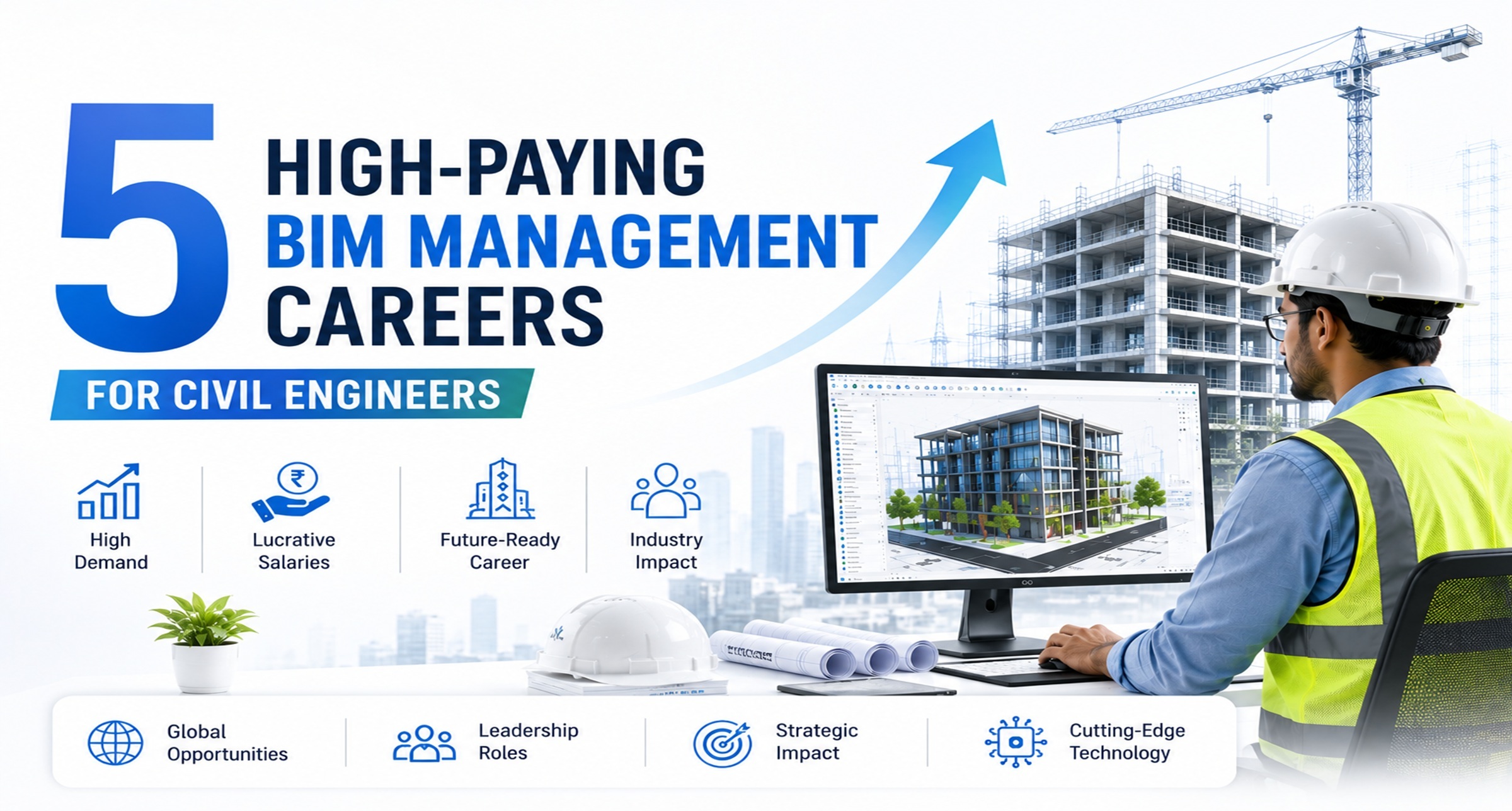




Which BIM Roles Offer The Highest Salary Potential?
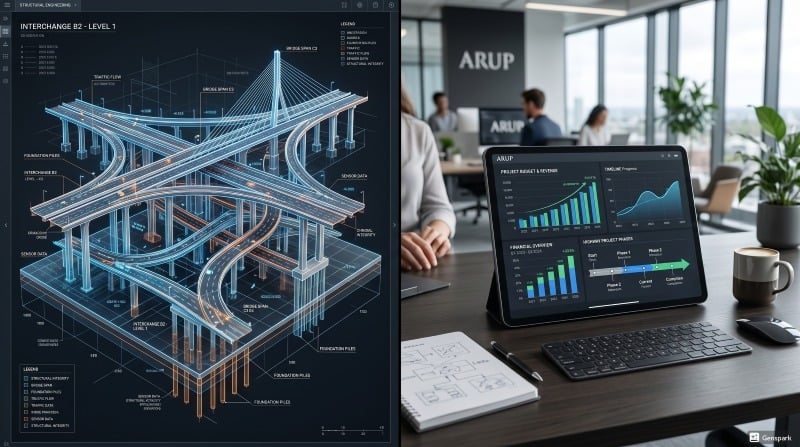
For civil engineers, a career in BIM directly translates to jobs with high salaries.
There are several high paying BIM roles available in the industry, which are better paid than conventional site engineering.
- BIM Manager: This is kind of a senior role, responsible for the overall digital strategy, within a large scale infrastructure project with the highest salary band.
- BIM Coordinator: A key position for coordinating between different teams and kind of linking the structural, architectural, and plumbing designs together.
- BIM Infrastructure Engineer: One of the specialised fields in civil engineering that covers roads, railways, bridges, and big public utilities.
- BIM Structural Designer: They are specialists in creating intelligent 3D structural designs, rich with data, and that also comply with international building codes.
What Does Each BIM Career Path Involve?
The daily objectives and activities vary for each stage of the BIM career path. Knowing these roles will help you to plan your civil engineering base to go where you want.
- BIM Manager: You are responsible for standards across the company and create information protocols in line with international standards like ISO 19650. You build teams, create cloud workflows, and maintain the overall flow of digital data securely.
- BIM Coordinator: Your main job is to blend separate structural models with architectural drawings, to spot space conflicts early. You also run coordination meetings and handle design issues ahead of time.
- BIM Infrastructure Engineer: You bring large civil projects into the digital world. Create 3D terrains, layout smart highway corridors and map underground pipes to prevent hazardous utility strikes.
- BIM Structural Designer: You are the BIM Structural Designer, converting ordinary structural engineering equations into smart, physics-based 3D objects. You ensure that steel bars and concrete dimensions are in exact match with load requirements in the center model.
Which Technical Skills Are Needed To Enter These Roles?
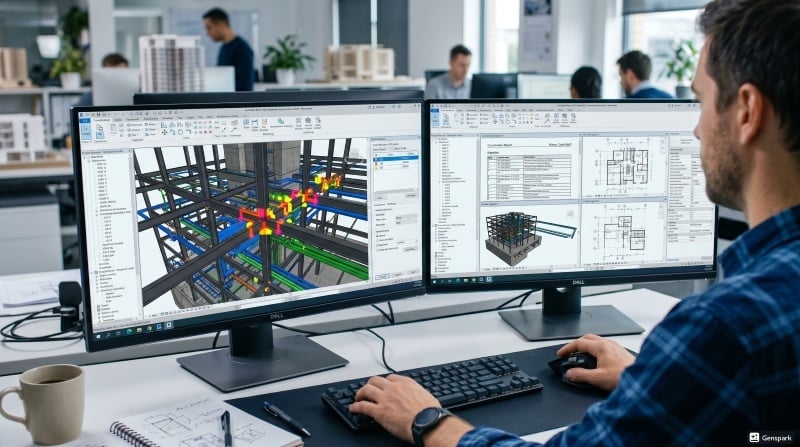
If you want to get competitive BIM jobs for civil engineers, you need to go beyond what you learned in the books.
- Multi-Disciplinary Software Expertise: You can't simply know how to use one program. To coordinate large projects, you must possess a deep understanding of Revit Structure, Civil 3D and Navisworks.
- Knowledge of Clash Detection Capabilities: Knowing how to perform automated clash detection tests to identify spatial conflicts between columns, beams and large ventilation pipes.
- Common Data Environment (CDE) Knowledge: Engineers working in modern offices must keep up to date with design sets on cloud collaboration platforms such as Autodesk Construction Cloud, and that's where Common Data Environment (CDE) Knowledge comes in.
- Visual Programming Tools: Learn simple visual scripting tools, such as Dynamo, to automate repetitive modeling tasks, saving hundreds of office hours.
Can Engineers Build a BIM Career Without a Master’s Degree?
The answer is, yes. Traditionally, a post-graduate diploma was required to get to the top of the corporate ladder, but digital construction has changed all that.
- Emphasise Practical Skills: Employers are interested in your ability to create, not your degree length. They are looking to see if you can fill actual data holes within the given time constraints.
- The Power of a Digital Portfolio: A full portfolio of actual project data sets conveys all the information a hiring manager needs during an interview.
- Global Standards Certifications: ISO 19650 and other industry recognised global standards such as ISO 19650 are a huge weight of credibility in the AEC industry.
Where Can Civil Engineers Learn Industry-Ready BIM Skills?
Most classrooms in universities are not up to date on technology. You need a learning track that is structured but still built by active, working professionals.
- Live Industry Mentor Tracks: Search for professional programs that are taught by practicing structural engineers and architects, not academic professors.
- Workplace Simulation Programs: Select platforms that allow to work with real multi-disciplinary datasets to gain design confidence through real-world experience.
- International Partner Firms: Direct portfolio review, Resume optimisation, Interview practice with International Partner Firms.

.png)