---
title: Which BIM Skills Show Career Readiness in the Hiring Process? 2026
description: Discover the top BIM skills employers look for during hiring. Learn how they signal career readiness, technical expertise, and workplace competence.
image: https://blog.novatr.com/hubfs/top%20bim%20skills%20to%20show%20career%20readiness.png
---
[Blogs](https://www.novatr.com/learning-hub)
- [Architecture & Construction](https://www.novatr.com/learning-hub?category=Architecture+%26+Construction)
- [BIM](https://www.novatr.com/learning-hub?category=BIM)
- [Computational Design](https://www.novatr.com/learning-hub?category=Computational+Design)
- [Company News](https://www.novatr.com/learning-hub?category=Company+News)
- [Expert Talks](https://www.novatr.com/learning-hub?category=Expert+Talks)
Explore Courses
[Just Launched  BIM Professional Program v.2026 Take your career to the next level by mastering the real-world application of BIM. Know More](https://www.novatr.com/courses/bim-professional-program)
[ Master Computational Design Course Break into an advanced career by learning to apply the power of computation to the art of design. Know More](https://www.novatr.com/courses/computational-design)
[Blogs](https://www.novatr.com/learning-hub)
Explore Blogs
- [Architecture & Construction](https://www.novatr.com/learning-hub?category=Architecture+%26+Construction)
- [BIM](https://www.novatr.com/learning-hub?category=BIM)
- [Computational Design](https://www.novatr.com/learning-hub?category=Computational+Design)
- [Company News](https://www.novatr.com/learning-hub?category=Company+News)
- [Expert Talks](https://www.novatr.com/learning-hub?category=Expert+Talks)
Courses
- [BIM Professional Program v.2026](https://www.novatr.com/courses/bim-professional-program)
- [Master Computational Design](https://www.novatr.com/courses/computational-design)
- [BIM/](https://www.novatr.com/learning-hub?category=BIM)
Featured Article
# Top BIM Skills Show Career Readiness in the Hiring Process

Pragya Sharma
August 31, 2026
6 min read

Building Information Modelling (BIM) is changing the game for Architecture, Engineering, and Construction (AEC) professionals. It’s simplifying the design and build process while offering practitioners an opportunity to level up their careers. According to a [survey by Association of Consulting Architects,](https://aca.org.au/wp-content/uploads/2023/07/2023-ACA-National-Salary-Survey-Report.pdf?tblci=GiaDFMKB) individuals with BIM skills earn 2x more than regular architecture and engineering jobs.
Leading AEC companies such as Foster + Partners, Bjarke Ingels Architects, and AECOM are now hiring BIM professionals to speed up their workflows and deliver projects more efficiently. This has increased the demand for candidates in BIM roles, making digital expertise a highly valued asset in the job market.
## **Key Takeaways**
- In the field of BIM, job readiness means being sufficiently equipped to deal with on-site challenges using a combination of theoretical and practical BIM skills.
- Having industry-relevant skills and project experience is a strong indicator of workplace preparedness.
- Presenting a portfolio with BIM models, [digital construction](https://www.novatr.com/blog/digital-construction-shift-with-cpwd) details, and documentation helps companies identify individuals who are best suited for BIM jobs.
- Organisations seek candidates who can bring both technical know-how and people skills to their projects.
Master BIM Before You Fall Behind
Join 8500+ AEC professionals building BIM careers.
Explore the Program
## **What Does Career Readiness Mean in BIM?**
**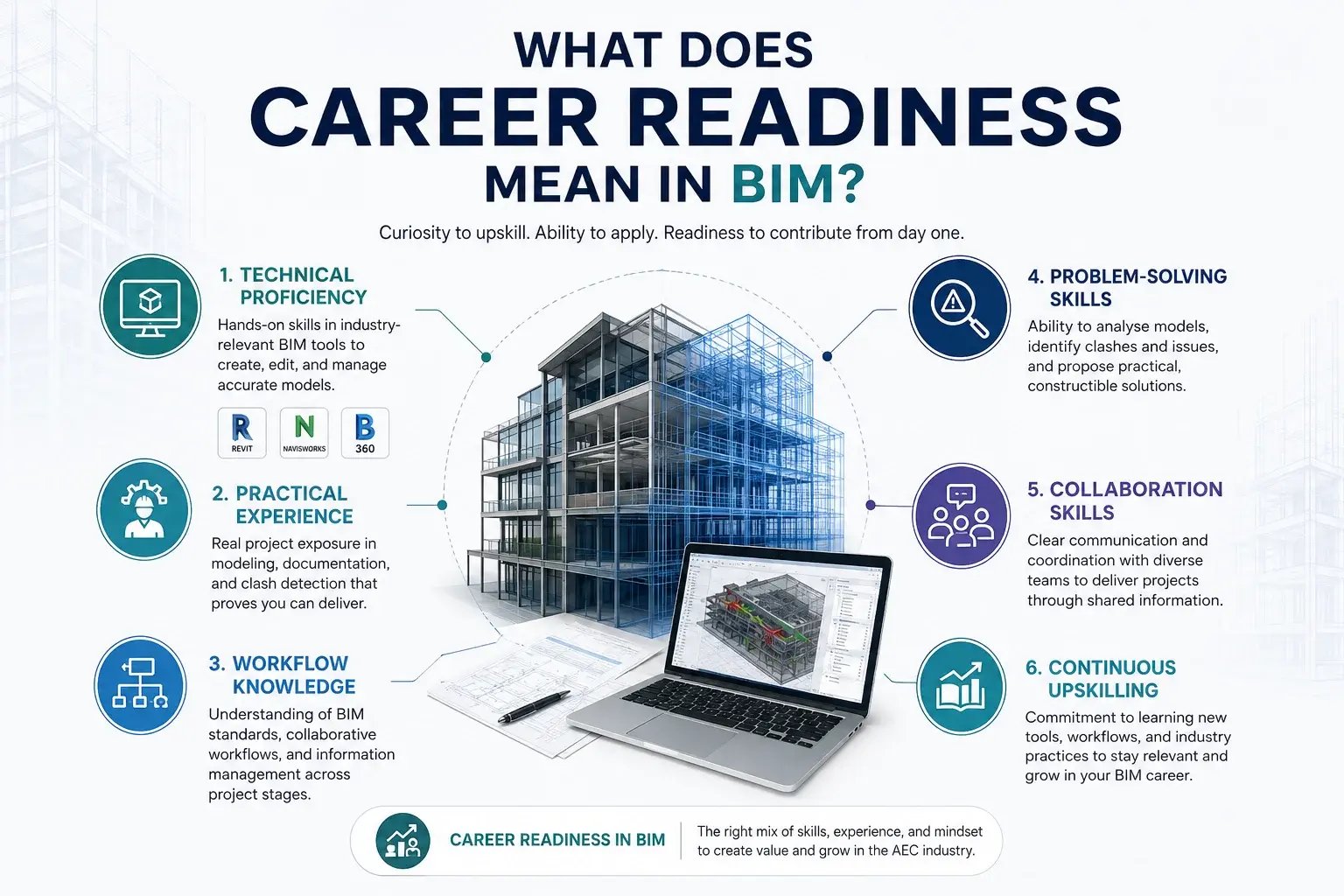**
The foremost step to make a BIM career is having the curiosity to upskill in the latest tools and construction technology. Here’s how this translates into career readiness.
**Technical Proficiency:** Employers expect candidates to be comfortable with industry-relevant BIM tools such as Revit, Navisworks, and [BIM coordination](https://www.novatr.com/blog/bim-coordination-workflow-explained-stages-tools-and-standards) platforms. The ability to create, edit, and manage models is a powerful indicator of career readiness.
**Practical Experience:** Professionals who have already worked in construction or architecture jobs and have used BIM to some capacity can stand out in the hiring process. Experience with modelling, documentation, and clash detection shows competent BIM skills.
**Workflow Knowledge:** BIM professionals need to understand how information moves between different project stages and disciplines. Familiarity with BIM standards, collaborative workflows, and information management helps candidates adapt to professional project environments.
**Problem-Solving Skills:** BIM is extensively used to identify and resolve issues much before they reach the site. Employers therefore value professionals who can analyse models, identify conflicts, and propose practical solutions.
**Collaboration Skills:** BIM projects involve architects, engineers, contractors, and consultants working with shared information. The ability to communicate clearly, coordinate with different teams, and respond to feedback is essential.
**Continuous Upskilling:** BIM is a continually evolving technology. Professionals who actively learn new [software](https://www.novatr.com/blog/8-popular-bim-software), workflows, and industry practices display the interest and adaptability needed to stay relevant throughout their careers.
## **Which BIM Skills and Project Experience Signal Job Readiness to Employers?**
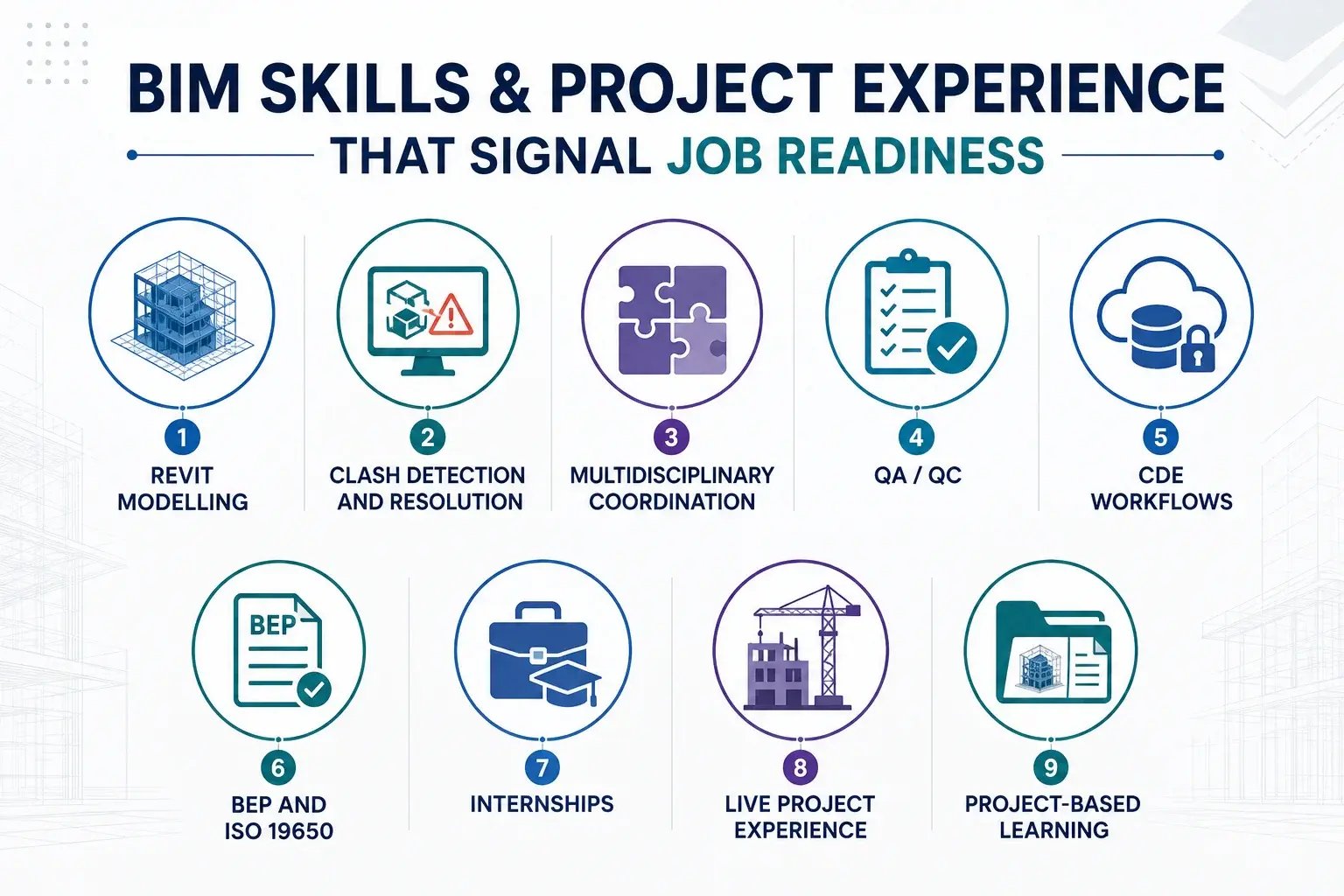
Hiring managers typically scan resumes for certain keywords such as software expertise, BIM certification, and project-based knowledge. Let’s explore which BIM skills employers look for:
**Revit Modelling:** Revit is one of the most widely used BIM software in AEC firms. Expertise in creating accurate models, developing families, generating documentation, and managing model information demonstrates strong modelling fundamentals.
**Clash Detection and Resolution:** BIM professionals are expected to identify conflicts before they become construction problems. An understanding of tools such as [Navisworks](https://www.novatr.com/blog/navisworks-guide) can show your ability to prevent costly reworks and budget overruns.
**Multidisciplinary Coordination:** BIM projects bring architectural, structural, MEP, and other disciplines together. Knowing how to coordinate models, communicate design changes, and resolve conflicts between different teams indicates collaborative BIM skills.
**QA/QC:** A BIM model needs to be accurate, consistent, and aligned with project requirements. Familiarity with model audits, naming conventions, information checks, and QA/QC processes shows employers that you understand the importance of maintaining model quality.
**CDE Workflows:** A Common Data Environment (CDE) provides a structured platform to store, share, review, and manage project information. Understanding how information is collected and exchanged through a CDE illustrates that you can work within a digital environment.
**BEP and ISO 19650:** Knowledge of ISO 19650 standards and how to write a [BIM Execution Plan (BEP)](https://www.novatr.com/blog/how-to-write-a-bim-execution-plan) signals that you understand BIM applications in the real world. This indicates that organisations can trust you with technical tasks.
**Internships:** BIM training offers the chance to apply classroom or course-based learning to actual project workflows. Even short-term experience can help candidates understand how documentation, collaboration, and revisions are handled in a professional setting.
**Live Project Experience:** Working on a live project gives you exposure to the realities of BIM such as design changes, coordination meetings, model revisions, deadlines, and stakeholder feedback. It also gives you tangible work to discuss during interviews.
**Project-Based Learning:** Employers are more likely to recognise the value of BIM skills when they are backed by evidence. A portfolio showing complete projects, coordinated models, clash reports, and drawings can reveal your ability to apply what you have learned.
## **How Does a Strong BIM Portfolio Demonstrate Career Readiness?**
A [BIM portfolio](https://www.novatr.com/blog/how-to-make-a-bim-architect-portfolio) places job seekers at the top of the employability pyramid. It empowers them to future-proof their careers in the AEC industry. Here’s how:
**Complete Project Models:** Including BIM models in your portfolio exemplifies your ability to develop and manage a project from the initial modelling stage to the final output. It also gives employers a better understanding of your attention to detail.
**Drawings and Schedules:** Plans, sections, elevations, schedules, and other model-based outputs show how effectively you can convert BIM data into usable project documentation.
**Clash Reports:** A well-presented clash report can highlight your understanding of coordination workflows. As one of the fundamental BIM skills, this depicts how you identify conflicts, assess their impact, and document the issues for resolution.
**Coordination Outputs:** Federated models, coordination views, and resolved clashes provide evidence of your ability to work across architectural, structural, and [MEP disciplines](https://www.novatr.com/blog/evolution-of-smart-mep-systems).
**BIM Documentation:** Incorporating elements such as naming conventions, model standards, BEPs, or information requirements can demonstrate that you understand the processes that support structured BIM delivery.
**Problem-Solving:** A strong portfolio should highlight design conflicts, modelling challenges, and coordination issues, while explaining how you addressed them. This gives employers a clearer picture of your decision-making abilities.
## **What Signals Show That a BIM Candidate Can Contribute From Day One?**
A BIM hire can contribute to projects from their very first day in the company if they have the skills to lead real projects. Here are the key signals that exhibit these skills:
**Workflow Understanding:** BIM involves much more than creating models. Knowing how modelling connects with documentation, coordination, reviews, and project delivery makes it easier to step into an existing workflow.
**Model Accuracy:** Small modelling errors can affect drawings, schedules, [bill of quantities](https://www.novatr.com/blog/bim-for-quantity-surveyors-uses-benefits-software-and-career-path), and coordination later. Clean geometry, correctly assigned parameters, and well-built families help keep these downstream outputs reliable.
**Information Management:** A BIM model contains valuable project data that needs to remain organised and up to date. Candidates who can structure, edit, and retrieve this information are better equipped to maintain a reliable project model.
**Problem-Solving:** Coordination issues, design changes, and unexpected model conflicts are part of everyday BIM work. Rather than simply flagging an issue, a job-ready candidate should be able to investigate its cause and suggest a workable solution. This makes it one of the key BIM skills.
**Following Project Standards:** [BIM teams](https://www.novatr.com/blog/how-to-build-a-bim-first-culture-in-construction-teams) typically work with predefined templates, naming conventions, modelling rules, and information requirements. Adapting to these standards and protocols ensures that individual contributions remain consistent with the rest of the project.
BIM is Advancing. Are You?
Get BIM certified and open doors to a better career.
Join the Program
## **Conclusion**
BIM does not just add a line in your resume; it changes how employers think about you. It adds more credibility to your candidature and gives you an edge over your competitors. Over time, this advantage multiplies in the form of global job opportunities, higher-paying positions, and holistic career development.
To help you achieve this, we suggest you check out the [BIM Professional Program](https://www.novatr.com/courses/bim-professional-program?utm_source=organic_search&utm_medium=blog&utm_campaign=) by [Novatr](https://www.novatr.com/). It offers a thorough understanding of BIM fundamentals, software, workflows, and how to prepare drawings for on-site execution. Additionally, students get the opportunity to apply their learnings to capstone projects and gain insights from mentorships and case studies. Novatr also supports participants with placement assistance, which enhances their job readiness.
For additional industry insights and learning resources, join us on our [WhatsApp channel](https://whatsapp.com/channel/0029Vb7Gy2LBFLgMx79j7B1b) or visit our [Resources Page](https://www.novatr.com/learning-hub) to learn about the latest trends in architecture and engineering.
## **FAQs**
### **1. Is BIM certification enough to show career readiness?**
No. BIM certification is not sufficient by itself to prove career readiness. Individuals are also expected to showcase proficiency in real-world application of BIM.
### **2. How important is practical BIM experience for getting hired?**
Demonstrating practical BIM experience in their resume helps candidates prove their BIM knowledge and skills, which improves their chances of getting hired.
### **3. Does a BIM portfolio prove job readiness?**
Yes. A BIM portfolio establishes that a candidate has the essential BIM skills required for managing real-life projects.
Was this content helpful to you
Like Yes
Dislike No

TABLE OF CONTENTS
BIM Is The New Standard. Are You Certified?
Get Certified in BIM
SHARE ON YOUR SOCIALS
Link Copied Successfully
Related articles
[ BIM Which BIM Roles are Emerging as Digital Construction Expands? 26 August 2026 8 min read](https://blog.novatr.com/blog/emerging-bim-roles-in-digital-construction) [ BIM What Employers Look for When Hiring BIM Graduates: Top Skills and Qualifications 27 August 2026 6 min read](https://blog.novatr.com/blog/what-employers-look-for-in-bim-graduates) [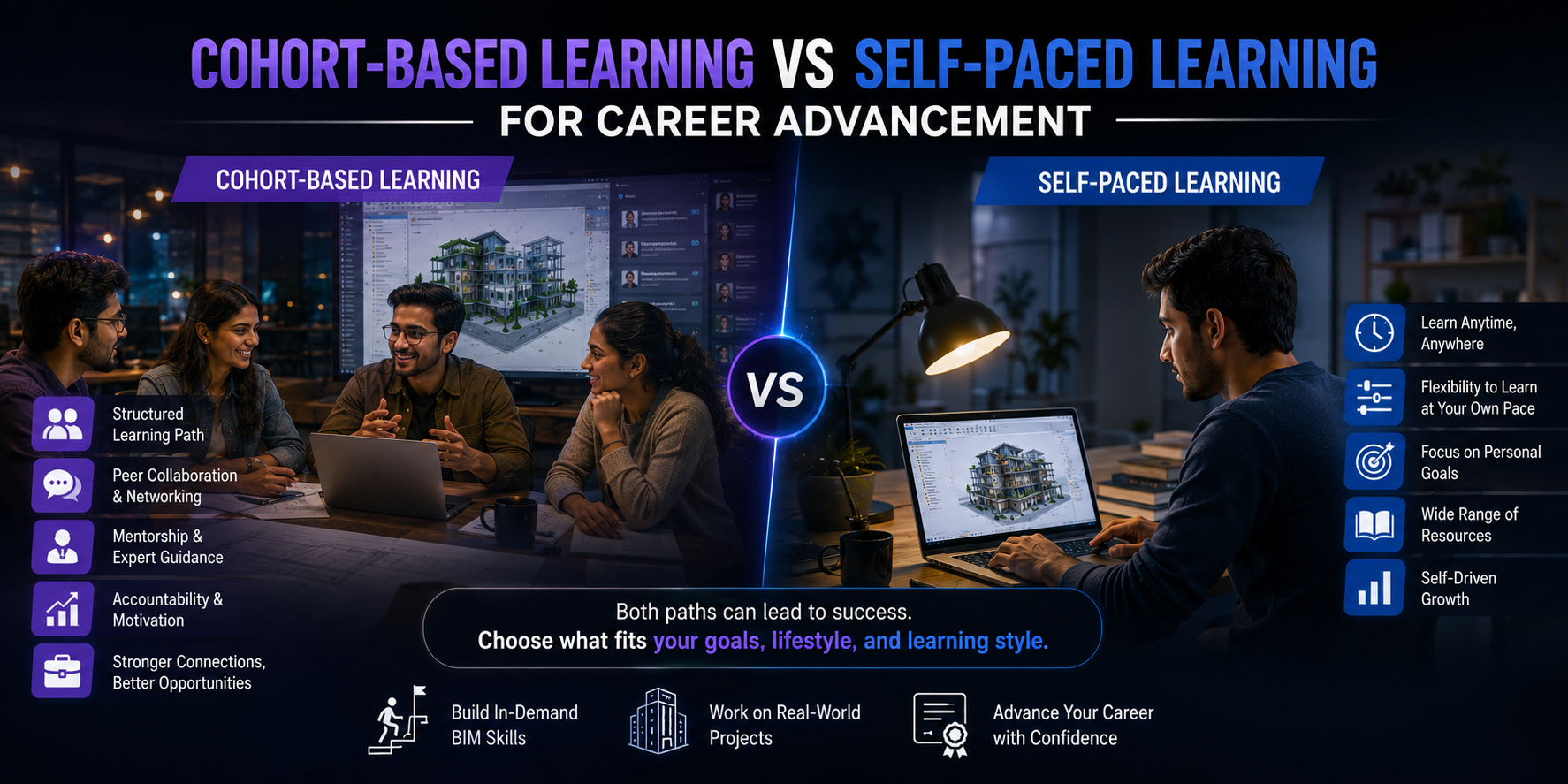 BIM Cohort-Based Learning vs Self-Paced Learning for Career Advancement 17 August 2026 11 min read](https://blog.novatr.com/blog/cohort-based-vs-self-paced-learning-for-bim) [ BIM Revit for Beginners: Everything You Need to Start Your First BIM Project 24 July 2026 8 min read](https://blog.novatr.com/blog/revit-for-beginners)
Download Syllabus
## BIM Professional Program
Next Cohort
June 2026
Program Duration
7 Months
Premium Program benefits
8 Credentials from Autodesk, NSDC, Novatr
1 program. 10 career paths. Infinite Growth.
40+ ISO 19650 & RIBA real-world projects to practice
1-on-1 guidance. Access 400+ industry experts.
Access the biggest AEC-Tech community on the planet. 8500+ and counting
Curated for you by 100+ global BIM leaders.
Lifelong access to course content
Enter your details to download the program syllabus.
##### BIM Professional Program
June 2026, 7 Months
Your Name Invalid name.
Phone Number Enter a valid phone number
Email Please enter a valid email address.
Select years of experience\* Currently studying 0-1 years 1-2 years 2-4 years 4-8 years 8-10 years 10-12 years 12+ years Invalid selection.
Specialisation Select your background\* Architecture Civil Engineering Mechanical Engineering Electrical Engineering Invalid selection.
Are you professionally trained in interior design?
Yes
No
I agree to the [Terms of Use](https://www.novatr.com/terms-and-conditions) and [Privacy Policy](https://www.novatr.com/privacy-policy), and consent to be contacted by Email, Call, WhatsApp, or SMS.
Submit
Ready to skyrocket your career?
Begin your next chapter in AEC
with Novatr!
We are here to help you take the industry by storm with advanced, tech-first skills.
[Explore Courses](https://www.novatr.com/#courses)
Join our newsletter
Submit
Thank you for signing up.
We’ll send you a nice letter once per week. No spam.

Dare to Disrupt.
Join thousands of people who organise
work and life with Novatr.
Company
- [About Us](https://www.novatr.com/about)
- [BIM Professional Program v.2026](https://www.novatr.com/courses/bim-professional-program)
- [Masters Computational Design](https://www.novatr.com/courses/computational-design)
- [Become a Mentor](https://www.novatr.com/apply-as-mentor)
- [Hiring from Us](https://www.novatr.com/hire-from-us)
- [Careers at Novatr](https://www.novatr.com/career)
Resources
- [Blog](https://www.novatr.com/learning-hub)
- [Media Room](https://www.novatr.com/media-room-home-page)
- [Career Builder](https://www.novatr.com/career-navigator)
- [Events & Webinars](https://www.novatr.com/webinars)
- [FAQs & Support Center](https://www.novatr.com/contact-us)
- [Contact Us](https://www.novatr.com/contact-us)
- [Privacy Policy](https://www.novatr.com/privacy-policy)
- [Terms of Use](https://www.novatr.com/terms-and-conditions)
©2023 Oneistox Network Pvt. Ltd.
All Rights Reserved
```json
{
"@context" : "https://schema.org",
"@type" : "BlogPosting",
"author" : {
"@type" : "Person",
"name" : "Pragya Sharma",
"url" : "https://blog.novatr.com/blog/author/pragya-sharma"
},
"dateModified" : "2026-08-31T07:09:45.926Z",
"datePublished" : "2026-08-31T07:02:47.000Z",
"headline" : "Which BIM Skills Show Career Readiness in the Hiring Process? {{year}}",
"image" : [ "https://blog.novatr.com/hubfs/top%20bim%20skills%20to%20show%20career%20readiness.png" ],
"mainEntityOfPage" : {
"@id" : "https://blog.novatr.com/blog/what-employers-look-for-when-hiring-bim-graduates",
"@type" : "WebPage"
},
"publisher" : {
"@type" : "Organization",
"logo" : {
"@type" : "ImageObject",
"url" : "https://blog.novatr.com/hubfs/Novatr%20Prev%20OX-2.svg"
}
}
}
```