---
title: Top Skills You Learn from a BIM Course in India 2026
description: Explore how a BIM course helps build technical and collaborative skills needed for careers in architecture, engineering, and construction.
image: https://blog.novatr.com/hubfs/Mastering%20BIM%20skills%20for%20the%20future.png
---
[Blogs](https://www.novatr.com/learning-hub)
- [Architecture & Construction](https://www.novatr.com/learning-hub?category=Architecture+%26+Construction)
- [BIM](https://www.novatr.com/learning-hub?category=BIM)
- [Computational Design](https://www.novatr.com/learning-hub?category=Computational+Design)
- [Company News](https://www.novatr.com/learning-hub?category=Company+News)
- [Expert Talks](https://www.novatr.com/learning-hub?category=Expert+Talks)
Explore Courses
[Just Launched  BIM Professional Program v.2026 Take your career to the next level by mastering the real-world application of BIM. Know More](https://www.novatr.com/courses/bim-professional-program)
[ Master Computational Design Course Break into an advanced career by learning to apply the power of computation to the art of design. Know More](https://www.novatr.com/courses/computational-design)
[Blogs](https://www.novatr.com/learning-hub)
Explore Blogs
- [Architecture & Construction](https://www.novatr.com/learning-hub?category=Architecture+%26+Construction)
- [BIM](https://www.novatr.com/learning-hub?category=BIM)
- [Computational Design](https://www.novatr.com/learning-hub?category=Computational+Design)
- [Company News](https://www.novatr.com/learning-hub?category=Company+News)
- [Expert Talks](https://www.novatr.com/learning-hub?category=Expert+Talks)
Courses
- [BIM Professional Program v.2026](https://www.novatr.com/courses/bim-professional-program)
- [Master Computational Design](https://www.novatr.com/courses/computational-design)
- [BIM/](https://www.novatr.com/learning-hub?category=BIM)
Featured Article
# What Skills Will You Have After Completing a BIM Course?

Bandana Singh
June 29, 2026
7 min read
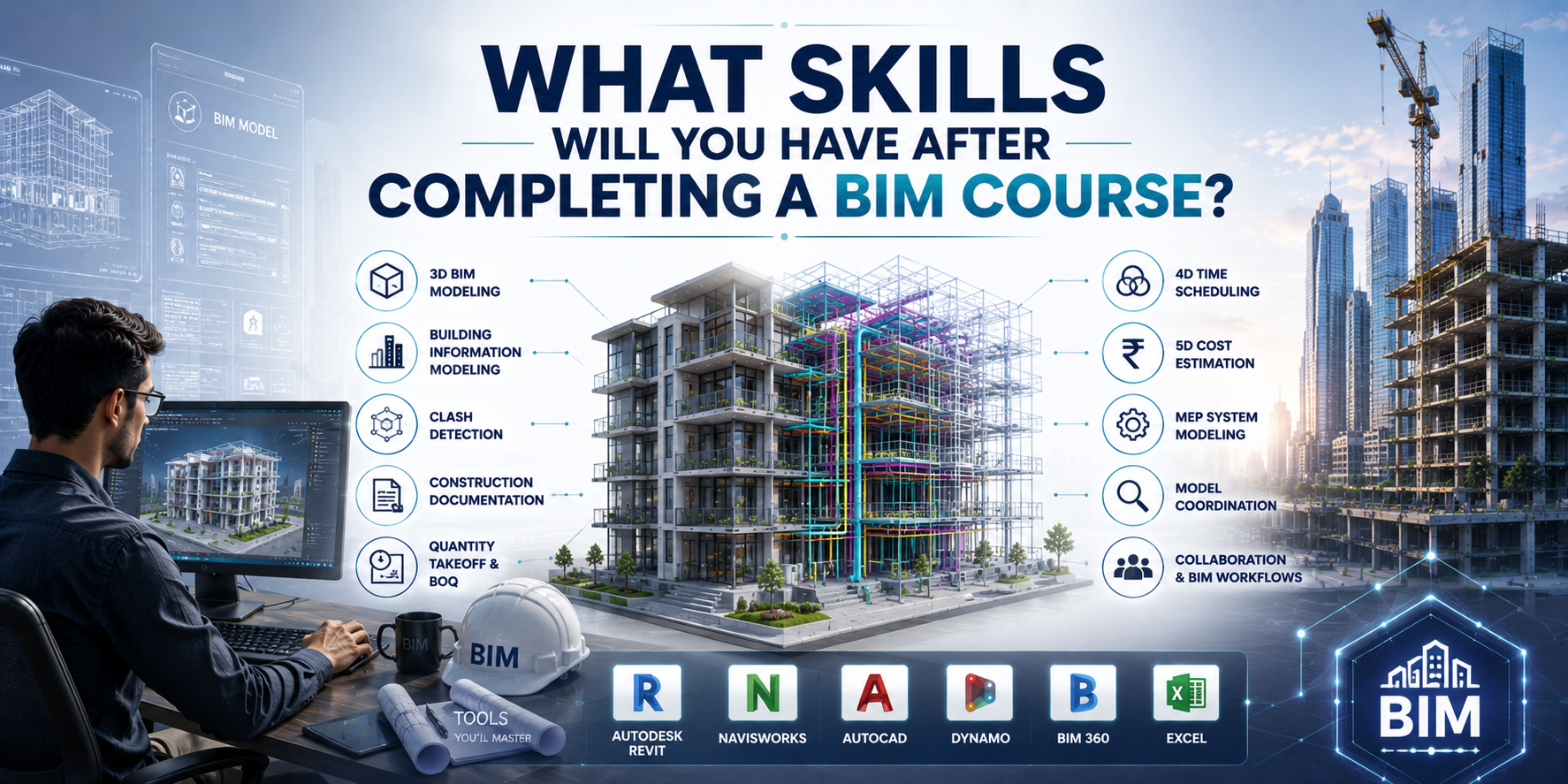

Digital technologies are increasingly used in the construction industry, resulting in a boosted need for people with BIM skills. According to [Fortune Business Insights](https://www.fortunebusinessinsights.com/index.php/building-information-modelling-software-market-102986), the worldwide Building Information Modeling market size will reach USD 10 billion in 2026 and therefore becomes increasingly important in construction projects worldwide.
If you are planning to invest in a BIM course, this is the right time. In the course you will learn how to use digital modelling, coordinate projects, manage information, and collaborate.
Read this blog to know everything you will learn after completing a BIM course from a reputed institution.
## **Key Takeaways**
- A BIM course builds skills in digital modelling, project coordination, and information management.
- Learners gain practical experience with industry-standard [BIM software and tools](https://www.novatr.com/blog/8-popular-bim-software).
- BIM training improves collaboration, communication, and team coordination abilities.
- These skills enhance career opportunities in architecture, engineering, and construction.
Unlock High-Paying Careers With BIM
Master BIM workflows, software and skills on real projects.
Apply Now
\*Limited seats available
## **What Skills Do You Gain After Completing a BIM Course?**
**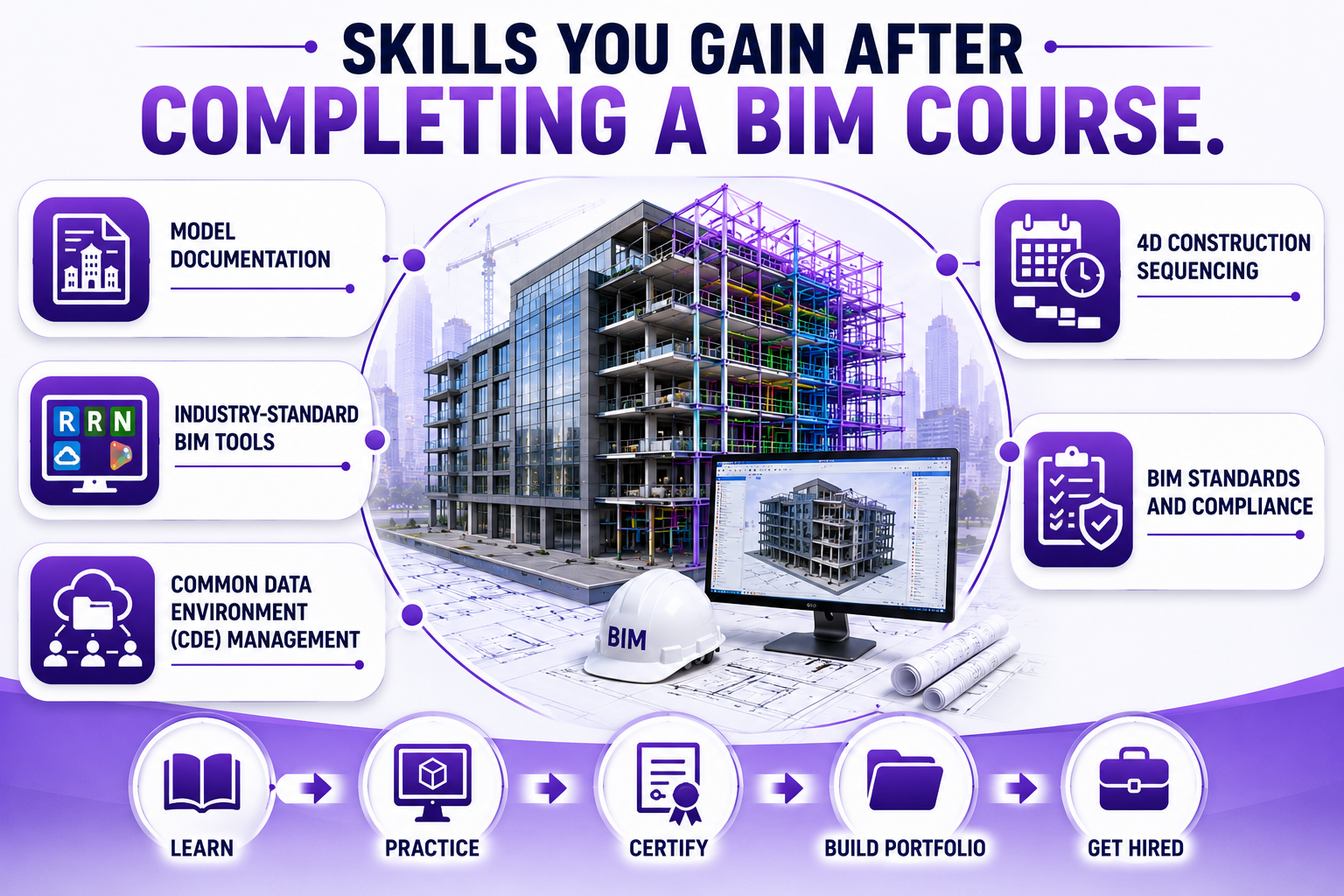**
Skills acquired through this BIM course are very important in all construction projects. Here are some of the skills you will be developing:
- ### **Model Documentation**
A key aspect of BIM is managing project information throughout the building lifecycle. You will learn how to organise model data, maintain information accuracy, and ensure that project teams have access to reliable and updated information.
- ### **Industry-Standard BIM Tools**
A BIM course provides practical experience with leading BIM software such as [Autodesk Revit](https://www.novatr.com/blog/detailed-revit-guide), Navisworks, Autodesk Construction Cloud, and Dynamo. Learning these industry-standard tools helps build technical proficiency and prepares professionals for real-world BIM jobs and digital construction projects.
- ### **Common Data Environment (CDE) Management**
Modern BIM projects rely on centralised platforms for sharing information. You gain experience in document control, version management, and collaborative workflows that support better project communication.
- ### **4D Construction Sequencing**
BIM extends beyond 3D modelling. You will learn how digital models can be linked with project schedules to visualise construction sequences, improve planning, and support more efficient digital construction processes.
- ### **BIM Standards and Compliance**
Understanding BIM standards is essential for working on professional projects. A [BIM course](https://www.novatr.com/blog/what-makes-a-bim-course-industry-relevant)introduces industry best practices, naming conventions, model structuring, and coordination requirements that support successful project delivery.
## **How Do BIM Courses Build Technical and Software Skills?**
The BIM course involves a combination of learning and software programs that are relevant to the construction industry, which enables the learner to acquire the skills necessary for the digital construction industry.
| **Skill Area** | **How a BIM Course Helps** |
| --- | --- |
| **3D Modelling** | Teaches learners how to create accurate digital representations of buildings and infrastructure projects. |
| **Construction Technology** | Introduces modern construction methods and digital tools used throughout the project lifecycle. |
| **BIM Coordination** | Helps individuals understand how different disciplines work together within a shared model environment. |
| **Software Proficiency** | Provides practical experience with industry-standard BIM applications used for modelling and documentation. |
| **Data Management** | Develops the ability to organise, update, and manage project information efficiently. |
| **Clash Detection** | Trains learners to identify design conflicts early, reducing errors and improving project outcomes. |
## **What Workflow and Coordination Skills are Important in BIM?**
**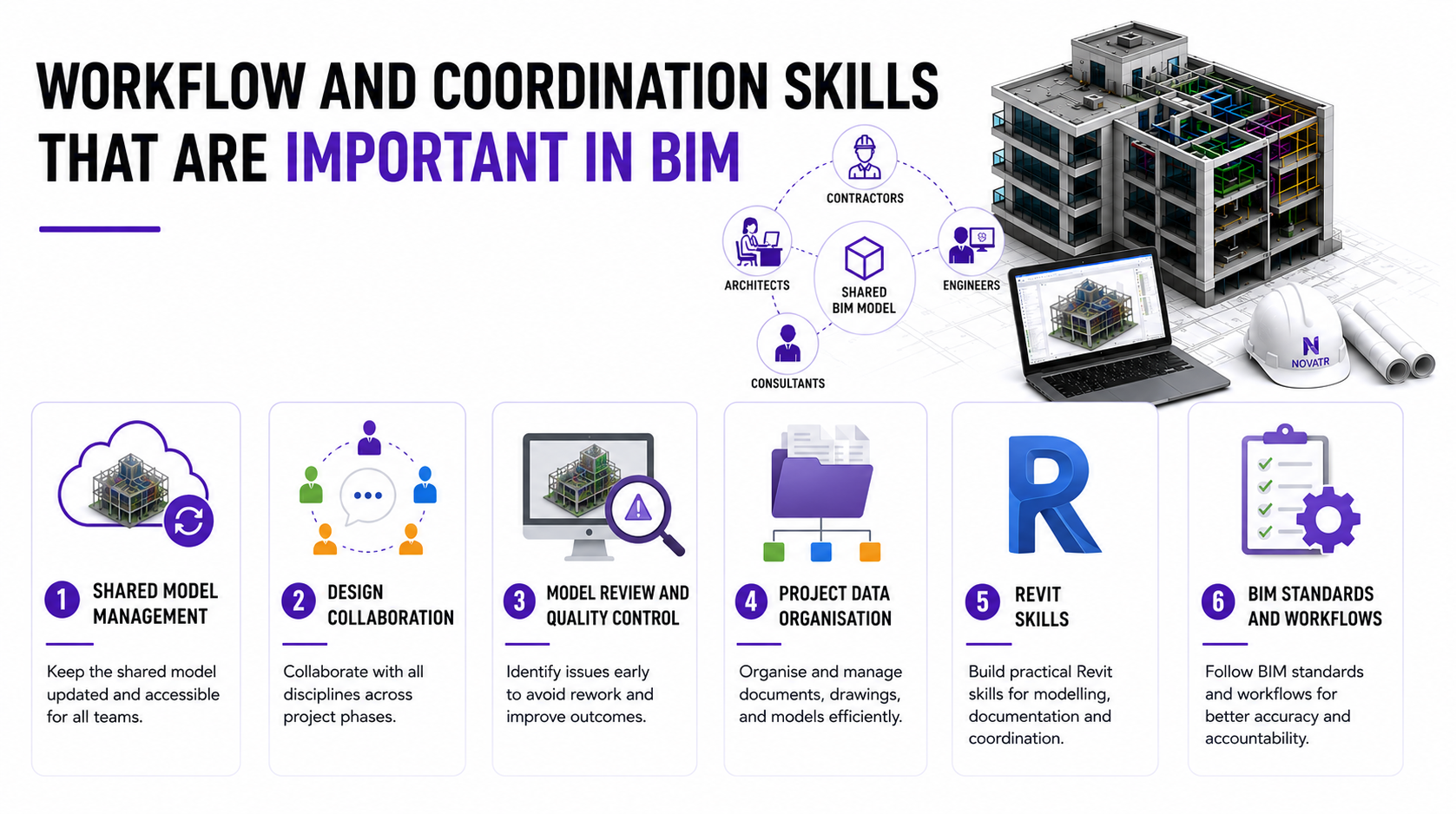**
Coordination and workflow skills are important in order to achieve success in BIM projects. A quality [BIM training program](https://www.novatr.com/blog/bim-learning-for-architects) helps aspiring professionals understand how information flows between multiple stakeholders and how digital processes support smoother project delivery within minimal errors.
- **Shared Model Management:** Learn how to effectively manage and update your shared project model so that all parties have access to accurate data. This ensures consistency across the teams and ensures everyone is working based on the updated project data.
- **Design Collaboration:** Learn how to collaborate effectively by working together with architects, engineers, contractors, and consultants at various phases of the project. This would help in better collaboration by eliminating the risk of communication gaps.
- **Model Review and Quality Control:** Understand model review processes and how to identify potential issues before they affect construction activities. Early detection of problems can save time, reduce rework, and improve project outcomes.
- **Project Data Organisation:** Gain experience in organising project data, ensuring that documents, drawings, and models remain consistent and accessible. Well-structured information supports efficient project management and decision-making.
- **Revit Skills:** Build practical Revit skills that support modelling, documentation, and coordination tasks commonly required in BIM projects. These technical abilities are highly valued by employers across the construction industry.
- **BIM Standards and Workflows:** Learn how to follow [BIM standards and workflows](https://www.novatr.com/blog/13-bim-skills-to-learn-beyond-revit) that promote efficiency, accuracy, and accountability across project teams. These practices form the foundation of successful BIM training.
## **How Do BIM Courses Improve Team Collaboration and Project Understanding?**
BIM courses help learners understand how different teams contribute to a construction project. By working with shared digital models, students gain practical experience in communication, coordination, and project planning.
- Learn how information moves between teams through a structured BIM workflow, helping projects run more smoothly from design through to construction.
- Develop strong design collaboration skills by working with architects, engineers, and other professionals within a shared digital environment.
- Improve communication by learning how to share project information clearly and efficiently, reducing confusion and delays.
- Gain a better understanding of how different disciplines contribute to a project and how their decisions affect the overall outcome.
- Discover how coordinated digital models help identify potential issues early, allowing teams to address challenges before they escalate.
- Build a clearer understanding of project objectives, timelines, and design requirements through visual and data-rich models.
## **Which Skills Help BIM Professionals Stand Out in Hiring?**
**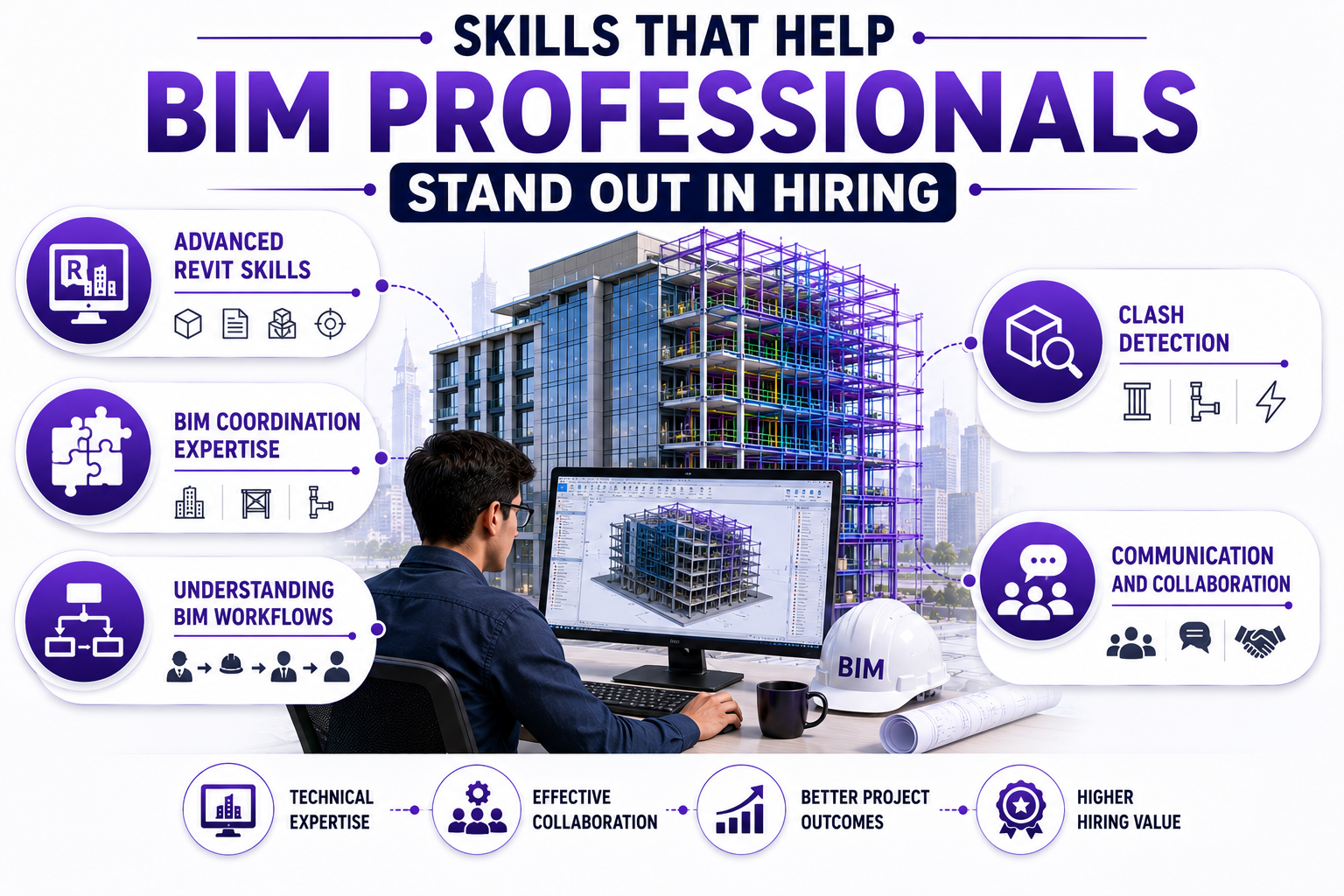**
The most successful BIM professionals combine technical expertise with strong coordination and communication abilities. Employers often prioritise candidates who can contribute effectively to projects while adapting to modern digital workflows.
- **Advanced Revit Skills:** Proficiency in Autodesk Revit is one of the most sought-after [BIM skills](https://www.novatr.com/blog/skills-needed-before-starting-a-bim-course). Employers value professionals who can create detailed models, develop project documentation, manage families, and maintain model accuracy.
- **BIM Coordination Expertise:** Strong BIM coordination capabilities help professionals coordinate architectural, structural, and MEP models within a shared environment, ensuring smoother collaboration across disciplines.
- **Understanding BIM Workflows:** A solid understanding of BIM workflows enables better coordination between architects, engineers, contractors, and consultants, helping projects run more efficiently.
- **Clash Detection:** Expertise in clash detection tools such as Navisworks helps identify conflicts between architectural, structural, and MEP systems before construction begins.
- **Communication and Collaboration:** Effective communication and teamwork skills are essential for sharing information, supporting decision-making, and working successfully within multidisciplinary project teams.
Master BIM and Get Hired Faster
Join a community of 8500+ Architects and Engineers.
Explore Now
\*Limited seats available
## **Conclusion**
A BIM course equips you with the technical, collaborative, and project management skills needed to succeed in today's construction industry. From digital modelling and coordination to workflow management and communication, these capabilities can support long-term architecture career growth.
If you are looking to build industry-relevant BIM skills, the [BIM Professional Program](https://www.novatr.com/courses/bim-professional-program?utm_source=organic_search&utm_medium=blog&utm_campaign=) offered by [Novatr](https://www.novatr.com/) provides practical learning, expert mentorship, and real-world project experience.
For more industry updates, join us on our [**WhatsApp channel**](https://whatsapp.com/channel/0029Vb7Gy2LBFLgMx79j7B1b) or head to our [**resource page**](https://www.novatr.com/learning-hub).
## FAQs
### **1. What technical skills are taught in BIM courses?**
BIM courses teach digital modelling, project coordination, clash detection, data management, and construction documentation skills used in modern projects.
### **2. Do BIM courses teach real project workflows?**
Yes, many BIM courses include practical projects that help learners understand industry workflows, collaboration processes, and project delivery methods. We at Novatr provide real project workflows for practical knowledge.
### **3. What software skills are taught in BIM courses?**
BIM courses provide hands-on training in industry-standard tools used for 3D modelling, documentation, coordination, and project information management.
Was this content helpful to you
Like Yes
Dislike No

TABLE OF CONTENTS
BIM Is The New Standard. Are You Certified?
Get Certified in BIM
SHARE ON YOUR SOCIALS
Link Copied Successfully
Related articles
[ BIM Civil Future Ready Career Paths for Civil Engineers in 2026 11 June 2026 7 min read](https://blog.novatr.com/blog/future-ready-career-paths-for-civil-engineers) [ BIM How WELL AP Certification Can Help You Grow in Your Career? 3 July 2026 4 min read](https://blog.novatr.com/blog/how-well-ap-certification-can-help-you-grow-in-your-career) [ BIM What Makes a BIM Course Industry-Relevant in 2026? 23 June 2026 6 min read](https://blog.novatr.com/blog/what-makes-a-bim-course-industry-relevant) [ BIM Civil How Real BIM Projects Work: From Design to Construction? 5 May 2026 5 min read](https://blog.novatr.com/blog/the-practicality-of-bim-projects-from-design-to-construction)
Download Syllabus
## BIM Professional Program
Next Cohort
June 2026
Program Duration
7 Months
Premium Program benefits
8 Credentials from Autodesk, NSDC, Novatr
1 program. 10 career paths. Infinite Growth.
40+ ISO 19650 & RIBA real-world projects to practice
1-on-1 guidance. Access 400+ industry experts.
Access the biggest AEC-Tech community on the planet. 8500+ and counting
Curated for you by 100+ global BIM leaders.
Lifelong access to course content
Enter your details to download the program syllabus.
##### BIM Professional Program
June 2026, 7 Months
Your Name Invalid name.
Phone Number Enter a valid phone number
Email Please enter a valid email address.
Select years of experience\* Currently studying 0-1 years 1-2 years 2-4 years 4-8 years 8-10 years 10-12 years 12+ years Invalid selection.
Specialisation Select your background\* Architecture Civil Engineering Mechanical Engineering Electrical Engineering Invalid selection.
Are you professionally trained in interior design?
Yes
No
I agree to the [Terms of Use](https://www.novatr.com/terms-and-conditions) and [Privacy Policy](https://www.novatr.com/privacy-policy), and consent to be contacted by Email, Call, WhatsApp, or SMS.
Submit
Ready to skyrocket your career?
Begin your next chapter in AEC
with Novatr!
We are here to help you take the industry by storm with advanced, tech-first skills.
[Explore Courses](https://www.novatr.com/#courses)
Join our newsletter
Submit
Thank you for signing up.
We’ll send you a nice letter once per week. No spam.

Dare to Disrupt.
Join thousands of people who organise
work and life with Novatr.
Company
- [About Us](https://www.novatr.com/about)
- [BIM Professional Program v.2026](https://www.novatr.com/courses/bim-professional-program)
- [Masters Computational Design](https://www.novatr.com/courses/computational-design)
- [Become a Mentor](https://www.novatr.com/apply-as-mentor)
- [Hiring from Us](https://www.novatr.com/hire-from-us)
- [Careers at Novatr](https://www.novatr.com/career)
Resources
- [Blog](https://www.novatr.com/learning-hub)
- [Media Room](https://www.novatr.com/media-room-home-page)
- [Career Builder](https://www.novatr.com/career-navigator)
- [Events & Webinars](https://www.novatr.com/webinars)
- [FAQs & Support Center](https://www.novatr.com/contact-us)
- [Contact Us](https://www.novatr.com/contact-us)
- [Privacy Policy](https://www.novatr.com/privacy-policy)
- [Terms of Use](https://www.novatr.com/terms-and-conditions)
©2023 Oneistox Network Pvt. Ltd.
All Rights Reserved
```json
{
"@context" : "https://schema.org",
"@type" : "BlogPosting",
"author" : {
"@type" : "Person",
"name" : "Bandana Singh",
"url" : "https://blog.novatr.com/blog/author/bandana-singh"
},
"dateModified" : "2026-06-29T10:44:03.842Z",
"datePublished" : "2026-06-29T06:46:59.000Z",
"headline" : "Top Skills You Learn from a BIM Course in India {{year}}",
"image" : [ "https://blog.novatr.com/hubfs/Mastering%20BIM%20skills%20for%20the%20future.png" ],
"mainEntityOfPage" : {
"@id" : "https://blog.novatr.com/blog/top-skills-you-learn-from-a-bim-course",
"@type" : "WebPage"
},
"publisher" : {
"@type" : "Organization",
"logo" : {
"@type" : "ImageObject",
"url" : "https://blog.novatr.com/hubfs/Novatr%20Prev%20OX-2.svg"
}
}
}
```