---
title: "How to Become a 4D BIM Engineer: Skills, Salary, and Career Path"
description: Learn how to become a 4D BIM Engineer, including skills, tools, salary insights, and career path from site engineer to BIM professional.
image: https://blog.novatr.com/hubfs/BIM%20Engineer%20reviewing%204D%20BIM%20simulation%20mode.jpg
---
[Blogs](https://www.novatr.com/learning-hub)
- [Architecture & Construction](https://www.novatr.com/learning-hub?category=Architecture+%26+Construction)
- [BIM](https://www.novatr.com/learning-hub?category=BIM)
- [Computational Design](https://www.novatr.com/learning-hub?category=Computational+Design)
- [Company News](https://www.novatr.com/learning-hub?category=Company+News)
- [Expert Talks](https://www.novatr.com/learning-hub?category=Expert+Talks)
Explore Courses
[Just Launched  BIM Professional Program v.2026 Take your career to the next level by mastering the real-world application of BIM. Know More](https://www.novatr.com/courses/bim-professional-program)
[ Master Computational Design Course Break into an advanced career by learning to apply the power of computation to the art of design. Know More](https://www.novatr.com/courses/computational-design)
[Blogs](https://www.novatr.com/learning-hub)
Explore Blogs
- [Architecture & Construction](https://www.novatr.com/learning-hub?category=Architecture+%26+Construction)
- [BIM](https://www.novatr.com/learning-hub?category=BIM)
- [Computational Design](https://www.novatr.com/learning-hub?category=Computational+Design)
- [Company News](https://www.novatr.com/learning-hub?category=Company+News)
- [Expert Talks](https://www.novatr.com/learning-hub?category=Expert+Talks)
Courses
- [BIM Professional Program v.2026](https://www.novatr.com/courses/bim-professional-program)
- [Master Computational Design](https://www.novatr.com/courses/computational-design)
- [CIVIL/](https://www.novatr.com/learning-hub?category=BIM)
Featured Article
# How to Become a 4D BIM Engineer: Skills, Salary, and Career Path

Deependra Dobriyal
April 30, 2026
6 min read


**How to become a 4D BIM Engineer** involves developing skills in model-based planning, scheduling, and digital coordination to manage modern construction projects. A 4D BIM Engineer integrates time with 3D models to simulate construction workflows and improve project delivery.
In India, BIM professionals are seeing steady salary growth, with BIM engineers typically earning between [₹3 lakh to ₹6 lakh](https://www.glassdoor.co.in/Salaries/bim-engineer-salary-SRCH_KO0,12_P103.htm) per year depending on experience.
As BIM adoption increases across infrastructure and commercial projects, the demand for professionals skilled in [4D workflows](https://www.novatr.com/blog/what-is-4d-bim-a-complete-guide-to-construction-planning-using-bim) continues to grow, making it a strong career path for engineers transitioning into digital construction roles.
Unlock High-Paying Careers With BIM
Master BIM workflows, software and skills on real projects.
Apply Now
\*Limited seats available
## **Who is a 4D BIM Engineer?**
A 4D BIM Engineer is responsible for linking construction schedules with 3D models to simulate project execution over time. This enables teams to visualize how a project will be built and identify issues before construction begins.
Understanding how to become a 4D BIM Engineer starts with recognizing that this role combines design, planning, and coordination. It requires both technical expertise and an understanding of construction workflows.
Through BIM and 4d planning, engineers ensure that design elements align with project timelines. This helps improve coordination between disciplines and reduces delays.
This role is essential in modern construction, where projects require [precise scheduling](https://www.novatr.com/blog/4d-bim-vs-traditional-scheduling-which-method-is-better-for-modern-construction), efficient coordination, and data-driven decision-making.
### **Key Responsibilities of a 4D BIM Engineer**
The **4D BIM Engineer job responsibilities** focus on integrating models with schedules and ensuring smooth project execution. These responsibilities go beyond basic modeling and involve planning and coordination.
The responsibilities include:
- **Model and Schedule Integration**Connect 3D models with timelines to create simulations of construction sequences.
- **Construction Sequencing Analysis**Evaluate how different systems interact during each phase of construction.
- **Clash and Conflict Identification**Detect sequencing and coordination issues early to prevent on-site problems.
- **Simulation and Visualization**Use BIM tools to simulate construction processes and improve planning clarity.
- **Cross-Discipline Coordination**Work with architects, engineers, and contractors to align workflows.
- **Documentation and Reporting**Maintain records of simulations, schedules, and coordination outcomes.
These responsibilities show how 4D BIM engineers improve project efficiency and reduce risks.
Also Read: [Role of 4D BIM in Construction Project Planning](https://www.novatr.com/blog/what-is-the-role-of-4d-bim-in-construction-project-planning)
## **Skills Required to Become a 4D BIM Engineer**
To build a successful [career in 4D BIM](https://www.novatr.com/blog/software-and-industry-requirements-for-bim-jobs#:), professionals need a combination of technical and analytical skills. The required 4D BIM Engineer skills focus on both modeling and scheduling.
The skills required include:
- **BIM Software Proficiency:** Learn essential BIM tools used in modeling and coordination.
- **Scheduling and Planning Knowledge:** Understand how to create and manage timelines using 4D workflows.
- **Model Integration Skills:** Learn how to link models with schedules effectively.
- **Analytical Thinking:** Identify inefficiencies and optimize construction sequences.
- **Communication Skills:** Coordinate with multiple teams to ensure alignment.
## **Tools Used by 4D BIM Engineers**
**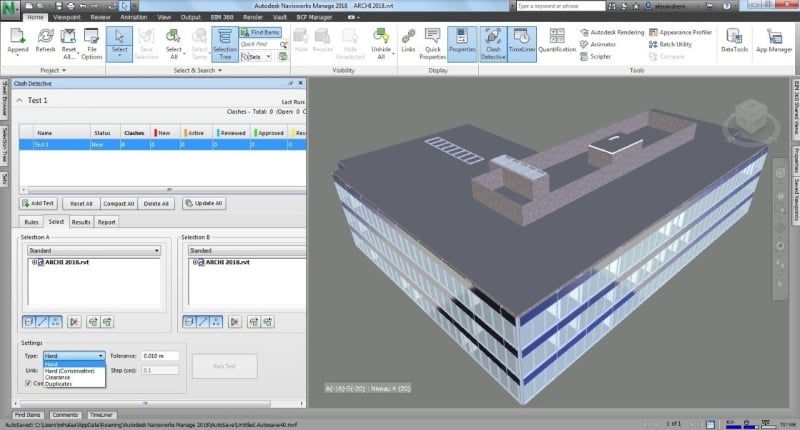**
4D BIM Engineers rely on a combination of modeling, scheduling, and coordination tools. These tools form the foundation of **software for BIM engineers** and enable efficient project planning.
### **1. Autodesk Revit**
[Revit](https://www.novatr.com/blog/detailed-revit-guide) is used to create detailed 3D models for architecture, structure, and MEP systems. It allows engineers to develop data-rich models where each component carries information such as dimensions, materials, and system connections. These models serve as the base for 4D simulations.
### **2. Autodesk Navisworks**
[Navisworks](https://www.novatr.com/blog/navisworks-type) is a primary tool for 4D BIM workflows. It enables model aggregation, clash detection, and schedule integration. Engineers use it to link models with timelines, run simulations, and analyze sequencing issues.
### **3. Synchro 4D**
Synchro is a specialized platform designed for 4D BIM. It allows users to connect schedules with models, simulate construction sequences, and optimize project timelines. It is widely used for advanced 4D planning.
### **4. Primavera P6**
Primavera is a scheduling tool used to create detailed construction timelines. It is often integrated with BIM tools to support 4D simulations and improve project planning accuracy.
### **5. Autodesk Construction Cloud**
[Autodesk Construction Cloud](https://www.novatr.com/blog/autodesk-construction-cloud-acc-complete-guide) supports collaboration and data management. It enables teams to share models, track issues, and ensure that all stakeholders work with updated information.
## **Salary and Career Opportunities**
A **career in 4D BIM** offers strong growth potential due to increasing demand for digital construction skills. Organizations across infrastructure and commercial sectors are actively hiring professionals with BIM expertise.
The 4D BIM Engineer Salary depends on experience and location. In India, BIM engineers earn an average of around ₹4.8 LPA, with a typical range between ₹3.1 LPA and ₹6.5 LPA, and top professionals earning up to ₹9.9 LPA, based on [Glassdoor salary data](https://www.glassdoor.co.in/Salaries/bim-engineer-salary-SRCH_KO0,12_P103.htm).
Entry-level roles such as BIM modelers typically start at lower salary ranges, while experienced professionals move into higher-paying roles such as BIM Manager or Digital Construction Lead.
Career opportunities include:
- BIM Engineer
- BIM Coordinator
- BIM Manager
- Digital Construction Specialist
This progression shows how professionals can grow within the BIM domain and take on leadership roles over time.
## **Career Path from Site Engineer to 4D BIM Engineer**

Transitioning from a site to BIM Engineer role is a structured process that builds on existing construction knowledge. Site engineers already understand execution workflows, which makes it easier to adapt to BIM roles.
The transition typically includes:
- **Step 1: Site Experience**Gain hands-on experience in construction workflows, sequencing, and coordination.
- **Step 2: Learn BIM Fundamentals**Understand concepts such as modeling, coordination, and data management.
- **Step 3: Develop Software Skills**Train in tools such as Revit and Navisworks to move into digital workflows.
- **Step 4: Apply BIM in Projects**Start using BIM for coordination and scheduling tasks.
- **Step 5: Specialize in 4D BIM**Focus on simulation, scheduling, and advanced planning workflows.
This pathway shows how site engineers can transition into a career in 4D BIM by combining practical knowledge with digital skills.
## **How to Start a Career in 4D BIM?**
Building expertise in 4D BIM requires structured learning and hands-on exposure to real-world workflows. Professionals must understand how to integrate modeling, scheduling, and coordination into a unified process.
Take your civil engineering career to the next level with Novatr’s BIM Professional Course for Civil Engineers, a project-based program that prepares you to plan, design, and manage construction projects using 12+ industry software and essential BIM plugins.
Learn how to work with Autodesk Revit, Navisworks, construction cloud and key plugins like DiRoots.One, pyRevit, EF-Tools, ProSheets, Issue and Model Checker for Revit to improve automation, accuracy, and project efficiency.
Here’s what you’ll gain:
- End-to-end understanding of BIM workflows - modeling, estimation, coordination, sequencing, and documentation.
- Hands-on training aligned with ISO 19650 standards and real residential + commercial projects.
- Globally recognized certifications:
o Novatr Course Certificate
o Autodesk User Certification
o NSDC Skill Certificate
o Novatr Specialization Certificate, if opted
After completing the core modules, learners can also choose 2 additional specializations, including:
- Visual Programming with Dynamo
- 4D, 5D & 6D with BIM
- Tekla for RCC Modeling
- Civil 3D for Infrastructure
- Project Strategy & Optimization with Plannerly
This structured approach enables professionals to build expertise in 4D BIM workflows and prepare for industry roles.
Master BIM and Get Hired Faster
Join a community of 8500+ Architects and Engineers.
Explore Now
\*Limited seats available
## Conclusion
Understanding how to become a 4D BIM Engineer provides a clear path into one of the fastest-growing roles in construction. By combining technical skills, planning knowledge, and site experience, professionals can transition into high-demand BIM roles.
Structured learning programs such as the [BIM Professional course for Civil Engineers](https://www.novatr.com/courses/bim-for-civil-engineers) offered by [Novatr](https://www.novatr.com/) help build industry-relevant skills and support long-term career development.
Visit our [resource page](https://www.novatr.com/learning-hub) to explore structured learning options.
Was this content helpful to you
Like Yes
Dislike No

TABLE OF CONTENTS
BIM Is The New Standard. Are You Certified?
Get Certified in BIM
SHARE ON YOUR SOCIALS
Link Copied Successfully
Related articles
[ BIM MEP Engineer vs Mechanical Engineer Salary, Expertise and Skills 24 April 2025 20 min read](https://blog.novatr.com/blog/bim-mep-engineer-vs-mechanical-engineer) [ BIM Civil What If You Don’t Crack ESE? Best Career Options for Engineers 11 June 2026 9 min read](https://blog.novatr.com/blog/what-if-you-dont-crack-ese-best-career-options-for-engineers) [ How the Novatr Course Can Help Automobile Engineers Begin Their Career in Construction 23 April 2025 12 min read](https://blog.novatr.com/blog/novatr-bim-mep-course-for-automobile-engineers) [ How to transition from Mechanical Engineer to BIM Mechanical Engineer 5 March 2025 39 min read](https://blog.novatr.com/blog/mechanical-engineer-to-bim-mechanical-engineer-transition-guide)
Download Syllabus
## BIM Professional Program
Next Cohort
June 2026
Program Duration
7 Months
Premium Program benefits
8 Credentials from Autodesk, NSDC, Novatr
1 program. 10 career paths. Infinite Growth.
40+ ISO 19650 & RIBA real-world projects to practice
1-on-1 guidance. Access 400+ industry experts.
Access the biggest AEC-Tech community on the planet. 8500+ and counting
Curated for you by 100+ global BIM leaders.
Lifelong access to course content
Enter your details to download the program syllabus.
##### BIM Professional Program
June 2026, 7 Months
Your Name Invalid name.
Phone Number Enter a valid phone number
Email Please enter a valid email address.
Select years of experience\* Currently studying 0-1 years 1-2 years 2-4 years 4-8 years 8-10 years 10-12 years 12+ years Invalid selection.
Specialisation Select your background\* Architecture Civil Engineering Mechanical Engineering Electrical Engineering Invalid selection.
Are you professionally trained in interior design?
Yes
No
I agree to the [Terms of Use](https://www.novatr.com/terms-and-conditions) and [Privacy Policy](https://www.novatr.com/privacy-policy), and consent to be contacted by Email, Call, WhatsApp, or SMS.
Submit
Ready to skyrocket your career?
Begin your next chapter in AEC
with Novatr!
We are here to help you take the industry by storm with advanced, tech-first skills.
[Explore Courses](https://www.novatr.com/#courses)
Join our newsletter
Submit
Thank you for signing up.
We’ll send you a nice letter once per week. No spam.

Dare to Disrupt.
Join thousands of people who organise
work and life with Novatr.
Company
- [About Us](https://www.novatr.com/about)
- [BIM Professional Program v.2026](https://www.novatr.com/courses/bim-professional-program)
- [Masters Computational Design](https://www.novatr.com/courses/computational-design)
- [Become a Mentor](https://www.novatr.com/apply-as-mentor)
- [Hiring from Us](https://www.novatr.com/hire-from-us)
- [Careers at Novatr](https://www.novatr.com/career)
Resources
- [Blog](https://www.novatr.com/learning-hub)
- [Media Room](https://www.novatr.com/media-room-home-page)
- [Career Builder](https://www.novatr.com/career-navigator)
- [Events & Webinars](https://www.novatr.com/webinars)
- [FAQs & Support Center](https://www.novatr.com/contact-us)
- [Contact Us](https://www.novatr.com/contact-us)
- [Privacy Policy](https://www.novatr.com/privacy-policy)
- [Terms of Use](https://www.novatr.com/terms-and-conditions)
©2023 Oneistox Network Pvt. Ltd.
All Rights Reserved
```json
{
"@context" : "https://schema.org",
"@type" : "BlogPosting",
"author" : {
"@type" : "Person",
"name" : "Deependra Dobriyal",
"url" : "https://blog.novatr.com/blog/author/deependra-dobriyal"
},
"dateModified" : "2026-04-30T11:07:26.391Z",
"datePublished" : "2026-04-30T11:06:44.000Z",
"headline" : "How to Become a 4D BIM Engineer: Skills, Salary, and Career Path",
"image" : [ "https://blog.novatr.com/hubfs/BIM%20Engineer%20reviewing%204D%20BIM%20simulation%20mode.jpg" ],
"mainEntityOfPage" : {
"@id" : "https://blog.novatr.com/blog/how-to-become-a-4d-bim-engineer-skills-salary-and-career-path",
"@type" : "WebPage"
},
"publisher" : {
"@type" : "Organization",
"logo" : {
"@type" : "ImageObject",
"url" : "https://blog.novatr.com/hubfs/Novatr%20Prev%20OX-2.svg"
}
}
}
```