---
title: How BIM Transformed the Western Freight Corridor In India? 2026
description: Discover how BIM improved planning, coordination, and delivery of the Western Dedicated Freight Corridor, India's landmark rail project.
image: https://blog.novatr.com/hubfs/Western%20Dedicated%20Freight%20Corridor.png
---
[Blogs](https://www.novatr.com/learning-hub)
- [Architecture & Construction](https://www.novatr.com/learning-hub?category=Architecture+%26+Construction)
- [BIM](https://www.novatr.com/learning-hub?category=BIM)
- [Computational Design](https://www.novatr.com/learning-hub?category=Computational+Design)
- [Company News](https://www.novatr.com/learning-hub?category=Company+News)
- [Expert Talks](https://www.novatr.com/learning-hub?category=Expert+Talks)
Explore Courses
[Just Launched  BIM Professional Program v.2026 Take your career to the next level by mastering the real-world application of BIM. Know More](https://www.novatr.com/courses/bim-professional-program)
[ Master Computational Design Course Break into an advanced career by learning to apply the power of computation to the art of design. Know More](https://www.novatr.com/courses/computational-design)
[Blogs](https://www.novatr.com/learning-hub)
Explore Blogs
- [Architecture & Construction](https://www.novatr.com/learning-hub?category=Architecture+%26+Construction)
- [BIM](https://www.novatr.com/learning-hub?category=BIM)
- [Computational Design](https://www.novatr.com/learning-hub?category=Computational+Design)
- [Company News](https://www.novatr.com/learning-hub?category=Company+News)
- [Expert Talks](https://www.novatr.com/learning-hub?category=Expert+Talks)
Courses
- [BIM Professional Program v.2026](https://www.novatr.com/courses/bim-professional-program)
- [Master Computational Design](https://www.novatr.com/courses/computational-design)
- [BIM/](https://www.novatr.com/learning-hub?category=BIM)
Featured Article
# Western Dedicated Freight Corridor - How BIM Is Revolutionising Rail Logistics in India?

Harshita Chaudhary
July 1, 2026
3 min read
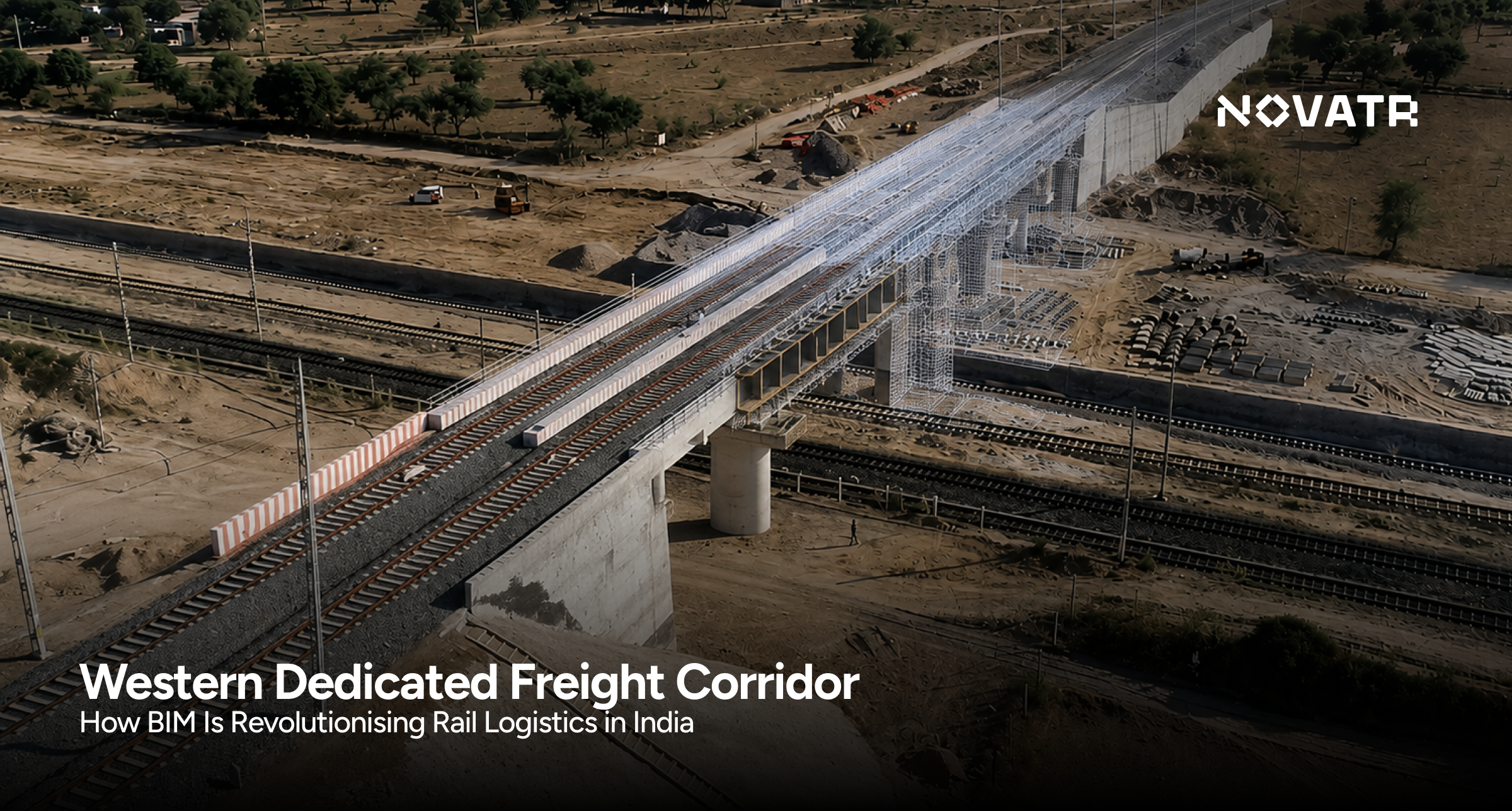

Moving freight efficiently across a country as vast as India is a significant logistical challenge. The Western Dedicated Freight Corridor was designed to change that by creating a dedicated network for faster, high-capacity freight movement. However, building one of the country's largest railway infrastructure projects required more than just engineering; it demanded seamless project [coordination](https://www.novatr.com/blog/revit-and-navisworks-for-effective-mep-coordination), modern construction technology, and connected digital workflows. Through digital engineering and BIM coordination, the project demonstrated how digital construction can improve execution, enhance collaboration, and set a new benchmark for future infrastructure projects and rail logistics in India.
## Key Takeaways
- The Western Dedicated Freight Corridor is setting new benchmarks for modern rail logistics in India.
- BIM coordination improved planning, collaboration, and project execution across the corridor.
- Digital construction helped reduce risks and streamline complex infrastructure delivery.
- The project highlights the growing role of BIM infrastructure in future transportation projects.
Unlock High-Paying Careers With BIM
Master BIM workflows, software and skills on real projects.
Apply Now
\*Limited seats available
## How Is BIM Changing Rail Logistics in India?
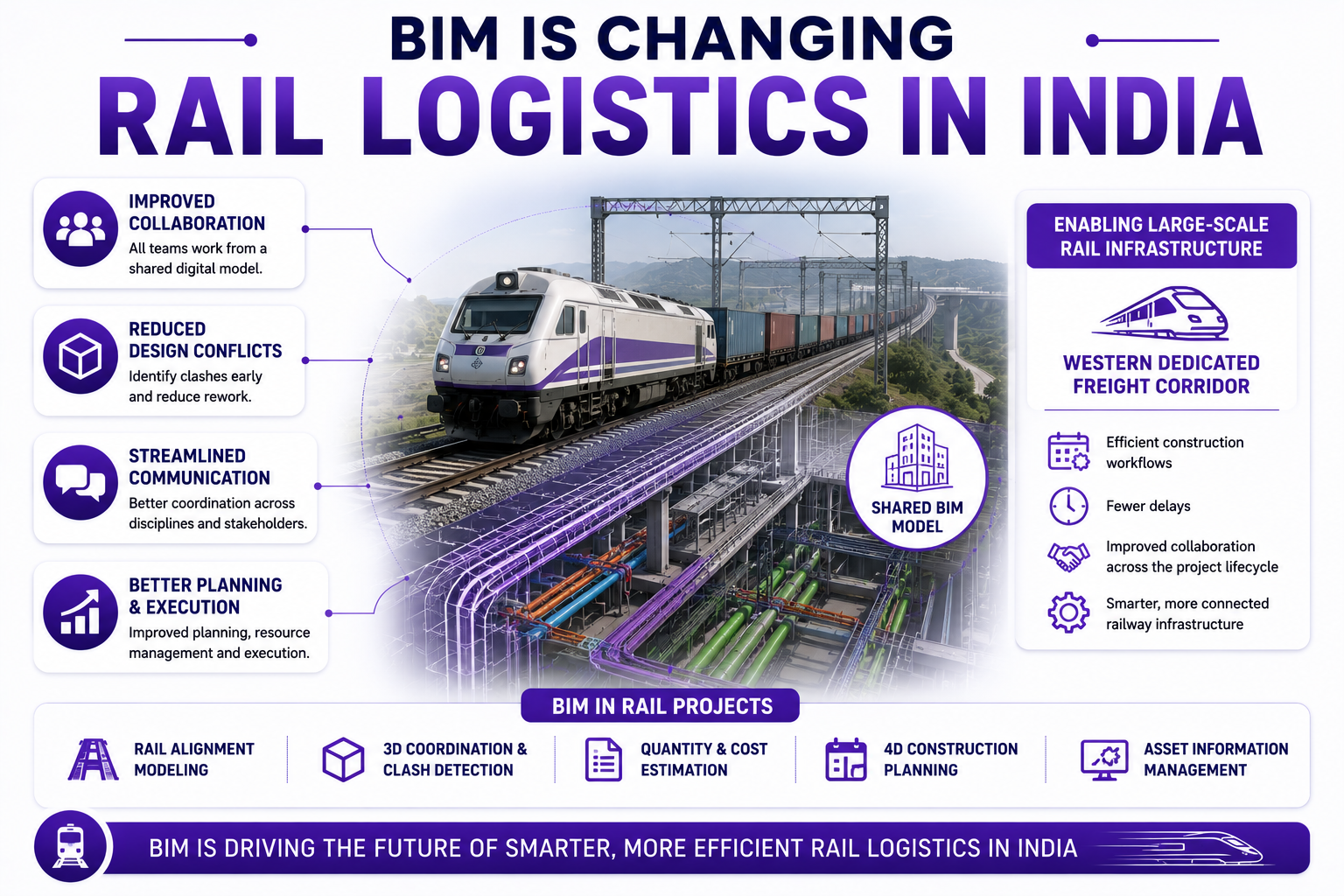
Modern rail logistics depend on more than tracks and trains. It requires infrastructure that is carefully planned, coordinated, and delivered with precision. As railway projects become higher stakes and more interconnected, traditional delivery methods often struggle to keep pace with the complexity they entail.
This is where BIM is reshaping rail construction. By creating a shared digital model, project teams can improve project coordination, reduce design conflicts, and streamline communication across multiple disciplines. Engineers, consultants, contractors, and stakeholders work from the same source of information, enabling faster and more informed decisions.
For large-scale transportation infrastructure projects such as the Western Dedicated Freight Corridor, BIM also supports improved planning, resource management, and [execution](https://www.novatr.com/blog/bim-execution-plan-for-mep-projects). The result is a more efficient construction workflow, fewer delays, and improved collaboration throughout the project lifecycle.
As India's railway network continues to expand, BIM is becoming a key enabler of smarter, more connected railway infrastructure and the future of digital construction.
## What Makes the Western Dedicated Freight Corridor a Landmark Project?
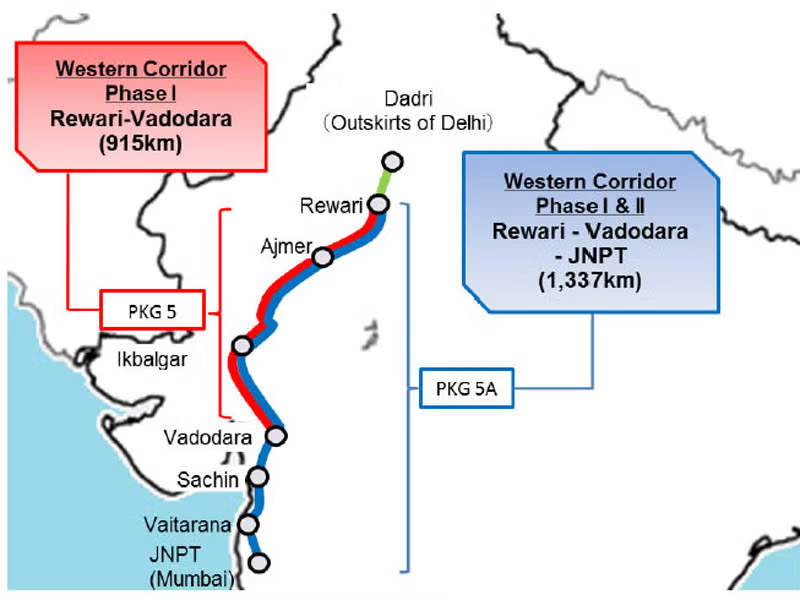
The Western Dedicated Freight Corridor represents a major shift in how freight moves across India. Stretching across multiple states and connecting key industrial and port regions, the corridor was designed to separate freight traffic from passenger rail, improving speed, capacity, and network efficiency.
Its scale made it one of the country's most complex infrastructure projects. This complexity also made the corridor an ideal choice for digital engineering. With so many moving parts, effective project coordination became critical to keeping design, construction, and execution aligned.
Beyond expanding railway infrastructure, the project demonstrated how modern delivery practices can support faster execution, better collaboration, and smarter infrastructure development. It has become a benchmark for future transportation projects.
## How Did Digital Construction Improve Planning and Coordination?
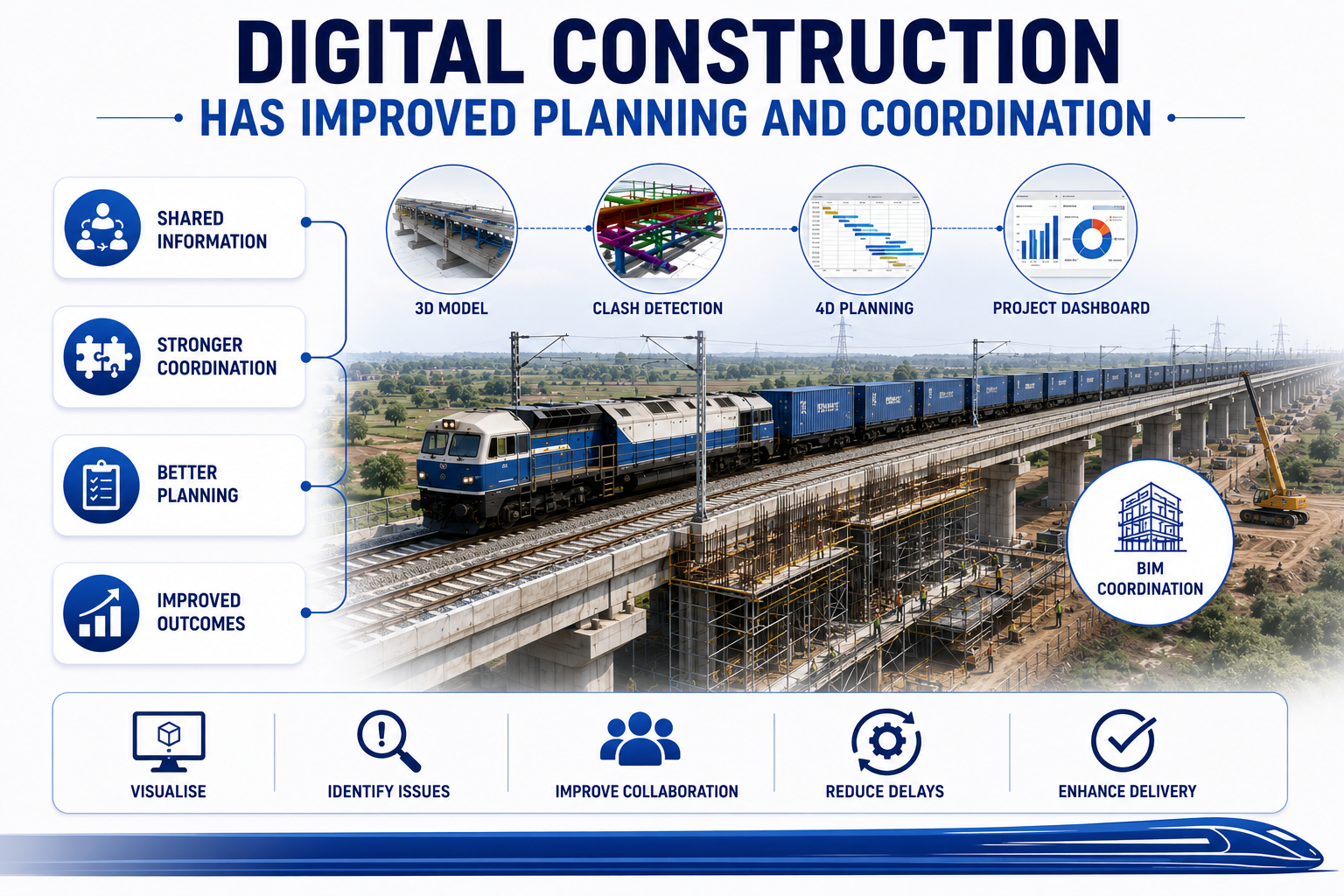
A project as extensive as the Western Dedicated Freight Corridor required thousands of design decisions to be coordinated across multiple teams and locations. Managing this level of complexity with disconnected workflows would have increased the risk of delays, rework, and communication gaps.
By adopting digital construction practices, project teams could work from a shared source of information throughout the project lifecycle. This strengthened BIM coordination, enabling architects, engineers, consultants, and contractors to collaborate more effectively and identify issues before construction began.
Digital engineering also improved planning by connecting design information with construction activities. Teams could visualise project progress, evaluate changes more efficiently, and make informed decisions with greater confidence.
The result was a more streamlined construction workflow, stronger project coordination, and improved delivery across one of India's largest BIM infrastructure initiatives.
## What Can Future Rail and Infrastructure Projects Learn From This Corridor?
The Western Dedicated Freight Corridor demonstrates that the success of large infrastructure projects depends as much on effective collaboration as it does on engineering excellence. As projects grow in scale and complexity, connected digital [workflows](https://www.novatr.com/blog/autocad-workflows-for-architects) become essential for delivering them efficiently.
One of the key lessons is the importance of adopting BIM early in the project lifecycle. Integrating BIM coordination into planning and design helps reduce conflicts, improve communication, and create a more predictable delivery process.
The project also highlights how digital engineering can support better decision-making throughout the project lifecycle. With accurate, shared project data, teams can respond to changes faster and coordinate work more effectively across disciplines.
As India continues investing in smart infrastructure and modern [transportation infrastructure](https://www.novatr.com/blog/bim-in-transportation-engineering), the corridor offers a blueprint for future rail construction projects, showing that technology is no longer just an advantage but a key part of successful project delivery.
Master BIM and Get Hired Faster
Join a community of 8500+ Architects and Engineers.
Explore Now
\*Limited seats available
## **Conclusion**
The Western Dedicated Freight Corridor is more than a railway project. It is a clear example of how digital construction can improve the delivery of complex transportation infrastructure. Through stronger [BIM](https://www.novatr.com/blog/bim-hvac-engineers-in-construction) coordination, better planning, and connected workflows, the project has set new standards for efficiency and collaboration in rail construction. As India continues to expand its infrastructure network, the demand for professionals with BIM and digital engineering expertise will only grow. Structured learning programs, such as Novatr's BIM Professional Program, help engineers develop practical, industry-relevant skills and prepare for the future of BIM infrastructure.
Those looking to develop industry-relevant BIM skills can explore the [**BIM Professional Program**](https://www.novatr.com/courses/bim-professional-program?utm_source=organic_search&utm_medium=blog&utm_campaign=) by [**Novatr**](https://www.novatr.com/), designed to help architects and engineers prepare for the evolving demands of the AEC industry.
For more industry updates, join us on our [**WhatsApp channel**](https://whatsapp.com/channel/0029Vb7Gy2LBFLgMx79j7B1b) or head to our [**resource page**](https://www.novatr.com/learning-hub).
## FAQs
### **1. How is BIM being used in the Western Dedicated Freight Corridor?**
BIM supports design coordination, planning, clash detection, and collaboration, enabling project teams to deliver the Western Dedicated Freight Corridor more efficiently.
### **2. Why is BIM important for rail logistics projects in India?**
BIM improves coordination, reduces design conflicts, enhances planning, and supports faster, more efficient delivery of complex rail logistics and infrastructure projects.
### **3. does BIM improve railway infrastructure planning and execution?**
BIM creates a shared digital model that improves planning, stakeholder collaboration, issue detection, and decision-making throughout the railway infrastructure project lifecycle.
Was this content helpful to you
Like Yes
Dislike No

TABLE OF CONTENTS
BIM Is The New Standard. Are You Certified?
Get Certified in BIM
SHARE ON YOUR SOCIALS
Link Copied Successfully
Related articles
[.png) BIM Bangalore Metro Phase 3 Is Here - What It Means for BIM Engineers in India? 25 June 2026 3 min read](https://blog.novatr.com/blog/bangalore-metro-phase-3) [ CIVIL How the Union Budget 2026–27 Will Transform India’s Infrastructure Sector? 27 March 2026 6 min read](https://blog.novatr.com/blog/infrastructure-investment-in-india-2026-budget-impact-digital-transformation) [ BIM 5D BIM at MAHA Metro Nagpur - What India's First 5D Project Taught the Industry 25 June 2026 4 min read](https://blog.novatr.com/blog/5d-bim-at-maha-metro-nagpur) [ BIM Archi Gati Shakti Meets BIM - How India Is Building Smarter, Faster and Digitally 14 May 2026 4 min read](https://blog.novatr.com/blog/gati-shakti-and-bim-in-india)
Download Syllabus
## BIM Professional Program
Next Cohort
June 2026
Program Duration
7 Months
Premium Program benefits
8 Credentials from Autodesk, NSDC, Novatr
1 program. 10 career paths. Infinite Growth.
40+ ISO 19650 & RIBA real-world projects to practice
1-on-1 guidance. Access 400+ industry experts.
Access the biggest AEC-Tech community on the planet. 8500+ and counting
Curated for you by 100+ global BIM leaders.
Lifelong access to course content
Enter your details to download the program syllabus.
##### BIM Professional Program
June 2026, 7 Months
Your Name Invalid name.
Phone Number Enter a valid phone number
Email Please enter a valid email address.
Select years of experience\* Currently studying 0-1 years 1-2 years 2-4 years 4-8 years 8-10 years 10-12 years 12+ years Invalid selection.
Specialisation Select your background\* Architecture Civil Engineering Mechanical Engineering Electrical Engineering Invalid selection.
Are you professionally trained in interior design?
Yes
No
I agree to the [Terms of Use](https://www.novatr.com/terms-and-conditions) and [Privacy Policy](https://www.novatr.com/privacy-policy), and consent to be contacted by Email, Call, WhatsApp, or SMS.
Submit
Ready to skyrocket your career?
Begin your next chapter in AEC
with Novatr!
We are here to help you take the industry by storm with advanced, tech-first skills.
[Explore Courses](https://www.novatr.com/#courses)
Join our newsletter
Submit
Thank you for signing up.
We’ll send you a nice letter once per week. No spam.

Dare to Disrupt.
Join thousands of people who organise
work and life with Novatr.
Company
- [About Us](https://www.novatr.com/about)
- [BIM Professional Program v.2026](https://www.novatr.com/courses/bim-professional-program)
- [Masters Computational Design](https://www.novatr.com/courses/computational-design)
- [Become a Mentor](https://www.novatr.com/apply-as-mentor)
- [Hiring from Us](https://www.novatr.com/hire-from-us)
- [Careers at Novatr](https://www.novatr.com/career)
Resources
- [Blog](https://www.novatr.com/learning-hub)
- [Media Room](https://www.novatr.com/media-room-home-page)
- [Career Builder](https://www.novatr.com/career-navigator)
- [Events & Webinars](https://www.novatr.com/webinars)
- [FAQs & Support Center](https://www.novatr.com/contact-us)
- [Contact Us](https://www.novatr.com/contact-us)
- [Privacy Policy](https://www.novatr.com/privacy-policy)
- [Terms of Use](https://www.novatr.com/terms-and-conditions)
©2023 Oneistox Network Pvt. Ltd.
All Rights Reserved
```json
{
"@context" : "https://schema.org",
"@type" : "BlogPosting",
"author" : {
"@type" : "Person",
"name" : "Harshita Chaudhary",
"url" : "https://blog.novatr.com/blog/author/harshita-chaudhary"
},
"dateModified" : "2026-08-20T03:13:55.632Z",
"datePublished" : "2026-07-01T11:17:08.000Z",
"headline" : "How BIM Transformed the Western Freight Corridor In India? {{year}}",
"image" : [ "https://blog.novatr.com/hubfs/Western%20Dedicated%20Freight%20Corridor.png" ],
"mainEntityOfPage" : {
"@id" : "https://blog.novatr.com/blog/how-bim-transformed-the-western-freight-corridor-in-india",
"@type" : "WebPage"
},
"publisher" : {
"@type" : "Organization",
"logo" : {
"@type" : "ImageObject",
"url" : "https://blog.novatr.com/hubfs/Novatr%20Prev%20OX-2.svg"
}
}
}
```