---
title: How BIM Adoption Has Taken Place in the UK? 2026
description: Understand the journey of BIM adoption in the UK. Explore key government initiatives, industry standards, milestones, and its impact on project delivery.
image: https://blog.novatr.com/hubfs/ChatGPT%20Image%20Aug%2027%2c%202026%2c%2008_46_51%20AM.png
---
[Blogs](https://www.novatr.com/learning-hub)
- [Architecture & Construction](https://www.novatr.com/learning-hub?category=Architecture+%26+Construction)
- [BIM](https://www.novatr.com/learning-hub?category=BIM)
- [Computational Design](https://www.novatr.com/learning-hub?category=Computational+Design)
- [Company News](https://www.novatr.com/learning-hub?category=Company+News)
- [Expert Talks](https://www.novatr.com/learning-hub?category=Expert+Talks)
Explore Courses
[Just Launched  BIM Professional Program v.2026 Take your career to the next level by mastering the real-world application of BIM. Know More](https://www.novatr.com/courses/bim-professional-program)
[ Master Computational Design Course Break into an advanced career by learning to apply the power of computation to the art of design. Know More](https://www.novatr.com/courses/computational-design)
[Blogs](https://www.novatr.com/learning-hub)
Explore Blogs
- [Architecture & Construction](https://www.novatr.com/learning-hub?category=Architecture+%26+Construction)
- [BIM](https://www.novatr.com/learning-hub?category=BIM)
- [Computational Design](https://www.novatr.com/learning-hub?category=Computational+Design)
- [Company News](https://www.novatr.com/learning-hub?category=Company+News)
- [Expert Talks](https://www.novatr.com/learning-hub?category=Expert+Talks)
Courses
- [BIM Professional Program v.2026](https://www.novatr.com/courses/bim-professional-program)
- [Master Computational Design](https://www.novatr.com/courses/computational-design)
- [BIM/](https://www.novatr.com/learning-hub?category=BIM)
Featured Article
# BIM Adoption in UK: Top Trends, Best Practices, and the Way Forward

Pragya Sharma
August 27, 2026
6 min read


Building Information Modelling (BIM) was first introduced in the 1970s as a way to enhance the capabilities of Computer-Aided Drafting. Eventually, 3D modelling software were introduced in the 1980s, making way for a comprehensive design and build technology. By the early 1990s, BIM platforms such as ArchiCAD and Revit had emerged.
Cut to 30 years later, BIM has become the most widely used construction technology globally, with the UK being at the forefront of this revolution. BIM adoption in the UK is around 7 in 10 professionals says a report[by the NBS](https://www.thenbs.com/about-nbs/press-releases/bim-comes-of-age-in-construction-as-most-professionals-now-consider-it-a-collaborative-project-information-management-process-). A House of Lords report also mentioned that 62% of construction companies were using BIM at least on some projects.
So, let’s explore the key reasons, trends, and factors shaping the rapid adoption of BIM in the UK.
## **Key Takeaways**
- As per NBC, BIM adoption in the UK has reached 72.3%, with nearly 88% of specialists either using BIM or planning to adopt it.
- The launch of the UK's Government Construction Strategy in 2011 followed by mandatory BIM integration in all public sector projects made it the next big shift in the AEC industry.
- The UK BIM Framework is based on the ISO 19650 standards to manage information across the lifecycle of a built asset.
- The RIBA Plan of Work supports BIM adoption by integrating construction management, collaboration, and digital workflows across each stage of a project.
Master BIM Before You Fall Behind
Join 8500+ AEC professionals building BIM careers.
Explore the Program
## **What Is BIM and Why Is It Important in the UK?**
BIM is a digital construction and design technology that uses a comprehensive 3D model of a structure to design, build, and manage a project. Professionals can access information such as design revisions, construction details, schedules, quantity take-offs, and lifecycle maintenance through a single consolidated dashboard. This helps in reducing construction timelines, saving costs, improving project coordination, and supporting better decision-making.
Recognising this potential, BIM implementation was encouraged by the UK civic authorities in public sector projects. It helped them improve efficiency, reduce waste, and encourage better collaboration across project teams. Over time, BIM has percolated into private sector projects, making it the most sought-after technology in the country. Today, BIM is also helping the UK infrastructure industry create standardised and data-driven workflows for their projects.
## **How Did BIM Adoption Begin in the UK?**
To understand how BIM became a major part of the UK construction innovation journey, let’s take a look at how this trajectory began:
- The journey gained momentum with the UK Government’s 2011 Construction Strategy, which called for collaborative BIM on centrally funded projects.
- The government set 2016 as the target for implementing BIM Level 2, giving firms time to develop the skills, standards, and workflows needed for adoption.
- Public sector requirements encouraged construction firms to invest in BIM capabilities. This further gave impetus for BIM adoption in the UK.
- This early government-led push gave the UK a strong foundation for wider BIM adoption across the industry and influenced its position as a global leader in digital construction.
## **What Role Did Government Mandates Play in BIM Adoption?**
**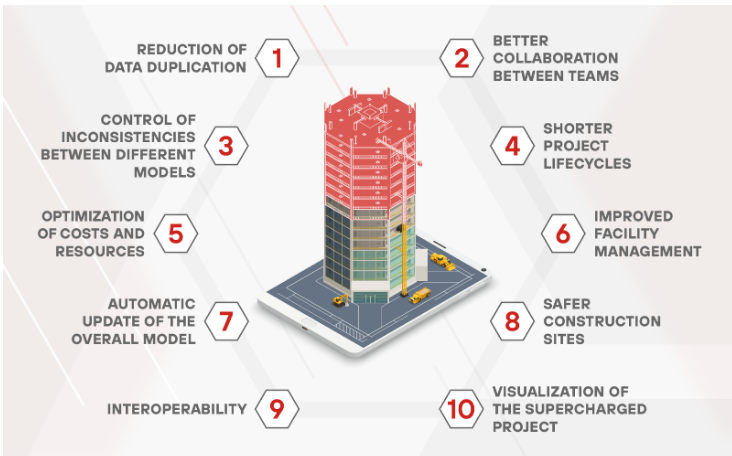**
Government policies became a turning point in the UK’s BIM journey. They set expectations for how digital engineering should be managed on construction projects. Let’s explore how:
- The 2011 Government Construction Strategy set the foundation by requiring centrally funded projects to boost BIM adoption in the UK.
- The government then set 2016 as the deadline for BIM Level 2 acceptance, giving the industry time to develop the required skills, standards, and digital workflows.
- BIM requirements also encouraged firms to adopt Common Data Environments (CDEs) and standardised approaches for creating, sharing, and managing project information.
- Public sector requirements created stronger demand for BIM expertise, encouraging contractors, consultants, and suppliers to build internal capabilities and train their teams.
- The government's approach also helped establish a common direction for the industry, making BIM adoption a consistent part of project delivery.
## **How Have UK BIM Standards and ISO 19650 Shaped Implementation?**
UK standards and ISO 19650 has helped bring more structure and consistency to digital project workflows. Here’s how:
- Instead of leaving each team to manage information differently, the standards establish common processes for how information is created, shared, and approved.
- ISO 19650 gives all project stakeholders a thorough understanding of data governance, responsibilities, and deliverables across different stages of a project.
- Common Data Environments (CDEs) provide a centralised system for organising and sharing information. This helps teams work with the right information at the same time
- Standardised naming, workflows, and information exchange make it easier for architects, engineers, contractors, and clients to coordinate across disciplines.
## **How Does the RIBA Plan of Work Support BIM Adoption?**
**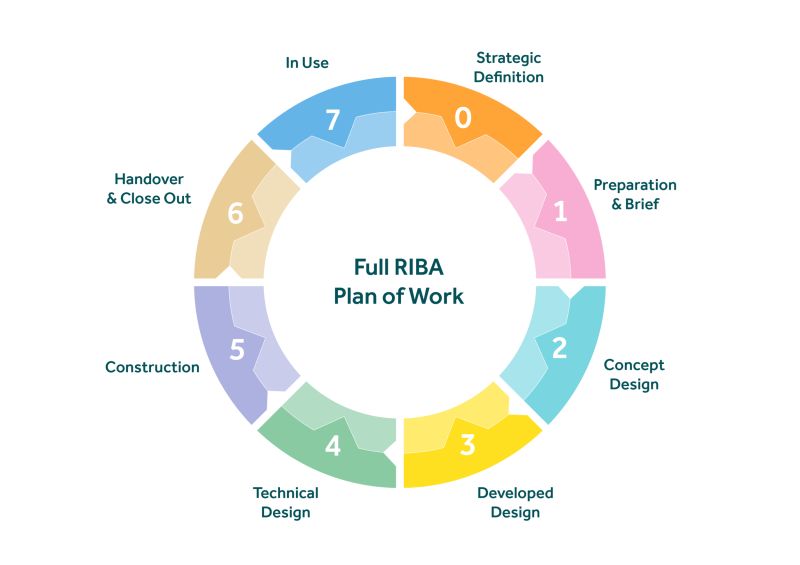**
The RIBA Plan of Work has helped align BIM processes with the different stages of design and construction, creating a more structured approach to project delivery. Let’s explore how this can benefit BIM adoption in the UK:
- The Plan of Work divides a project into well-defined stages. This gives professionals a stipulated framework for planning activities and deliverables.
- BIM can be integrated into every stage of a project to determine what data needs to be developed, reviewed, and exchanged as the project progresses.
- BIM adoption in the UK has helped teams connect design decisions with later project requirements such as construction, handover, and building operation.
- By providing a common structure for project delivery, the Plan of Work makes it easier for different disciplines to coordinate their BIM processes and duties.
**Which Industries and Projects Have Driven BIM Adoption in the UK?**
BIM adoption has grown across the UK as different sectors and project types have increasingly embraced digital workflows and information management. For example, there’s:
- **Infrastructure:** Large-scale projects such as railways, highways, bridges, and airports have adopted BIM to simplify vendor coordination, and large volumes of information.
- **Commercial construction:** Office towers, mixed-use developments, and commercial buildings have used BIM to coordinate multiple disciplines and manage construction sequences.
- **Healthcare:** Hospitals and other healthcare facilities benefit from BIM’s capability to coordinate building services, specialist equipment, and space requirements across detailed projects.
- **Residential development:** Housing projects use BIM to improve design coordination, standardise components, and support more efficient construction across multiple units.
- **Public-sector projects:** BIM adoption in the UK can also be seen in government-funded schools, infrastructure, and civic buildings. It has played an vital role in driving curiosity for the BIM technology in private sector developments.
- **Industrial and manufacturing facilities:** Complex facilities with extensive mechanical, electrical, and process systems have increasingly relied on BIM to coordinate services and manage asset information.
## **What Challenges Did the UK Face During BIM Adoption?**
Despite its steady growth, BIM adoption in the UK came with several hurdles that affected how quickly and effectively firms could implement it. The list of challenges include:
- Smaller firms often struggled with the upfront costs of BIM software, hardware, training, and digital infrastructure.
- Moving from traditional CAD-based practices to BIM required teams to learn new tools, processes, and ways of collaborating.
- The shortage of professionals with practical BIM experience made it harder for some firms to build capable in-house teams.
- Different levels of BIM maturity across firms created inconsistencies in how models and project information were produced and exchanged.
- Teams using different software platforms sometimes faced interoperability issues when sharing models and data.
- Demonstrating a clear return on BIM investment was difficult when the initial costs were immediate, but many benefits emerged later across the project lifecycle.
## **How Is BIM Shaping the Future of the UK AEC Industry?**
The UK’s growing focus on infrastructure upgrades, housing, and low-carbon development will give rise to complex projects involving multiple teams and longer asset lifecycles. BIM can help manage this intricacy by keeping project information accessible from design to execution.
This shift also creates a growing need for individuals who can confidently work with BIM tools, standards, and workflows. For those looking to work on UK or international projects, upskilling in BIM can be a valuable career move.
All-encompassing BIM courses such as [BIM Professional Program](https://www.novatr.com/courses/bim-professional-program?utm_source=organic_search&utm_medium=blog&utm_campaign=) by [Novatr](https://www.novatr.com/) can be a clever choice for this purpose. It allows students to learn at their own time and pace, while providing access to live sessions and 1:1 mentorship from industry experts.
BIM is Advancing. Are You?
Get BIM certified and open doors to a better career.
Join the Program
## **Conclusion**
BIM adoption is no longer limited to the UK. Across Europe, Asia, and North America, countries are increasingly adopting BIM to improve coordination and support more efficient construction workflows. For architects, engineers, and construction professionals, developing BIM skills can therefore open doors to projects beyond their home markets.
We advise you to explore the [BIM Professional Program](https://www.novatr.com/courses/bim-professional-program?utm_source=organic_search&utm_medium=blog&utm_campaign=) by [Novatr](https://www.novatr.com/). This comprehensive course teaches BIM skills, software, collaborative workflows, and client-ready deliverables. Additionally, students get the opportunity to apply their learnings through capstone projects, gain knowledge from live sessions, and receive mentorship from practising professionals. Novatr also assists in resume building, portfolio creation, and placement support. This ensures students become job ready for the UK’s construction industry.
For additional industry insights and learning resources, join us on our [WhatsApp channel](https://whatsapp.com/channel/0029Vb7Gy2LBFLgMx79j7B1b) or visit our [Resources Page](https://www.novatr.com/learning-hub) to learn about the latest trends in architecture and engineering.
## **FAQs**
### **1. When did the UK start adopting BIM?**
The UK began its formal BIM adoption journey in 2011 when the Government Construction Strategy was launched.
### **2. Why did the UK government promote BIM?**
The UK government encouraged BIM adoption to reduce costs, improve productivity, and strengthen collaboration across construction projects.
### **3. What are the key milestones in BIM adoption in the UK?**
Key milestones in the UK’s BIM adoption journey include the 2011 BIM strategy, the 2016 BIM Level 2 mandate, and the later shift to ISO 19650-based information management.
Was this content helpful to you
Like Yes
Dislike No

TABLE OF CONTENTS
BIM Is The New Standard. Are You Certified?
Get Certified in BIM
SHARE ON YOUR SOCIALS
Link Copied Successfully
Related articles
[ BIM How a BIM Course Supports Careers in the UK AEC Industry? 18 August 2026 8 min read](https://blog.novatr.com/blog/bim-course-for-career-growth-in-uk) [.png) BIM BIM Freelancing Vs Full-Time Career: The Complete Guide 22 July 2026 9 min read](https://blog.novatr.com/blog/bim-freelancing-or-full-time-career) [ BIM Complete Guide to Best BIM Companies in the UK for Architects and Engineers 18 August 2026 8 min read](https://blog.novatr.com/blog/best-bim-companies-in-the-uk) [ BIM Civil Surat Diamond Bourse: How BIM Brought the World’s Largest Office Building to Life? 5 June 2026 7 min read](https://blog.novatr.com/blog/surat-diamond-bourse-how-bim-brought-the-worlds-largest-office-building-to-life)
Download Syllabus
## BIM Professional Program
Next Cohort
June 2026
Program Duration
7 Months
Premium Program benefits
8 Credentials from Autodesk, NSDC, Novatr
1 program. 10 career paths. Infinite Growth.
40+ ISO 19650 & RIBA real-world projects to practice
1-on-1 guidance. Access 400+ industry experts.
Access the biggest AEC-Tech community on the planet. 8500+ and counting
Curated for you by 100+ global BIM leaders.
Lifelong access to course content
Enter your details to download the program syllabus.
##### BIM Professional Program
June 2026, 7 Months
Your Name Invalid name.
Phone Number Enter a valid phone number
Email Please enter a valid email address.
Select years of experience\* Currently studying 0-1 years 1-2 years 2-4 years 4-8 years 8-10 years 10-12 years 12+ years Invalid selection.
Specialisation Select your background\* Architecture Civil Engineering Mechanical Engineering Electrical Engineering Invalid selection.
Are you professionally trained in interior design?
Yes
No
I agree to the [Terms of Use](https://www.novatr.com/terms-and-conditions) and [Privacy Policy](https://www.novatr.com/privacy-policy), and consent to be contacted by Email, Call, WhatsApp, or SMS.
Submit
Ready to skyrocket your career?
Begin your next chapter in AEC
with Novatr!
We are here to help you take the industry by storm with advanced, tech-first skills.
[Explore Courses](https://www.novatr.com/#courses)
Join our newsletter
Submit
Thank you for signing up.
We’ll send you a nice letter once per week. No spam.

Dare to Disrupt.
Join thousands of people who organise
work and life with Novatr.
Company
- [About Us](https://www.novatr.com/about)
- [BIM Professional Program v.2026](https://www.novatr.com/courses/bim-professional-program)
- [Masters Computational Design](https://www.novatr.com/courses/computational-design)
- [Become a Mentor](https://www.novatr.com/apply-as-mentor)
- [Hiring from Us](https://www.novatr.com/hire-from-us)
- [Careers at Novatr](https://www.novatr.com/career)
Resources
- [Blog](https://www.novatr.com/learning-hub)
- [Media Room](https://www.novatr.com/media-room-home-page)
- [Career Builder](https://www.novatr.com/career-navigator)
- [Events & Webinars](https://www.novatr.com/webinars)
- [FAQs & Support Center](https://www.novatr.com/contact-us)
- [Contact Us](https://www.novatr.com/contact-us)
- [Privacy Policy](https://www.novatr.com/privacy-policy)
- [Terms of Use](https://www.novatr.com/terms-and-conditions)
©2023 Oneistox Network Pvt. Ltd.
All Rights Reserved
```json
{
"@context" : "https://schema.org",
"@type" : "BlogPosting",
"author" : {
"@type" : "Person",
"name" : "Pragya Sharma",
"url" : "https://blog.novatr.com/blog/author/pragya-sharma"
},
"dateModified" : "2026-08-27T04:24:16.654Z",
"datePublished" : "2026-08-27T03:22:47.000Z",
"headline" : "How BIM Adoption Has Taken Place in the UK? {{year}}",
"image" : [ "https://blog.novatr.com/hubfs/ChatGPT%20Image%20Aug%2027%2c%202026%2c%2008_46_51%20AM.png" ],
"mainEntityOfPage" : {
"@id" : "https://blog.novatr.com/blog/bim-adoption-in-uk",
"@type" : "WebPage"
},
"publisher" : {
"@type" : "Organization",
"logo" : {
"@type" : "ImageObject",
"url" : "https://blog.novatr.com/hubfs/Novatr%20Prev%20OX-2.svg"
}
}
}
```