---
title: 10 Examples How BIM is Revolutionizing Infrastructure Projects in the USA?
description: Discover how BIM is transforming U.S. infrastructure projects with real examples, benefits, and why BIM skills matter for civil engineers today.
image: https://blog.novatr.com/hubfs/Bridge%20built%20Using%20BIM.jpg
---
[Blogs](https://www.novatr.com/learning-hub)
- [Architecture & Construction](https://www.novatr.com/learning-hub?category=Architecture+%26+Construction)
- [BIM](https://www.novatr.com/learning-hub?category=BIM)
- [Computational Design](https://www.novatr.com/learning-hub?category=Computational+Design)
- [Company News](https://www.novatr.com/learning-hub?category=Company+News)
- [Expert Talks](https://www.novatr.com/learning-hub?category=Expert+Talks)
Explore Courses
[Just Launched  BIM Professional Program v.2026 Take your career to the next level by mastering the real-world application of BIM. Know More](https://www.novatr.com/courses/bim-professional-program)
[ Master Computational Design Course Break into an advanced career by learning to apply the power of computation to the art of design. Know More](https://www.novatr.com/courses/computational-design)
[Blogs](https://www.novatr.com/learning-hub)
Explore Blogs
- [Architecture & Construction](https://www.novatr.com/learning-hub?category=Architecture+%26+Construction)
- [BIM](https://www.novatr.com/learning-hub?category=BIM)
- [Computational Design](https://www.novatr.com/learning-hub?category=Computational+Design)
- [Company News](https://www.novatr.com/learning-hub?category=Company+News)
- [Expert Talks](https://www.novatr.com/learning-hub?category=Expert+Talks)
Courses
- [BIM Professional Program v.2026](https://www.novatr.com/courses/bim-professional-program)
- [Master Computational Design](https://www.novatr.com/courses/computational-design)
- [CIVIL/](https://www.novatr.com/learning-hub?category=BIM)
Featured Article
# 10 Examples How BIM is Revolutionizing Infrastructure Projects in the USA?

Deependra Dobriyal
February 23, 2026
7 min read


**BIM infrastructure projects in USA** are transforming how infrastructure is designed, built, and maintained by improving accuracy, collaboration, safety, and cost control. Building Information Modeling (BIM) creates digital representations of physical assets, enabling engineers and project teams to plan and manage infrastructure more efficiently.
Infrastructure development remains a national priority in the United States. According to the [U.S. Department of Transportation](https://www.transportation.gov/rural/grant-toolkit/funding-and-financing/grants-overview?), the Bipartisan Infrastructure Law provides $1.2 trillion in funding for transportation, bridges, transit, and public works, increasing the need for efficient delivery methods and digital project management tools. This scale of investment is accelerating the adoption of BIM technologies across public infrastructure programs.
Understanding what a BIM model in construction is helps explain this transformation. A BIM model is a data-rich digital representation of a physical structure that integrates design, geometry, materials, cost, and scheduling information. As infrastructure projects become more complex, **BIM for infrastructure development** supports better decision-making, risk reduction, and collaboration across stakeholders.
Unlock High-Paying Careers With BIM
Master BIM workflows, software and skills on real projects.
Apply Now
\*Limited seats available
## **How BIM Is Revolutionizing the Construction Industry in the USA**
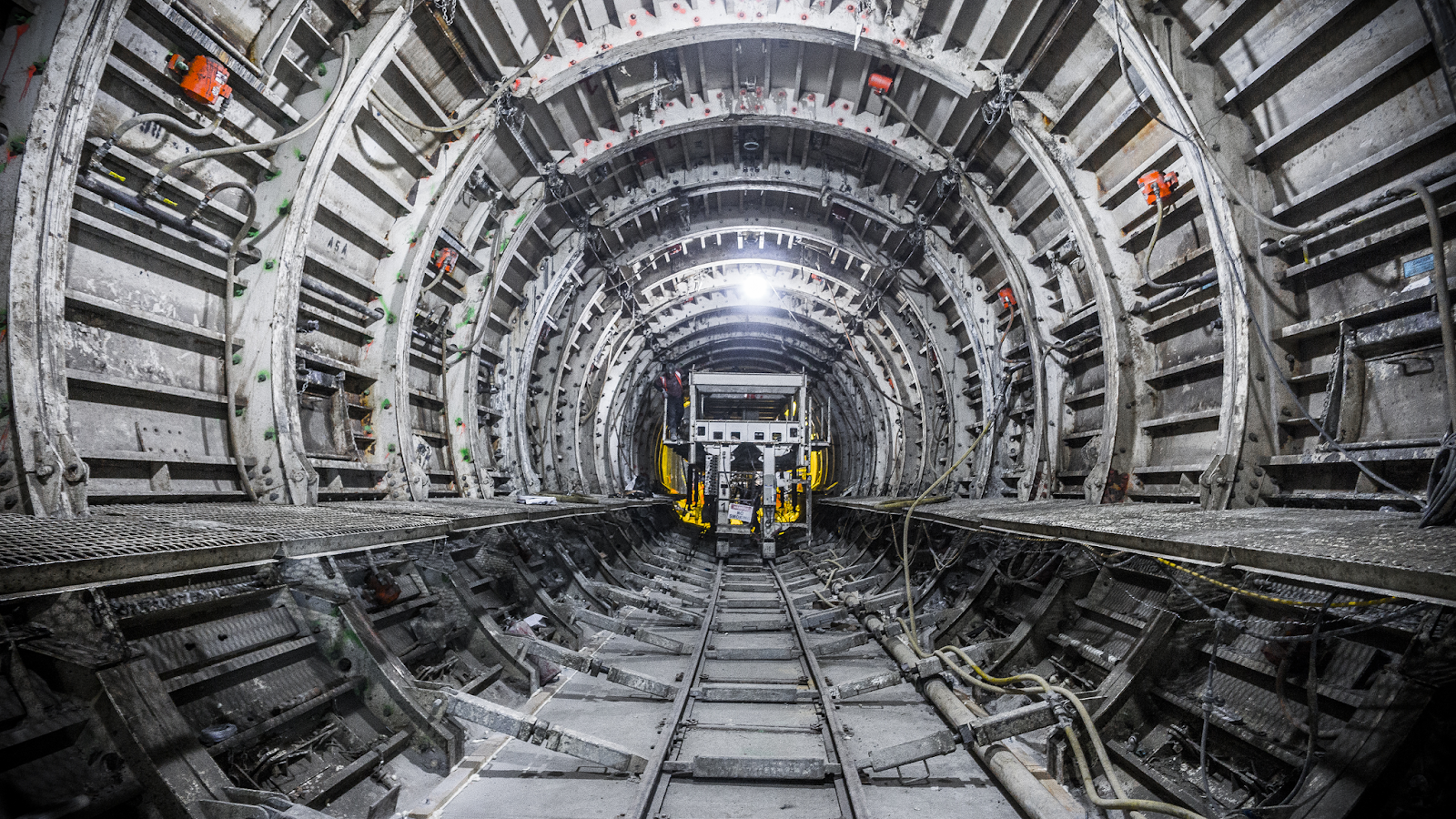
***Image:*** [***Source***](https://upload.wikimedia.org/wikipedia/commons/c/cc/East_Side_Access_Update-_November_2014_%2815953013856%29.jpg)
***Alt text:*** *The New York City East Side Access Complete Project.*
[Building Information Modeling](https://www.novatr.com/blog/what-is-building-information-modeling-bim) is reshaping infrastructure planning and execution across transportation, utilities, and urban development projects. It enables teams to work with shared digital models that improve coordination and reduce costly errors.
To understand the impact of BIM, it is useful to look at the core changes it introduces to project workflows.
The following developments explain why [BIM adoption](https://www.novatr.com/blog/bim-adoption-worldwide) is expanding rapidly across the industry.
- **Improved design accuracy:** BIM allows engineers to create detailed digital models that detect design conflicts early, reducing errors before construction begins.
- **Streamlined collaboration:** Project teams, including engineers, contractors, and planners, work within a shared digital environment that improves communication and coordination.
- **Cost and time savings:** Digital simulations enable accurate cost estimation, scheduling, and resource planning, reducing delays and unexpected expenses.
- **Enhanced safety and risk mitigation:** Virtual construction planning helps identify hazards and improves safety management during project execution.
- **Lifecycle infrastructure management:** BIM models store asset data that supports long-term maintenance and operation of infrastructure.
These capabilities explain the increasing use of [**BIM in smart infrastructure**](https://www.novatr.com/blog/how-bim-enables-the-creation-of-responsive-design-structures), where digital technologies support sustainable urban development and connected public systems.
The use of BIM also expands across transportation projects, including **BIM use cases in highways and bridges**, where digital modeling improves structural analysis and project coordination.
Understanding these industry-wide benefits provides context for examining specific **BIM projects** that demonstrate measurable outcomes.
## **10 Examples of BIM Projects Revolutionizing Infrastructure in USA**
Across the United States, several infrastructure initiatives demonstrate how BIM improves project delivery. The following examples show measurable benefits such as cost savings, improved safety, and enhanced collaboration.
### **1. California High-Speed Rail Project**

The California High-Speed Rail project uses BIM to manage complex design and construction processes across multiple regions.
- Digital models improve route planning and design accuracy.
- Shared project data supports coordination between engineers and contractors.
- BIM-based simulations reduce construction risks and scheduling delays.
- Cost estimates become more reliable through model-based planning.
This project demonstrates strong **BIM use cases in highways and bridges** and rail infrastructure planning.
### **2. Gordie Howe International Bridge**
**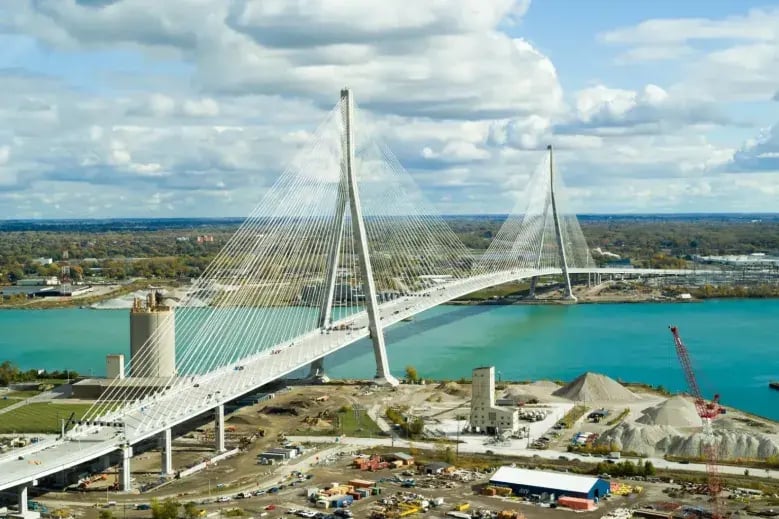**
This cross-border bridge connecting Detroit and Windsor uses BIM for structural design and construction planning.
- BIM enables precise modeling of bridge components.
- Digital collaboration improves coordination across international teams.
- Safety planning benefits from virtual construction simulations.
- Risk mitigation improves through clash detection and design validation.
The project shows the value of BIM in large transportation systems.
### **3. Los Angeles International Airport (LAX) Modernization**
**%20Modernization.jpg?width=800&height=450&name=Los%20Angeles%20International%20Airport%20(LAX)%20Modernization.jpg)**
Airport modernization projects at LAX rely on BIM to coordinate complex infrastructure upgrades.
- Digital models support terminal expansion planning.
- BIM improves communication between design and construction teams.
- Construction sequencing reduces operational disruptions.
- Enhanced visualization improves decision-making.
This project reflects how **BIM in smart infrastructure** supports transportation hubs.
### **4. New York City East Side Access Project**
**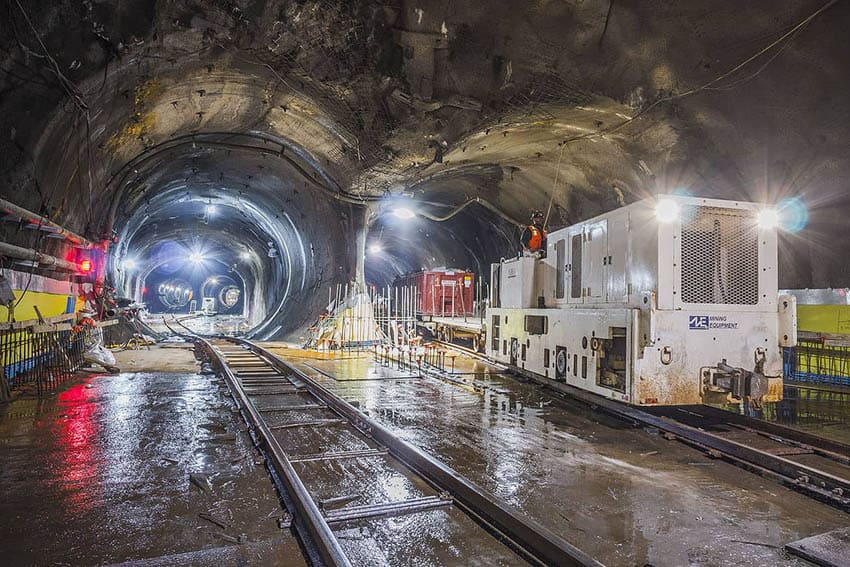**
This rail infrastructure project uses BIM to manage underground construction challenges.
- BIM improves tunnel alignment and design accuracy.
- Risk analysis reduces potential structural conflicts.
- Digital coordination supports complex engineering workflows.
- Improved scheduling minimizes delays.
The project demonstrates how **BIM projects** enhance urban transportation infrastructure.
### **5. Denver Eagle P3 Commuter Rail Project**
****
The Denver Eagle P3 project uses BIM to coordinate rail network expansion.
- Digital design models improve infrastructure integration.
- Real-time collaboration enhances project coordination.
- BIM-based planning improves cost forecasting.
- Safety planning benefits from virtual simulations.
This example shows the functional benefits of **BIM for infrastructure development** in public transit systems.
### **6. San Francisco–Oakland Bay Bridge Seismic Retrofit**
****
Seismic upgrades to the Bay Bridge used BIM for structural analysis and retrofit planning.
- Digital modeling improves structural safety assessment.
- BIM enables accurate visualization of reinforcement strategies.
- Risk mitigation reduces construction uncertainty.
- Improved coordination supports complex engineering tasks.
The project demonstrates how BIM enhances safety in critical infrastructure.
### **7. Chicago O’Hare Airport Expansion**
****
Airport expansion programs at O’Hare use BIM to coordinate large-scale construction.
- BIM improves design integration across multiple contractors.
- Digital models reduce design conflicts and rework.
- Cost estimation becomes more accurate.
- Project timelines improve through coordinated scheduling.
This initiative supports the growth of **BIM in smart infrastructure** for urban development.
### **8. Texas Department of Transportation Highway Projects**
****
Several highway initiatives in Texas apply BIM for design and construction planning.
- Digital modeling improves roadway alignment accuracy.
- BIM supports collaboration across engineering teams.
- Risk analysis reduces design errors.
- Construction efficiency improves through detailed planning.
### **9. Seattle Alaskan Way Viaduct Replacement Tunnel**
****
This tunnel project used BIM to manage complex underground construction.
- BIM supports detailed tunnel design and visualization.
- Digital coordination improves stakeholder communication.
- Safety planning benefits from virtual simulations.
- Cost control improves through predictive modeling.
### **10. Hudson Yards Infrastructure Development**
****
The Hudson Yards project in New York uses BIM for integrated infrastructure planning.
- BIM supports coordinated design of utilities and structures.
- Digital models improve construction sequencing.
- Risk mitigation reduces project uncertainty.
- Lifecycle data supports long-term infrastructure management.
This example reflects the growing importance of BIM in the USA for large urban developments.
## **Learn BIM With Novatr**
As infrastructure projects adopt digital workflows, engineers increasingly seek structured training to develop BIM expertise.
Professionals exploring **what is a bim model in construction** often begin with training programs that combine theoretical knowledge with practical applications.
The [BIM course for civil engineers](https://www.novatr.com/us/courses/bim-for-civil-engineers) offered by Novatr focuses on practical skills relevant to architecture, engineering, and construction workflows. The program includes:
- **5+ industry softwares**, including **Autodesk Revit, Navisworks, Autodesk Construction Cloud: Docs, Coordination & Collaboration.**
- Master essential **plugins** such as **EF-Tools, DiRoots.One, pyRevit, ProSheets, Issue and Model Checker for Revit** to automate documentation and improve precision.
- Learn complete **BIM workflows** — from **digital design development, estimation & BOQ, and information modeling** to **clash detection, sequencing, and multidisciplinary coordination**.
- Get hands-on experience working on **real commercial and residential projects** following **ISO 19650 standards**, guided by mentors from the global AEC industry.
- Develop professional **construction documentation, audits, and deliverables** aligned with international BIM practices.
Master BIM and Get Hired Faster
Join a community of 8500+ Architects and Engineers.
Explore Now
\*Limited seats available
## **Conclusion**
Building Information Modeling is transforming infrastructure development across the United States by improving design accuracy, project coordination, safety planning, and lifecycle management. Large transportation systems, bridges, tunnels, and urban developments demonstrate measurable benefits from digital project delivery methods. These advancements show how **BIM infrastructure projects in USA** are reshaping engineering practice and construction workflows.
Engineers who understand BIM processes can improve project efficiency, reduce risks, and support sustainable infrastructure development. For civil engineers seeking to build hands-on BIM expertise, structured training programs can provide hands-on experience with digital workflows and infrastructure modeling. The [BIM professional Course for Civil Engineers](https://www.novatr.com/us/courses/bim-for-civil-engineers) offered by [Novatr](https://www.novatr.com/us) focuses on real-world applications, project-based learning, and industry-relevant tools for modern infrastructure projects.
Visit our [resource page](https://www.novatr.com/learning-hub) to explore course details and additional materials that support BIM skill development for engineering professionals.
Was this content helpful to you
Like Yes
Dislike No

TABLE OF CONTENTS
BIM Is The New Standard. Are You Certified?
Get Certified in BIM
SHARE ON YOUR SOCIALS
Link Copied Successfully
Related articles
[ CIVIL Top BIM Projects in India 2026 27 March 2026 6 min read](https://blog.novatr.com/blog/top-bim-projects-in-india) [ CIVIL Why a PE License Alone Is No Longer Enough in Today’s BIM-Driven Industry 24 February 2026 6 min read](https://blog.novatr.com/blog/why-a-pe-license-alone-is-no-longer-enough-in-todays-bim-driven-industry) [ CIVIL Why PE Engineers Without BIM Skills Struggle on Large Infrastructure Projects? 23 February 2026 6 min read](https://blog.novatr.com/blog/why-pe-engineers-without-bim-skills-struggle-on-large-infrastructure-projects) [ CIVIL What Is Py Revit, Its Key Features & Who Uses It? 25 March 2026 5 min read](https://blog.novatr.com/blog/what-is-py-revit-its-key-features-who-uses-it)
Download Syllabus
## BIM Professional Program
Next Cohort
June 2026
Program Duration
7 Months
Premium Program benefits
8 Credentials from Autodesk, NSDC, Novatr
1 program. 10 career paths. Infinite Growth.
40+ ISO 19650 & RIBA real-world projects to practice
1-on-1 guidance. Access 400+ industry experts.
Access the biggest AEC-Tech community on the planet. 8500+ and counting
Curated for you by 100+ global BIM leaders.
Lifelong access to course content
Enter your details to download the program syllabus.
##### BIM Professional Program
June 2026, 7 Months
Your Name Invalid name.
Phone Number Enter a valid phone number
Email Please enter a valid email address.
Select years of experience\* Currently studying 0-1 years 1-2 years 2-4 years 4-8 years 8-10 years 10-12 years 12+ years Invalid selection.
Specialisation Select your background\* Architecture Civil Engineering Mechanical Engineering Electrical Engineering Invalid selection.
Are you professionally trained in interior design?
Yes
No
I agree to the [Terms of Use](https://www.novatr.com/terms-and-conditions) and [Privacy Policy](https://www.novatr.com/privacy-policy), and consent to be contacted by Email, Call, WhatsApp, or SMS.
Submit
Ready to skyrocket your career?
Begin your next chapter in AEC
with Novatr!
We are here to help you take the industry by storm with advanced, tech-first skills.
[Explore Courses](https://www.novatr.com/#courses)
Join our newsletter
Submit
Thank you for signing up.
We’ll send you a nice letter once per week. No spam.

Dare to Disrupt.
Join thousands of people who organise
work and life with Novatr.
Company
- [About Us](https://www.novatr.com/about)
- [BIM Professional Program v.2026](https://www.novatr.com/courses/bim-professional-program)
- [Masters Computational Design](https://www.novatr.com/courses/computational-design)
- [Become a Mentor](https://www.novatr.com/apply-as-mentor)
- [Hiring from Us](https://www.novatr.com/hire-from-us)
- [Careers at Novatr](https://www.novatr.com/career)
Resources
- [Blog](https://www.novatr.com/learning-hub)
- [Media Room](https://www.novatr.com/media-room-home-page)
- [Career Builder](https://www.novatr.com/career-navigator)
- [Events & Webinars](https://www.novatr.com/webinars)
- [FAQs & Support Center](https://www.novatr.com/contact-us)
- [Contact Us](https://www.novatr.com/contact-us)
- [Privacy Policy](https://www.novatr.com/privacy-policy)
- [Terms of Use](https://www.novatr.com/terms-and-conditions)
©2023 Oneistox Network Pvt. Ltd.
All Rights Reserved
```json
{
"@context" : "https://schema.org",
"@type" : "BlogPosting",
"author" : {
"@type" : "Person",
"name" : "Deependra Dobriyal",
"url" : "https://blog.novatr.com/blog/author/deependra-dobriyal"
},
"dateModified" : "2026-02-23T09:52:42.675Z",
"datePublished" : "2026-02-23T09:51:14.000Z",
"headline" : "10 Examples How BIM is Revolutionizing Infrastructure Projects in the USA?",
"image" : [ "https://blog.novatr.com/hubfs/Bridge%20built%20Using%20BIM.jpg" ],
"mainEntityOfPage" : {
"@id" : "https://blog.novatr.com/blog/10-examples-how-bim-is-revolutionizing-infrastructure-projects-in-the-usa",
"@type" : "WebPage"
},
"publisher" : {
"@type" : "Organization",
"logo" : {
"@type" : "ImageObject",
"url" : "https://blog.novatr.com/hubfs/Novatr%20Prev%20OX-2.svg"
}
}
}
```